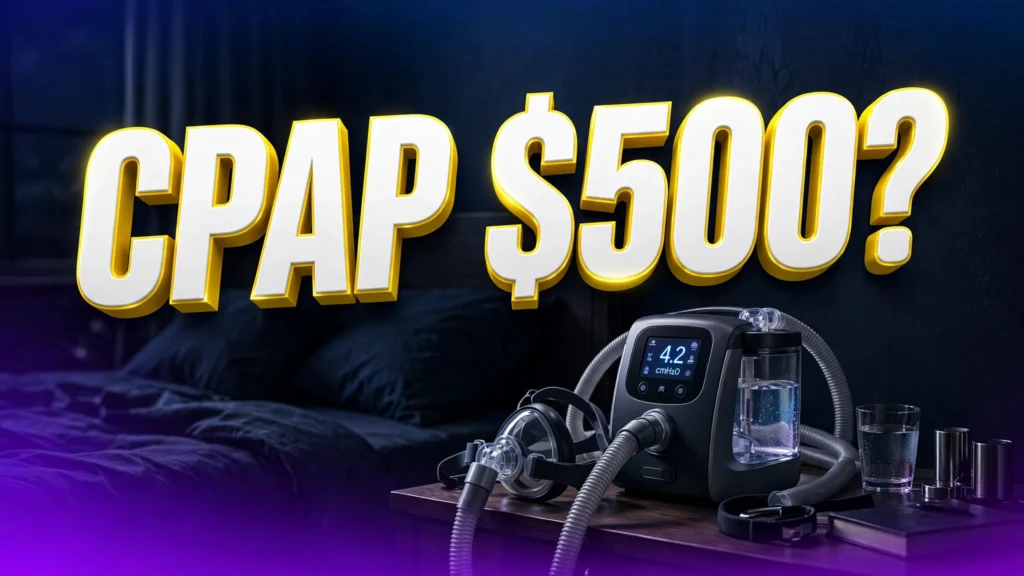
The Short Answer: $500–$1,200 Cash for the Machine
A CPAP machine without insurance typically costs $500 to $1,200 bought outright, depending on the model — a basic fixed-pressure unit at the low end, an auto-adjusting (APAP) machine with heated humidifier at the high end. Masks, hoses, and filters add roughly $150–$400 in the first year.
Here is the twist most people miss: having insurance can make a CPAP cost MORE. Durable medical equipment (DME) suppliers routinely put insured patients on a 13-month rental plan, and the total rental payments frequently exceed the cash price of buying the machine outright. If your plan has a high deductible, you may pay the full rental bill yourself — at inflated DME prices.
CPAP Cost Breakdown (Self-Pay)
| Item | Typical cash price | Notes |
|---|---|---|
| CPAP machine (fixed pressure) | $500–$800 | Basic models; fine for straightforward apnea |
| APAP machine (auto-adjusting) | $700–$1,200 | Adjusts pressure through the night; most popular |
| BiPAP machine | $1,500–$3,000+ | Two pressure levels; prescribed for complex cases |
| Mask (nasal, pillow, or full-face) | $80–$200 | Fit matters more than brand — try before committing |
| Heated humidifier | $0–$150 | Often built in on newer models |
| Replacement supplies (filters, cushions, hose) | $150–$400/year | Masks/cushions wear out every few months |
First-year all-in for a typical APAP setup bought with cash: roughly $850–$1,600 including mask and a year of supplies.
The 13-Month Rental Trap
This is the most expensive fine print in sleep medicine. When a DME supplier bills your insurance, Medicare-style rules often require a 13-month capped rental: you “rent” the machine monthly, and ownership transfers after month 13 of compliant use. The problems:
- The monthly rental rate is inflated. DME fee schedules often price the machine at $100–$200/month — 13 months totals $1,300–$2,600 for a machine that retails for $800 cash.
- Your deductible applies first. On a high-deductible plan, those monthly bills come straight out of your pocket until the deductible is met.
- Compliance is monitored. Miss the usage threshold (typically 4+ hours per night for a set percentage of nights in the first 90 days) and the supplier can reclaim the machine — after you have already paid months of rental.
- Supplies get auto-shipped on “replacement schedules” that maximize billing, not your actual wear rate.
Before accepting a DME setup, ask for the total 13-month rental cost and your estimated out-of-pocket after deductible and coinsurance — then compare it to the cash price from an online retailer. The cash price wins depressingly often.
Cash-Buy vs. Insurance: The Real Math
| Scenario | Typical total cost |
|---|---|
| Cash buy online (APAP + mask + year of supplies) | $850–$1,600 |
| DME rental, high-deductible plan | $1,300–$2,600+ out of pocket |
| DME rental, low deductible / good coverage | $200–$600 out of pocket |
| Refurbished machine, cash | $300–$700 |
Insurance wins only when your out-of-pocket costs (deductible + coinsurance) stay well below the cash price. With a $3,000+ deductible, cash-buying is usually cheaper from day one — and you own the machine immediately with no compliance monitoring.
The Prescription Requirement
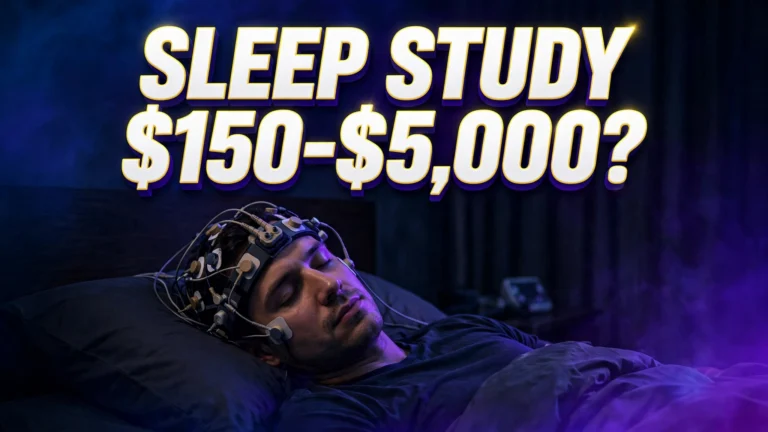
You cannot legally buy a CPAP machine in the US without a prescription, which requires a sleep study diagnosing sleep apnea first. That study is its own bill — in-lab studies run $1,000–$5,000+ without insurance, while home sleep tests run $150–$500 and are sufficient for most straightforward cases. Budget the diagnosis and the machine together: the full journey from suspicion to sleeping with a CPAP often totals $1,000–$2,000 cash for the home-test route.
Some online retailers bundle a home sleep test, prescription, and machine into one package — compare the bundle price against buying each piece separately.
Ways to Pay Less
- Buy online, not from the DME: reputable online CPAP retailers sell the exact same machines for hundreds less than DME fee-schedule prices.
- Consider refurbished: certified pre-owned machines from reputable sellers typically run 40–60% below new — often $300–$700 for a solid APAP unit with warranty.
- Use FSA/HSA funds: CPAP machines, masks, and supplies are all eligible expenses — pre-tax dollars effectively discount everything by your tax rate.
- Time supply replacements to actual wear: cushions and filters do not expire on the DME’s shipping schedule. Replace when worn, not when the calendar says.
- Ask about last year’s model: CPAP technology evolves slowly; previous-generation machines are functionally identical and heavily discounted.
- Check the mask return policy: mask fit determines whether you actually use the machine. Retailers with 30-day mask exchanges save you from buying three $150 masks to find one that seals.
Travel, Power, and Lifestyle Costs Nobody Mentions
The machine price is the beginning of living with a CPAP. Real-world extras:
- Travel CPAP: full-size machines are portable but bulky; dedicated travel units run $500–$1,000. Many owners skip this and just travel with the main unit plus a $30–$60 battery pack for camping or flights.
- Distilled water: heated humidifiers want distilled water — roughly $1–$2/gallon, trivial per night but a recurring errand. Tap water leaves mineral deposits that shorten the tank’s life.
- Electricity: negligible — a CPAP draws roughly 30–90 watts, pennies per night.
- Bed partner costs: none directly, but the quieter machine you buy, the fewer separate-bedrooms conversations you have. Noise ratings (measured in decibels) are worth comparing when shopping.
- Cleaning supplies: mild soap and water handles most of it; UV sanitizers ($80–$300) are popular but optional — manufacturers generally say soap and water is sufficient.
When Insurance Actually Wins
Cash-buying is not always the answer. Insurance comes out ahead when:
- Your deductible is already met (or nearly met) for the year from other medical spending.
- Your plan covers DME at 80–90% after a low deductible — your share drops to a few hundred dollars.
- You need a BiPAP ($1,500–$3,000+ cash), where the absolute dollars make insurance math more favorable.
- Your plan includes a generous DME benefit with no rental requirement — some do; ask.
The decision rule: get the DME’s total out-of-pocket estimate in writing, get the online cash price, and pick the smaller number. Never assume — the spread between the two paths is routinely over $1,000.
Buying Used: What to Check
The secondary market for CPAP machines is active — and risky if you buy blind. A safe used purchase checks these boxes:
- Run hours under 5,000 (accessible in the clinical menu) — like mileage on a used car. Under 2,000 is excellent.
- Data-capable model: older “brick” machines without SD cards or wireless cannot report compliance data, which matters if your doctor needs to verify therapy.
- Sanitized and tested by the seller, with a stated warranty (even 6 months beats none).
- New mask, hose, and filters regardless — never reuse someone else’s mask. Budget $100–$200 for fresh consumables.
- Prescription on file with the seller before they ship — legitimate sellers require it, and sellers who do not are a red flag.
At $300–$700 for a low-hour APAP from a reputable refurbisher, used is the single biggest discount available — bigger than any insurance benefit most high-deductible patients will ever see.
CPAP Machine Cost FAQ
Can you buy a CPAP machine without insurance?
Yes — cash purchase is completely legal with a prescription. Many patients find it cheaper than going through insurance, especially on high-deductible plans.
How often do you need to replace CPAP supplies?
Typical guidance: mask cushions every 1–3 months, full mask every 6–12 months, filters monthly, hose every 6–12 months, machine every 5+ years. Actual wear varies — replace on condition, not on the supplier’s auto-ship calendar.
Do refurbished CPAP machines work as well?
From reputable sellers with warranties, yes — the blower technology is mature and durable. Verify the machine’s run hours (like mileage on a used car) and confirm it has been sanitized and tested.
What happens if you stop using your CPAP?
Besides the health consequences of untreated apnea, DME rental contracts may require returning the machine — and you do not get the rental payments back. Another reason cash-buying wins: the machine is yours regardless.
The Bottom Line
A cash-bought APAP setup runs $850–$1,600 all-in for year one — often less than what insured patients pay through the 13-month rental mill. Get the prescription via an affordable home sleep test, compare the DME’s total rental cost against online cash prices, and pay with pre-tax HSA/FSA dollars. The machine that actually gets used is the one that fits your face and your budget.