The Short Answer: $700–$1,500 for the Root Canal, $2,000–$3,200 All-In
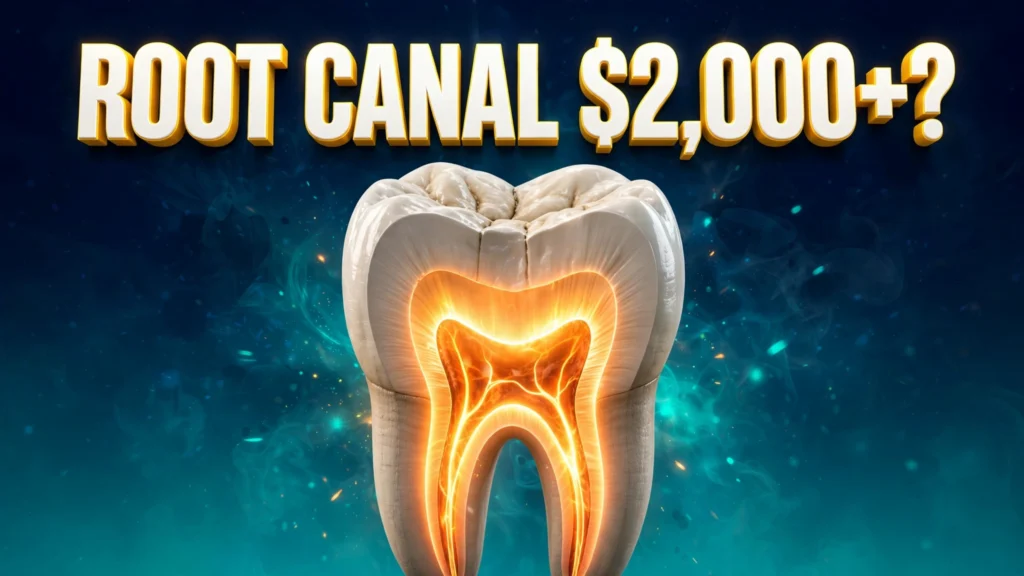
A root canal without insurance typically costs $700 to $1,500 for the procedure itself. But that number misleads people, because most root-canaled teeth also need a crown afterward to protect them — and the crown is billed separately at roughly $800–$1,500. The realistic all-in bill most self-pay patients face is $2,000 to $3,200 per tooth.
The single most expensive mistake is budgeting for the root canal and forgetting the crown. Dentists quote them as two line items, and the crown often costs as much as the procedure. Always ask for the combined, all-in total before you sit in the chair.
Root Canal Cost by Tooth Type (Self-Pay)
Price depends heavily on which tooth needs work. Molars have more roots and take longer, so they cost more:
| Tooth type | Typical cost without insurance | Notes |
|---|---|---|
| Front tooth (incisor/canine) | $700–$1,100 | Single root, simplest procedure |
| Premolar (bicuspid) | $800–$1,200 | One or two roots |
| Molar | $1,000–$1,500 | Three to four roots, longest chair time |
| Retreatment (redo of a failed root canal) | $1,200–$1,800 | More complex, often needs a specialist |
An endodontist (root-canal specialist) typically charges 20–40% more than a general dentist for the same tooth — but for molars and retreatments, the higher success rate often makes the premium worth it. A failed root canal that needs redoing costs far more than getting it right the first time.
The Crown Is the Second Bill
After a root canal, the tooth is hollowed out and brittle. Without a crown, it can crack — and a cracked root-canaled tooth usually has to be extracted, which wastes everything you just paid. The crown is not optional upselling; it is part of the treatment.
| Crown material | Typical cost without insurance |
|---|---|
| Porcelain-fused-to-metal | $800–$1,200 |
| All-ceramic / zirconia | $1,000–$1,500 |
| Gold | $1,000–$1,600 |
Combined with the root canal, the honest all-in ranges look like this:
- Front tooth + crown: typically $1,500–$2,600
- Premolar + crown: typically $1,800–$2,700
- Molar + crown: typically $2,000–$3,200
Why Dental Insurance Barely Helps
Dental insurance is not like medical insurance. Most plans have an annual maximum of $1,000–$2,000 — and a single molar root canal plus crown can blow through the entire year’s benefit in one visit. Everything after that is out of pocket.
Three more traps to know:
- Waiting periods: many plans make you wait 6–12 months before covering major work like root canals. Buy a plan the week your tooth hurts and the root canal likely is not covered yet.
- Missing-tooth clauses: if the tooth was already gone or the problem predates your coverage, some plans deny the claim.
- Downgrade clauses: the plan may pay for the cheapest acceptable crown material and leave you covering the difference for ceramic.
Run the math before buying a dental plan for one procedure: a year of premiums plus the deductible can easily exceed what the plan actually pays toward your root canal.
Cheaper Paths to the Same Treatment
- Dental schools: accredited dental schools and endodontic residency programs typically charge 30–50% less, with supervised students or residents doing the work. The tradeoff is longer appointments.
- Ask for the cash price: many practices offer 5–15% off for paying in full upfront. The published price list is often the starting bid, not the final price.
- Payment plans: in-house plans or medical credit cards (CareCredit and similar) split the bill over 6–12 months, often interest-free for the promotional period. Read the deferred-interest terms carefully.
- FSA/HSA funds: root canals and crowns are eligible expenses — paying with pre-tax dollars effectively discounts the bill by your tax rate.
- Community health centers: federally qualified health centers offer sliding-scale dental fees based on income.
- Phase the work: if money is tight, some dentists will do the root canal now and place a sturdy temporary filling, with the permanent crown scheduled a few months later. Ask — do not just skip the crown.
What Happens If You Skip It
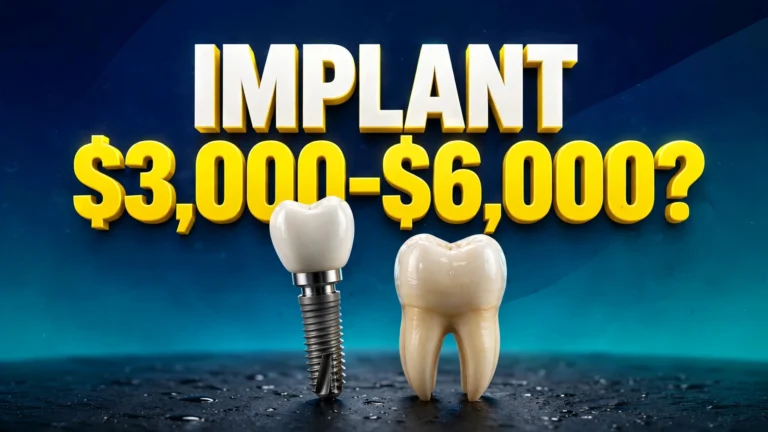
An infected tooth does not heal on its own. The infection spreads, the pain gets worse, and eventually the tooth becomes unrestorable — which means extraction. An extraction ($150–$500) sounds cheaper until you price replacing the tooth: a bridge runs $2,000–$5,000 and an implant $3,000–$6,000. Saving the natural tooth with a root canal is almost always the cheaper long-term play.
There is also a health angle with a money tail: dental infections can spread to the jaw, sinuses, and in rare cases the bloodstream, turning a $2,500 dental bill into a five-figure ER and hospital bill. Delaying rarely saves money.
Root Canal vs. Extraction: The Full Lifetime Math
When the quote lands, extraction starts looking tempting. Here is the honest decade-long comparison for a single molar:
| Path | Year 1 cost | 10-year total (typical) |
|---|---|---|
| Root canal + crown | $2,000–$3,200 | $2,000–$3,800 (occasional crown replacement) |
| Extraction, no replacement | $150–$500 | $150–$500 + risk of shifting teeth, bite problems, and future orthodontics |
| Extraction + bridge | $2,150–$5,500 | $4,000–$8,000 (bridges typically replaced every 10–15 years) |
| Extraction + implant | $3,150–$6,500 | $3,500–$7,500 (implant lasts; crown may need replacing) |
The root canal wins on total cost in most scenarios — and it preserves your natural tooth, which no replacement fully replicates. Extraction only wins financially if you genuinely leave the gap empty, which most dentists advise against for molars because neighboring teeth drift into the space and create bite problems that cost more to fix later.
Emergency Root Canals: Weekend and After-Hours Pricing
Tooth infections do not respect business hours, and emergency pricing reflects that. An emergency endodontist visit on a weekend or evening typically adds $100–$300 to the standard fee — and if the tooth cannot wait, you pay it.
What actually happens in a dental emergency: the dentist usually performs a pulpotomy (removing the infected pulp to relieve pain) for $150–$400, then schedules the full root canal for a regular appointment. This two-stage approach spreads the cost and the chair time. If you are quoted a full root canal fee for an emergency pain-relief visit, ask whether that covers the complete treatment or just the emergency portion.
One cost-saving note: some dental discount plans and community clinics reserve emergency slots at standard rates. If the pain is manageable with over-the-counter anti-inflammatories for 24–48 hours, waiting for a weekday appointment at a dental school can save several hundred dollars — but never wait through spreading swelling, fever, or difficulty swallowing; those are ER situations, not dental-scheduling situations.
Root Canal Cost FAQ
Does a root canal always need a crown?
Front teeth sometimes get by with just a filling, since biting forces are lighter. Molars and premolars almost always need crowns — they take the full force of chewing, and an uncrowned root-canaled molar has a high fracture rate.
Can a root canal be done in one visit?
Often, yes — straightforward cases take 60–90 minutes in a single appointment. Complex molars or active infections may need two visits. The crown is always a separate appointment (or two).
Is extraction cheaper than a root canal?
The extraction alone is cheaper ($150–$500 vs. $2,000–$3,200 all-in). But leaving the gap causes neighboring teeth to shift, and replacing the tooth costs $2,000–$6,000. Over a lifetime, the root canal usually wins on total cost.
How long does a root canal last?
With a proper crown, a root-canaled tooth typically lasts 10–15+ years, and many last a lifetime. Without the crown, the odds drop sharply — which is why the crown is part of the real price.
The Bottom Line
Budget $2,000–$3,200 all-in for a molar root canal plus crown without insurance — the procedure quote is only half the story. Get the combined price in writing, check whether your dental plan’s annual max even covers it, and price dental schools and cash discounts before you commit. Saving the tooth is still cheaper than replacing it.