The Short Answer: $100 to $250 for Screening, $250 to $500+ for Diagnostic
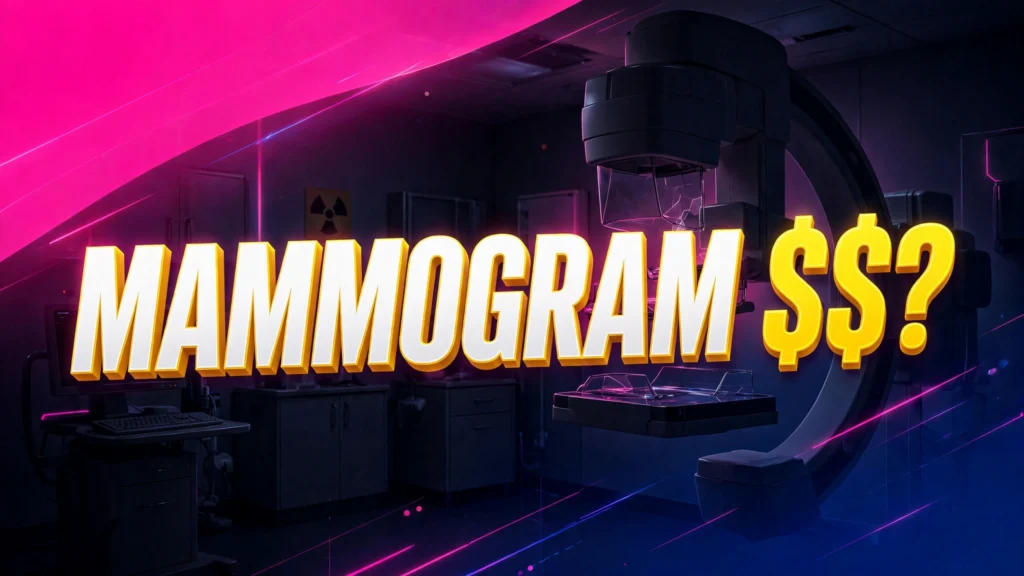
A screening mammogram without insurance typically costs $100–$250 at an independent imaging center, while a diagnostic mammogram — the follow-up workup after an abnormal screening or for symptoms — typically runs $250–$500+. The single most important thing to know: screening and diagnostic mammograms are billed completely differently, and the free-coverage rules that apply to one do not automatically apply to the other.
Mammogram Cost by Type (Self-Pay, Without Insurance)
| Mammogram type | Typical self-pay range |
|---|---|
| 2D screening mammogram | $100–$200 |
| 3D screening mammogram (tomosynthesis) | $150–$300 |
| Diagnostic mammogram | $250–$500+ |
| Diagnostic mammogram + targeted ultrasound | $400–$800+ |
3D tomosynthesis adds roughly $50–$100 to a screening mammogram and detects more cancers with fewer false alarms — worth the premium if you are paying out of pocket and have dense breast tissue. Hospital outpatient departments charge at the top of every range; independent imaging centers at the bottom.
Screening vs. Diagnostic: Why the Distinction Is Worth Hundreds
A screening mammogram is the routine annual check for someone with no symptoms — two images per breast, quick, standardized. A diagnostic mammogram is the follow-up: more images, magnification views, often paired with an ultrasound, ordered because of a lump, pain, or an abnormal screening result. The diagnostic workup takes longer, uses more technologist and radiologist time, and costs roughly double.
Here is the money trap: if your screening finds something and you are called back, the follow-up is billed as diagnostic — and the free preventive coverage described below generally does not extend to it. Ask the facility, in advance, what a callback workup would cost self-pay so there are no surprises.
What Insurance Typically Covers (For Readers Who Have It)
Under the Affordable Care Act, most insurance plans must cover screening mammograms with zero cost-sharing — no copay, no deductible — for women starting at age 40, generally every 1–2 years. (The current federal guidance recommends screening every two years from 40 to 74.) But note the limits:
- Diagnostic mammograms are not free. Once the visit is coded diagnostic, normal cost-sharing applies — deductible, then coinsurance or copay. A growing number of states have passed laws eliminating cost-sharing for diagnostic follow-ups, so check your state’s rules.
- Out-of-network facilities can bill you even for screening — stay in-network.
- 3D tomosynthesis is covered as screening by most plans now, but a few still treat the 3D upgrade as an extra charge. Confirm before the appointment.
Free and Low-Cost Mammograms Without Insurance
Do not skip screening over cost — several programs exist specifically for uninsured women:
- CDC’s National Breast and Cervical Cancer Early Detection Program (NBCCEDP). Provides free or low-cost mammograms to low-income, uninsured, and underinsured women. Find your state’s program through the CDC website.
- State and local health departments. Many run their own screening programs or partner with imaging centers for free screening days.
- Nonprofits. Organizations like the National Breast Cancer Foundation fund free mammograms through partner facilities nationwide.
- Hospital charity care. Nonprofit hospitals must offer financial assistance — a screening mammogram is exactly the kind of preventive service these programs cover.
- Planned Parenthood and FQHCs. Federally Qualified Health Centers provide breast cancer screening on a sliding fee scale; many can refer you to low-cost imaging.
How to Cut the Bill: Self-Pay Shopping
- Choose an independent imaging center. Hospital outpatient mammography routinely costs 2–3× what a freestanding center charges for the same images.
- Ask for the cash price in writing. Self-pay screening mammograms are frequently discounted 20–40% off list when you pay at time of service.
- Ask whether 3D is worth it for you. If you have dense breasts, the ~$50–$100 upgrade reduces false alarms (and the cost of unnecessary callbacks). If not, 2D is fine and cheaper.
- Bundle the callback quote. Ask what a diagnostic follow-up would cost at the same facility before your screening — you want that number while you are calm, not after an abnormal result.
- Use cash-price marketplaces. Services like MDsave sell bundled, upfront-priced mammograms at local facilities with no surprise bills.
- Time it with open enrollment. If you are uninsured and eligible for marketplace coverage, a plan with free preventive screening can pay for itself on this one service.
How Often Do You Actually Need One?
Guidelines converge around this: start at 40, screen every 1–2 years through at least 74, and continue as long as you are in good health. Women at higher risk — family history, BRCA mutations, chest radiation before 30 — typically start earlier and screen annually, sometimes alternating mammogram with breast MRI. Your doctor’s recommendation beats any guideline summary; the cost advice here applies the same either way.
Dense Breasts? The Supplemental Screening Cost Question
Roughly half of women have dense breast tissue, which both raises cancer risk slightly and makes mammograms harder to read. If your mammogram report says “dense breasts,” your doctor may recommend supplemental screening:
- Breast ultrasound: typically $150–$350 self-pay. Good at finding cancers mammograms miss in dense tissue, but triggers more false alarms.
- Breast MRI: typically $1,000–$3,000+ self-pay — usually reserved for high-risk women, not routine dense-breast follow-up.
- Contrast-enhanced mammography: an emerging middle option; pricing varies widely by facility.
Money-wise, the key point: supplemental screening after a normal mammogram is billed as diagnostic, so it is rarely free even with insurance. If your report notes dense breasts, ask your doctor whether supplemental screening is actually recommended for your risk level — for average-risk women, the answer is often no, and skipping an unneeded $300 ultrasound is a legitimate saving.
Frequently Asked Questions
Why was my “free” mammogram billed?
The most common reason: the visit was coded as diagnostic rather than screening — because of symptoms, a prior abnormal result, or a same-day ultrasound. Call the billing department and the ordering doctor’s office; coding errors happen, and a re-code to screening can zero the bill.
Can I get a mammogram without a doctor’s order?
In most states, yes for screening — many imaging centers accept self-referred patients for routine screening mammograms. Diagnostic mammograms still require a provider’s order.
Is a 3D mammogram worth the extra cost?
For dense breast tissue, yes — it finds more cancers and triggers fewer callbacks, and a callback workup costs far more than the 3D upgrade. For non-dense breasts, 2D screening is well-supported and cheaper.
What if I can’t afford the diagnostic follow-up?
Do not skip it. Call the imaging center’s financial counselor before the appointment — ask about self-pay discounts, charity care applications, and NBCCEDP eligibility. An abnormal screening that never gets worked up is the worst outcome of all.
Do mobile mammogram vans cost less?
Mobile mammography units — often run by hospitals, nonprofits, or health departments — typically charge the same as a freestanding center for the images, but they frequently partner with free-screening programs and show up in underserved areas. If a mobile unit visits your area through a health department or charity event, the screening is often free regardless of insurance status. Check your local health department’s event calendar.
The Bottom Line
A screening mammogram without insurance is a $100–$250 service at an independent center — and it is free through federal, state, and nonprofit programs for women who qualify. The expensive surprise is the diagnostic callback, so get that price in writing before your screening, not after. Shop the facility, ask for the cash price, and never let cost be the reason you skip the screen.