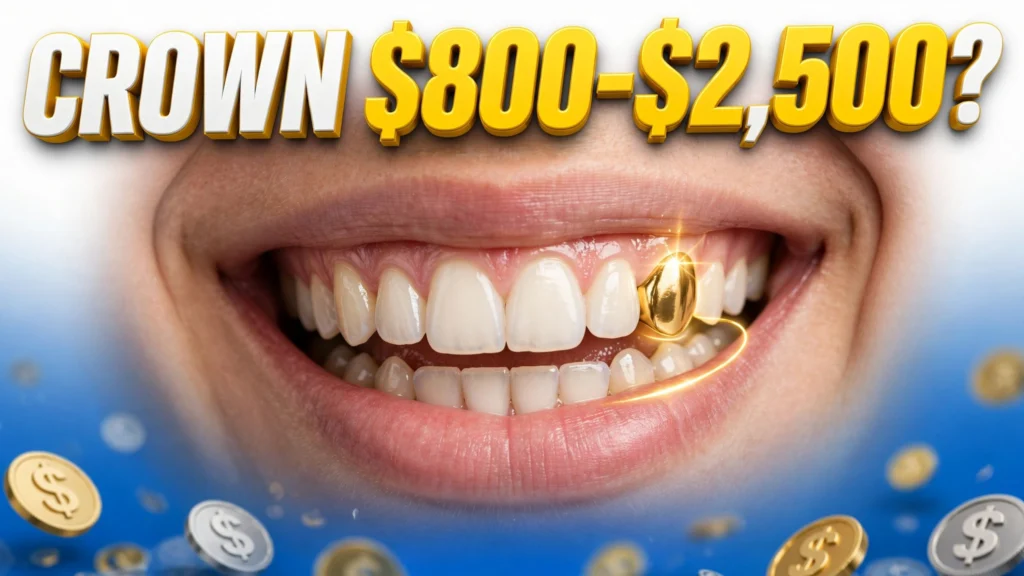
The Short Answer: $800 to $2,500 Per Tooth
A dental crown without insurance typically costs $800 to $2,500 per tooth, depending on the material. Porcelain-fused-to-metal (PFM) is usually cheapest; zirconia and all-ceramic sit at the top for visible teeth. But the crown itself is only part of the bill — X-rays, tooth buildup, and a root canal (if needed) are billed separately and can add hundreds to over a thousand dollars. Get the full treatment plan in writing before you agree to anything.
Dental Crown Cost by Material (Self-Pay, Per Tooth)
| Material | Cost without insurance | Best for | Typical lifespan |
|---|---|---|---|
| PFM (porcelain-fused-to-metal) | $800–$2,000 | Front & back teeth; best value tooth-colored option | 15–20 years |
| All-porcelain / all-ceramic | $1,000–$2,500 | Front teeth; best color match | 10–15 years |
| Zirconia | $1,000–$2,500 | Front & back; strongest all-around | 15–25+ years |
| E-max (lithium disilicate) | $1,200–$2,500 | Visible front teeth; premium esthetics | 10–15 years |
| Gold / metal alloy | $900–$2,500 | Molars, heavy grinders; longest-lasting | 20–30+ years |
| Composite resin | $400–$800 | Temporary / budget option | 3–5 years |
Material choice is a trade-off between looks, durability, and price. Gold lasts longest but shows metal. Zirconia is the current all-rounder. For a back molar nobody sees, PFM or gold usually wins on value.
The Hidden Add-Ons: What Else Gets Billed
The crown fee is only the restoration. A typical treatment plan also includes:
- X-rays: $50–$200.
- Core buildup (rebuilding the tooth so the crown has something to grip): $100–$500.
- Post and core (if the tooth is heavily damaged): $250–$650.
- Root canal (if the tooth’s nerve is infected or damaged): $700–$2,100.
- Temporary crown: often included, sometimes $200–$500.
A “cheap crown” quote that excludes the buildup and root canal is not a cheap crown. Ask for the itemized total treatment plan — every line — before scheduling.
The Insurance Math: Why One Crown Can Eat Your Whole Plan
Most dental insurance covers crowns at roughly 50% under “major restorative” benefits — but that 50% applies to the insurer’s allowed amount, not the dentist’s full fee, and it is capped by your plan’s annual maximum (commonly $1,000–$2,000). One crown can consume most or all of a year’s maximum. Add a waiting period (many plans impose 6–12 months before major work is covered) and a deductible, and the real out-of-pocket for an insured patient often lands at $500–$900 per crown — with the rest of the year’s dental work uncovered.
Before scheduling, confirm three numbers with your insurer: your remaining annual maximum, your deductible status, and whether any waiting period applies.
Cheaper Paths to the Same Crown
- Dental schools. Accredited dental schools offer crowns at significantly lower prices — often in the $400–$800 range — performed by supervised students. The trade-off is time: appointments are longer and scheduling is slower.
- In-office membership plans. Many practices sell annual memberships ($250–$400/year) that include exams, cleanings, X-rays, and 10–25% off major work like crowns. For someone without insurance who needs a crown, the membership often pays for itself on the first procedure.
- Same-day CEREC crowns. Milled in-office in a single visit ($1,000–$1,500 typical). You save a second appointment and a temporary crown — worth asking about if your dentist offers it.
- Payment plans and CareCredit. Many practices offer in-house payment plans or 0% APR financing for 6–24 months through CareCredit. Read the deferred-interest terms carefully — miss a payment and the retroactive interest is brutal.
- Shop the treatment plan. Crown fees vary widely between practices. Get the itemized plan, then get a second quote from another dentist for the same material and procedure codes.
- Don’t delay until it becomes an extraction + implant. A cracked, uncrowned tooth that fractures can turn a $1,500 crown into a $4,000+ implant. Delay is the most expensive option.
Which Crown Should You Pick?
- Front tooth, appearance matters: all-ceramic, E-max, or zirconia.
- Back molar, grind your teeth: gold or zirconia — durability beats looks where nobody sees it.
- Tight budget, back tooth: PFM is the value pick.
- Temporary fix while you save: composite resin, with a plan to replace it.
Same-Day vs. Lab Crowns: Does Speed Cost More?
Traditional crowns take two visits: the dentist prepares the tooth, takes an impression, fits a temporary crown, and the permanent crown comes back from a lab in 1–3 weeks. Same-day CEREC crowns are milled in-office from a digital scan in a single visit, typically $1,000–$1,500. You save a second appointment, a second round of anesthesia, and weeks with a temporary crown. The trade-off: not every dentist offers CEREC, and lab crowns still have an edge for complex front-tooth color matching. If your dentist offers both, ask which material each uses — the comparison only makes sense for the same material.
What Happens If You Skip the Crown?
Delay is the most expensive option. A cracked or weakened tooth left uncrowned tends to fracture further. The escalation path is brutal on the wallet:
- Crown now: $800–$2,500, tooth saved.
- Crown + root canal later: add $700–$2,100 for the root canal.
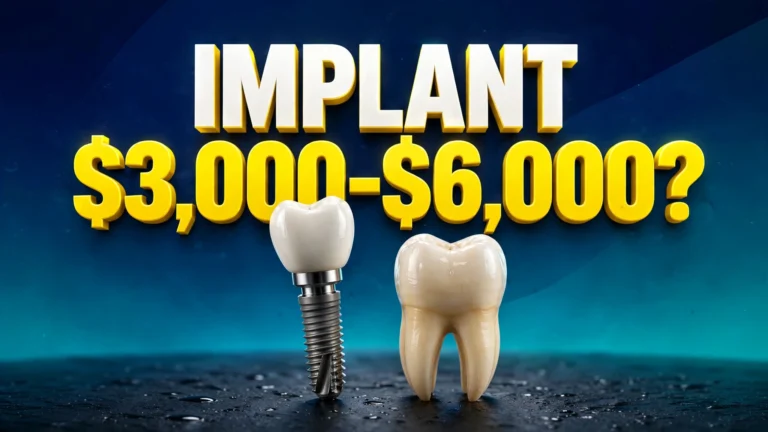
- Tooth fractures beyond repair: extraction ($150–$500) plus a dental implant ($3,000–$6,000+) or bridge ($2,000–$5,000) to replace it.
If money is the reason for delay, the cheaper paths above (dental school, membership plan, payment plan) are far better than waiting. A tooth that could have been crowned is a tooth worth saving.
Frequently Asked Questions
How long does a crown last?
Gold and zirconia: 20–30+ years with good care. PFM: 15–20 years. All-ceramic: 10–15 years. Grinding your teeth (bruxism) shortens every material’s life — a night guard ($300–$800 custom, or $20–$50 boil-and-bite) protects the investment.
Does a crown hurt?
The procedure is done under local anesthesia, so you should not feel pain during preparation. Some sensitivity for a few days afterward is normal. Persistent pain or a bite that feels “high” means the crown needs adjustment — call the dentist rather than waiting it out.
Can I get a crown on the same day as a root canal?
Sometimes. If the root canal is completed and the tooth is stable, a same-day CEREC crown is possible. Lab crowns always need a second visit. Your dentist will advise based on the tooth’s condition.
Is a crown covered if it’s “cosmetic”?
Dental insurance typically covers crowns deemed medically necessary (decay, fracture, post-root-canal). A purely cosmetic crown on a healthy tooth is usually not covered. The dentist’s treatment notes determine the classification — ask how yours is coded.
Crown vs. Filling vs. Veneer: When Is a Crown Actually Needed?
Not every damaged tooth needs a crown. Understanding the alternatives keeps you from overpaying:
- Filling ($150–$400): right for small-to-moderate cavities where most of the tooth structure is intact. If your dentist recommends a crown for a small cavity, ask why a filling would not work — the answer should be specific (e.g., the cavity undermines a cusp).
- Inlay / onlay ($650–$1,200): a middle option for larger decay that does not require full coverage. It preserves more of your natural tooth than a crown.
- Veneer ($900–$2,500 per tooth): a thin shell bonded to the front of a tooth, for cosmetic issues only. It does not strengthen a damaged tooth the way a crown does — do not let a cosmetic veneer substitute for a structural crown on a compromised tooth.
- Crown ($800–$2,500): needed when the tooth is cracked, has had a root canal, has a large filling that leaves little structure, or is severely worn. The crown caps the whole tooth and restores its strength.
If you are unsure whether a crown is necessary, a second opinion from another dentist — with the same X-rays — is cheap insurance against an $1,500 procedure you may not need.
The Bottom Line
A dental crown without insurance is an $800–$2,500 line item inside a larger treatment plan. The material decides the crown price, but the add-ons decide the total. Get the itemized plan, check the insurance math (annual max, waiting period, 50% major coverage), and price the alternatives — dental school, membership plans, and a second quote — before you commit. The tooth will not wait; the bill, with a little homework, gets smaller.