Diwali is the festival of lights, and it is one of the most widely celebrated festivals in the world. Families clean and decorate their homes, light small oil lamps called diyas, share sweets, and gather for prayers. If you are planning travel, time off work, or a family gathering, the first question is simple: what date does it fall on in 2027?
Quick Answer: When Is Diwali 2027?
Diwali 2027 falls on Friday, 29 October 2027. That is the main day, Lakshmi Puja, when families light diyas and pray to Lakshmi, the goddess of wealth and good fortune. The full five-day festival runs from Wednesday, 27 October to Sunday, 31 October 2027, ending with Bhai Dooj.
The Five Days of Diwali 2027
Diwali is a five-day festival, and each day has its own name and customs.
Day 1: Dhanteras, Wednesday 27 October 2027
Dhanteras opens the festival. Its name joins Dhan, meaning wealth, with Teras, the thirteenth day of the lunar month. Families clean their homes, buy gold, silver, or new utensils, and pray for health and prosperity.
Day 2: Naraka Chaturdashi, Thursday 28 October 2027
The second day is Naraka Chaturdashi, often called Choti Diwali, or small Diwali. It marks the victory of Lord Krishna over the demon Narakasura, a story of good defeating evil. Families light diyas this evening and prepare sweets for the main day. In Tamil Nadu, Deepavali is observed on this day, Thursday 28 October 2027, a day earlier than the main date in most of India.
Day 3: Lakshmi Puja, Friday 29 October 2027
Friday 29 October 2027 is the main day. Families perform Lakshmi Puja in the evening, praying to Lakshmi, the goddess of wealth, and Ganesha, the remover of obstacles. Diyas are lit in every room and around doorways to welcome prosperity and drive away darkness. Families exchange gifts and sweets, many people wear new clothes, and fireworks light up the night sky. The Government of India lists Friday 29 October 2027 as the gazetted Diwali holiday for central government offices in Delhi (Office Memorandum F.No. 12/2/2023-JCA, 16 July 2026).
Day 4: Govardhan Puja, Saturday 30 October 2027
The fourth day is Govardhan Puja, also known as Annakut. It honours the story of Lord Krishna lifting Govardhan Hill to protect villagers from heavy rain. In many temples and homes, a large spread of food is offered to Krishna and then shared as a meal, in thanks for the harvest.
Day 5: Bhai Dooj, Sunday 31 October 2027
The festival closes with Bhai Dooj on Sunday 31 October 2027. This day celebrates the bond between brothers and sisters. Sisters pray for the long life and well-being of their brothers, apply a tilak on their foreheads, and brothers give gifts in return.
Why Diwali Moves Every Year
Diwali follows the Hindu lunar calendar, so it does not fall on the same Gregorian date each year. The main day, Lakshmi Puja, falls on Amavasya, the new moon day of the month of Kartik, when the moon is not visible. That is why the lights matter so much: the festival fills the darkest night of the month with light. In 2026, Diwali falls on Sunday 8 November, and in 2027 it comes ten days earlier, on Friday 29 October.
Traditions of Diwali
The traditions of Diwali are shared across regions, even though the details vary from family to family.
Lighting diyas and lamps
Lighting diyas is the heart of the festival. Small clay lamps filled with oil are placed around the home, on balconies, and along paths. The light stands for knowledge over ignorance and hope over despair.
Rangoli
Rangoli is a decorative pattern made on the floor near the entrance of a home, using coloured powder, flower petals, or rice. They are meant to welcome guests and bring good luck.
Fireworks
Fireworks are a loud and joyful part of Diwali in India, where whole neighbourhoods light up after dark. In the United States, many cities and neighbourhoods restrict them, so families often attend an organised public display instead. Check local rules before buying or lighting any fireworks.
Sweets and food
Food is central to Diwali. Families prepare or buy sweets such as ladoo, barfi, and jalebi, and share them with neighbours, friends, and co-workers. Giving a box of sweets is one of the most common Diwali gifts.
How Diwali Is Celebrated in the US
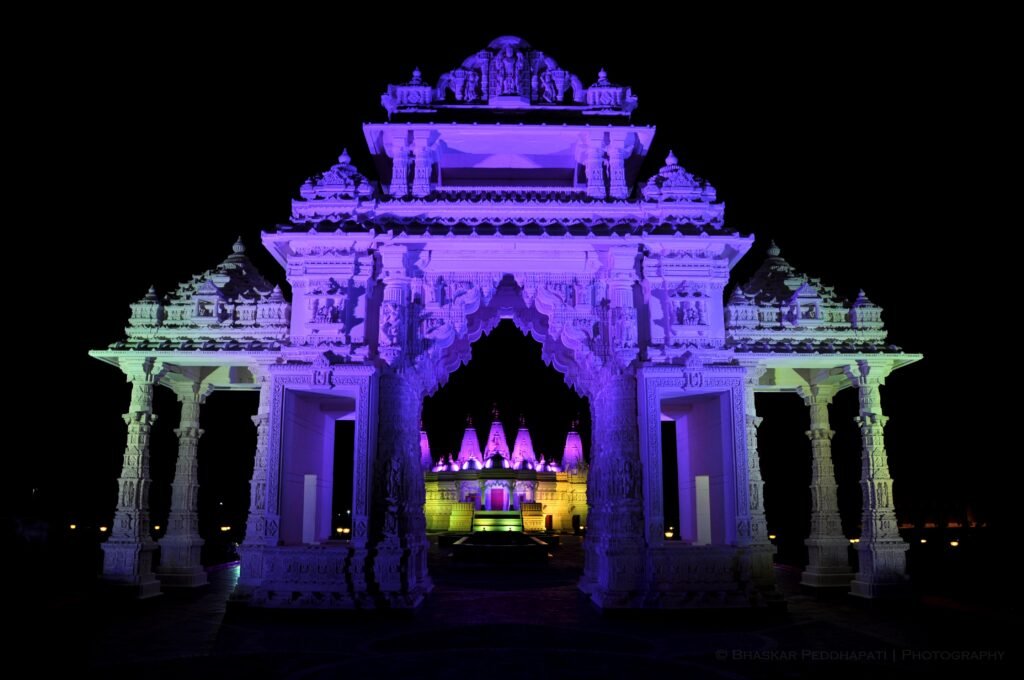
Diwali is widely celebrated in the United States by Indian American families and by the wider South Asian community. Hindu temples across the country hold Lakshmi Puja services, cultural programmes, and community meals during the festival week. Families who cannot attend a temple service often hold a small puja at home, light diyas in the evening, and invite friends over for sweets.
Many cities host public Diwali festivals with dance performances, music, food stalls, and fireworks displays, often organised by Indian cultural associations or city councils.
Diwali is not a federal public holiday in the United States, so schools and offices stay open on Friday 29 October 2027. Families often celebrate in the evening after work and school, and save the larger gathering for the weekend. Community events are often scheduled on the nearest Saturday or Sunday so more people can attend, which means a local Diwali festival may fall on 30 or 31 October rather than on the main day itself.
Example: An Illustrative Family Plan and Budget for Diwali in the US
The numbers below are an illustrative example only, not a survey or a price guide. They show how one family of four might plan and budget a simple Diwali celebration at home in the United States.
Example: a family of four in a US suburb plans a home celebration for Friday 29 October 2027, with a total budget of 350 dollars. They spend 45 dollars on diyas, string lights, and candles, 60 dollars on rangoli powder, flowers, and decorations, 120 dollars on sweets and food for the family meal, 100 dollars on gifts for children and relatives, and 25 dollars on a donation at a temple community event. That adds up to 350 dollars: 45 plus 60 plus 120 plus 100 plus 25 equals 350.
The plan runs over three evenings. On Thursday 28 October, they clean the house, put up lights, and make the rangoli. On Friday 29 October, they hold a short Lakshmi Puja at home after work, light the diyas, share sweets with neighbours, and eat together. On Sunday 31 October, they visit relatives for Bhai Dooj. A simple budget tool can help track a plan like this, such as the budget calculator.
Common Mistakes When Planning for Diwali 2027
The first mistake is confusing the main day with the first day. Dhanteras on Wednesday 27 October opens the festival, but the main celebration, Lakshmi Puja, is on Friday 29 October. Check the date against the five-day list above before booking travel or a venue.
The second is forgetting the Tamil Nadu difference. If family members are in Tamil Nadu, their main Deepavali observance falls on Thursday 28 October 2027, a day earlier than the rest of India. A call or a gift timed for Friday may arrive a day late for them.
The third is assuming Diwali is a US public holiday. It is not a federal holiday, so time off work or school needs to be requested in advance.
The fourth is leaving fireworks and community tickets to the last minute. Public Diwali events in US cities can sell out, and firework rules vary by city and county. Check the rules and book early rather than assuming everything will be available on the day.
What to Know Before You Celebrate
Diwali brings families together, gives children a vivid link to their culture, and opens a door for neighbours and colleagues to learn about the festival.
There are watch-outs too. Diyas and candles are open flames, so they need a safe surface, away from curtains and decorations, and should never be left burning in an empty room. Fireworks need care and local permission, and pets and small children can be frightened by loud displays.
Frequently Asked Questions
When is Diwali 2027?
Diwali 2027 is on Friday, 29 October 2027. That is the main day, Lakshmi Puja. The five-day festival runs from Wednesday, 27 October to Sunday, 31 October 2027.
What are the five days of Diwali 2027?
The five days are Dhanteras on Wednesday 27 October, Naraka Chaturdashi on Thursday 28 October, Lakshmi Puja on Friday 29 October, Govardhan Puja on Saturday 30 October, and Bhai Dooj on Sunday 31 October 2027.
Is Diwali a public holiday in the US in 2027?
No. Diwali is not a federal public holiday in the United States, so schools and offices stay open on Friday 29 October 2027. Some cities and schools mark the day with events, and some employers allow time off on request, but it is not a nationwide day off.
Why is Deepavali a day earlier in Tamil Nadu?
In Tamil Nadu, Deepavali is observed mainly on Naraka Chaturdashi, which falls on Thursday 28 October 2027. The main Lakshmi Puja date used in most of India is Friday 29 October 2027. Regional calendars follow different customs, so the main day can differ by a day.
How can I count down to Diwali 2027?
Pick the date you are counting to, usually the main day, Friday 29 October 2027, and count the days from today. A countdown tool makes this simple: the same idea works for other autumn holidays, such as the Thanksgiving countdown used to track the days until Thanksgiving.
For another example of a US holiday date guide, see when Thanksgiving falls in 2026, and for a look at how a cultural observance is marked across the country, see the Native American Heritage Month guide.
Final Thoughts
Diwali 2027 falls on Friday, 29 October 2027, with the full festival running from Wednesday 27 October to Sunday 31 October. Mark the main day for Lakshmi Puja, remember that Tamil Nadu observes Deepavali a day earlier, and use the Friday-to-Sunday stretch to celebrate with family, whether at home, at a temple, or at a community event. For the exact puja timings in your city, confirm them with Drik Panchang at Drik Panchang Lakshmi Puja 2027 or with timeanddate at timeanddate Diwali page.