Every June, the same question pops up: is Juneteenth a federal holiday? The answer decides whether the post office is open, whether the bank can process a payment, and whether a federal office will answer the phone. It also matters for a deeper reason, because Juneteenth marks a moment that arrived more than two years after freedom had already been promised.
Quick answer: is Juneteenth a federal holiday?
Yes, Juneteenth is a federal holiday in the United States. Its official name is Juneteenth National Independence Day, observed every year on June 19. President Joe Biden signed the Juneteenth National Independence Day Act into law on June 17, 2021, adding June 19 to the federal holiday list in 5 U.S.C. 6103. In 2026, June 19 falls on a Friday.
What Juneteenth marks
Juneteenth marks June 19, 1865, the day Union Major General Gordon Granger arrived in Galveston, Texas, and issued General Order No. 3, announcing that enslaved people in Texas were free.
The announcement came more than two years after President Abraham Lincoln signed the Emancipation Proclamation, which took effect on January 1, 1863. The Proclamation had declared enslaved people in the Confederate states free, but in Texas, far from the fighting and with few Union troops present, the news had not been enforced. For the enslaved people of Texas, freedom became real on the day Granger’s order was read aloud, not on the day the Proclamation was signed.
That delay is the heart of the day: Juneteenth celebrates the moment the promise in that document finally reached the people it was meant for. The first celebrations followed in Texas in 1866, and the observance spread from there.
How Juneteenth became a federal holiday
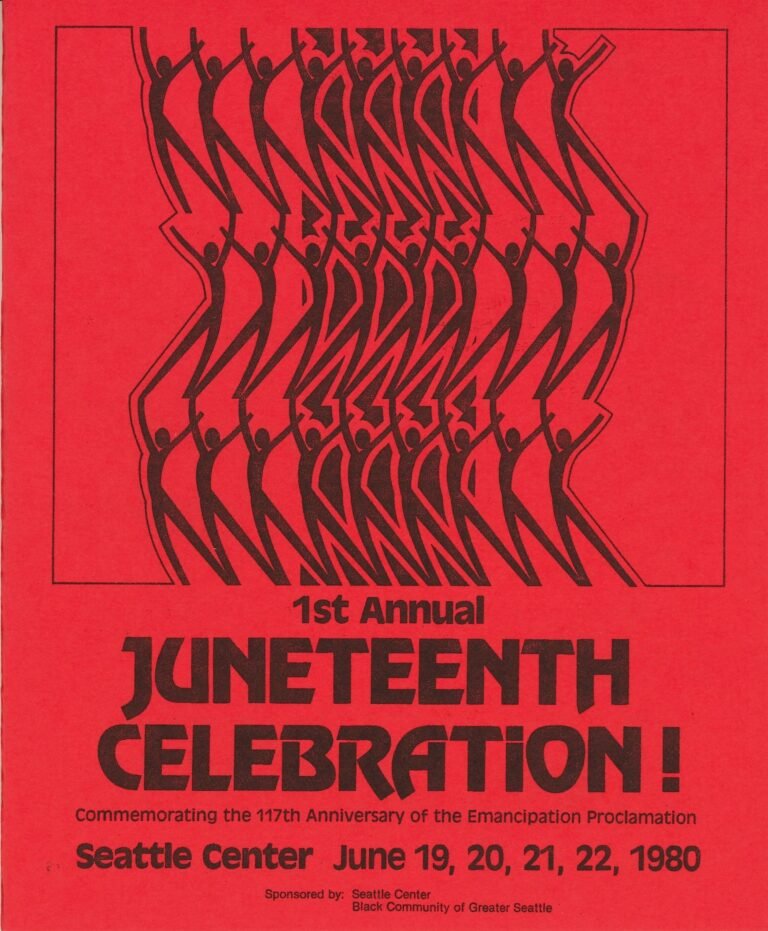
Juneteenth was celebrated as a community and state observance for more than a century before it became a federal holiday. Texas recognized it as a state holiday in 1980, the first state to do so, and other states followed over the years.
The federal change came in June 2021. The Juneteenth National Independence Day Act, designated S. 475, passed the Senate on June 15, 2021, and the House on June 16, 2021. President Biden signed it into law on June 17, 2021, amending section 6103(a) of title 5 of the United States Code to add June 19 to the list of official holidays for federal employees. The Congressional Research Service’s report on the new federal holiday sets out the history and the law in full.
It was the first new federal holiday since the Birthday of Martin Luther King, Jr. was added in 1983. The Office of Personnel Management issued guidance to federal agencies the same day, and its list of federal holidays now includes Juneteenth National Independence Day on June 19. The federal law covers federal employees and the District of Columbia; states decide their own legal holidays, so whether it is a paid holiday for state workers depends on the state.
When Juneteenth falls, and what happens on weekends
Juneteenth is a fixed-date holiday, which means it always falls on June 19, but the day of the week changes each year. In 2026, June 19 is a Friday, so federal offices, banks, and the post office observe the holiday on that Friday, with no shift needed.
When June 19 falls on a weekend, the federal observance shifts under the in-lieu-of rule for fixed-date federal holidays. If June 19 falls on a Saturday, federal employees on a standard schedule observe it on the preceding Friday. If it falls on a Sunday, they observe it on the following Monday. In 2021, June 19 fell on a Saturday, so most federal employees had Friday, June 18 off instead.
That shift matters for planning: in a weekend year, a payment, delivery, or appointment that depends on a federal office moves to the observed day. In 2026 there is no such wrinkle, because the holiday lands on a Friday.
What closes and what stays open
On a federal holiday, the closures follow a simple pattern: anything that runs on the federal calendar closes, and anything that runs on its own calendar makes its own decision.
Federal government offices close. Non-essential federal agencies shut down, federal employees receive a paid day off, and federal courts close. Emergency services keep running with limited staffing, but routine business waits until the next business day.
The post office closes, and there is no regular mail delivery. Post office retail counters close and letter carriers do not run their routes, so mail that would have arrived on June 19 arrives on the next delivery day instead. Priority Mail Express is the exception: it is delivered every day of the year, including on federal holidays, in many markets.
Most banks close, because the Federal Reserve observes Juneteenth and the payment systems banks rely on pause with it. Branches close, and wire transfers and other transactions that need Federal Reserve settlement wait until the next business day. Online banking and ATMs keep working, but a payment that needs to clear through the Federal Reserve will not move until the system reopens.
Stock markets close. The New York Stock Exchange treats Juneteenth as a market holiday, so there is no trading on June 19.
What stays open is most of everyday life. Retail stores, restaurants, grocery stores, and most private businesses stay open, because no federal law requires a private company to close on a federal holiday. Private delivery companies such as FedEx and UPS generally run on Juneteenth, and schools are mostly on summer break by mid-June. State and local offices vary, so check your state and city before assuming a local office is closed.
Worked example: what Friday, June 19, 2026 looks like
Take a typical Friday and run it through the holiday rules for 2026. June 19, 2026 is a Friday, so the holiday is observed on that day itself, with no shift.
In the morning, the post office is closed and no regular mail arrives. A letter posted on Thursday, June 18 would normally arrive on Friday, but with the holiday it arrives on Monday, June 22. A Priority Mail Express parcel is the exception and can still be delivered on the Friday.
At the bank, the branch is closed, and a wire transfer sent on Thursday would not settle on Friday, because the Federal Reserve is closed. The money would move on Monday, June 22. An ATM withdrawal still works, but anything that needs the Federal Reserve to settle waits.
At work, a federal employee has a paid day off. A private-sector worker may or may not, depending on their employer. There is no federal rule that gives private employees the day off, so a shop assistant, a restaurant worker, or an office worker at a private company should check their employer’s holiday calendar rather than assuming the day is free.
By the afternoon, the rest of the day looks like a normal Friday. Shops are open, restaurants are serving, and many cities hold parades, cookouts, concerts, and readings of General Order No. 3.
The gap from Friday to Monday is the practical number to remember. A Friday holiday means three days without regular mail or bank settlement, from Friday, June 19 through Sunday, June 21, with normal service resuming on Monday, June 22.
How Juneteenth is observed
Juneteenth is observed in many ways, and there is no single official ceremony. Community celebrations often include parades, barbecues, picnics, concerts, and church services, and some events feature readings of General Order No. 3 or the Emancipation Proclamation.
Museums and historical sites often hold special programs, and for many families the day is also a reunion, with relatives traveling to gather for a cookout or a community event. Our guide to Native American Heritage Month covers another observance with a similar shape: a period of recognition with its own history and its own way of being marked across the country.
Common mistakes and misconceptions
The most common mistake is thinking Juneteenth is the day slavery ended everywhere in the United States. It is not. It marks the day the news of freedom reached Galveston, Texas. Slavery was formally ended across the country later, with the ratification of the Thirteenth Amendment in December 1865. Juneteenth is the anniversary of the announcement in Texas, not the anniversary of abolition itself.
The third mistake is confusing the calendar date with the observed date in weekend years. When June 19 falls on a Saturday or Sunday, the federal observance moves to Friday or Monday. In 2026 that does not apply, because June 19 is a Friday, but in other years it changes when offices close and when mail stops.
The fourth mistake is treating Juneteenth as a new invention. The federal holiday is new, from 2021, but the observance is more than 150 years old, going back to the first celebrations in Texas in 1866.
Frequently asked questions
Is Juneteenth a federal holiday?
Yes. Juneteenth National Independence Day is a federal holiday, observed every year on June 19, since President Biden signed the Juneteenth National Independence Day Act into law on June 17, 2021.
When is Juneteenth in 2026?
Juneteenth in 2026 is Friday, June 19, 2026. Because it falls on a Friday, it is observed on that day, with no shift to another weekday.
What happened on June 19, 1865?
On June 19, 1865, Union Major General Gordon Granger arrived in Galveston, Texas, and issued General Order No. 3, announcing that enslaved people in Texas were free, more than two years after the Emancipation Proclamation took effect on January 1, 1863.
Is the post office open on Juneteenth?
No. Post offices close and there is no regular mail delivery. Mail resumes on the next business day, except for Priority Mail Express, which is delivered every day of the year in many markets.
Do private businesses have to close on Juneteenth?
No. No federal law requires a private company to close on a federal holiday, and most shops, restaurants, and private businesses stay open. Whether an employee gets the day off depends on their employer. If you are planning around the holiday calendar, our guide to when Thanksgiving falls in 2026 covers the fourth Thursday in November, and our guide to which states do not observe daylight saving time shows another case where a national rule and state choices do not line up.
Juneteenth is a short answer with a long story behind it. Yes, it is a federal holiday, and in 2026 it falls on Friday, June 19. The offices close, the mail waits until Monday, and the celebrations go ahead in the afternoon, all for a date that gives the day its meaning: June 19, 1865, in Galveston, when freedom finally arrived in person, more than two years after it had been promised on paper.