Every June 19, flags go up, parades step off, and many workplaces close. Yet the name on the calendar raises a question that a date alone cannot answer: what exactly happened on that day, and why did it take so long to happen? Juneteenth marks the day enslaved people in Texas learned they were free, more than two years after the law that was meant to free them had already been signed.
That delay is the heart of the holiday. Juneteenth does not celebrate the signing of a document in Washington. It celebrates the moment the promise in that document finally reached the people it concerned, in one of the last places it had yet to reach.
Quick Answer
Juneteenth celebrates June 19, 1865, when Union Maj. Gen. Gordon Granger arrived in Galveston, Texas, and issued General Order No. 3, announcing that enslaved people in Texas were free. It came more than two years after the Emancipation Proclamation of January 1, 1863. The name blends June and nineteenth, and the day became a federal holiday in 2021.
What Happened on June 19, 1865
On June 19, 1865, Union Maj. Gen. Gordon Granger arrived in Galveston, Texas, with Union troops and issued General Order No. 3. The order stated that the people of Texas were informed that, in accordance with a proclamation from the executive of the United States, all slaves were free. It also stated that former masters and former slaves now stood on an absolute equality of personal rights and rights of property, and that the relationship between them had become that between employer and hired labor.
The order was not a new law. It enforced in Texas a freedom that had already been declared. Its power came from the troops who arrived with it: for the first time, the federal government had the force in Texas to make the announcement real. The National Archives preserves the original handwritten record of General Order No. 3.
The people affected were the enslaved people of Texas, whom the National Archives describes as 250,000 people who remained enslaved in the state. For them, June 19 was the day the news arrived, not the day freedom was first promised. That distinction is why the holiday is also called Freedom Day and Emancipation Day.
Why the News Took More Than Two Years
President Abraham Lincoln issued the Emancipation Proclamation on January 1, 1863. It declared enslaved people in the Confederate states free, but it could only be enforced where Union forces held ground. Texas, far from the main fighting and with few Union troops present, remained largely beyond Union control for the rest of the war. Enslavers in Texas faced little pressure to act on a proclamation they could ignore in practice.
The Civil War ended in the spring of 1865, and Union troops then moved into Texas in force. Only when Granger arrived in Galveston in June did the proclamation reach Texas with the troops needed to enforce it. The gap between January 1, 1863, and June 19, 1865, is 900 days, or two years and about five and a half months.
Even June 19, 1865, did not end slavery everywhere in the United States by law. The Emancipation Proclamation had applied to the Confederate states, and slavery remained legal in some places outside its reach. The 13th Amendment, which abolished slavery throughout the United States, was ratified on December 6, 1865, about five and a half months after Juneteenth.
A Timeline From 1863 to 2021
This timeline is a worked example of the dates and gaps behind the holiday. Each gap is simple subtraction on the years given, and each date is stated in the timeline itself.
| Date | Event | Gap from the previous date |
|---|---|---|
| January 1, 1863 | Emancipation Proclamation issued | Starting point |
| June 19, 1865 | General Order No. 3 issued in Galveston, Texas | 2 years and about 5 and a half months, or 900 days |
| December 6, 1865 | 13th Amendment ratified, abolishing slavery | About 5 and a half months |
| June 19, 1866 | First organized Juneteenth celebrations in Texas | About 6 and a half months |
| June 17, 2021 | Juneteenth National Independence Day Act signed into law | 155 years after the first celebrations in 1866 |
| June 18, 2021 | First federal observance, on a Friday | 1 day after signing |
Two gaps in the timeline carry the story. The first is the 900 days between the Emancipation Proclamation and General Order No. 3, which explains why Juneteenth exists as a separate date at all. The second is the 156 years between June 19, 1865, and June 19, 2021, found by subtracting 1865 from 2021. The first organized celebrations came one year after the event, on June 19, 1866, when freed people in Texas marked the anniversary as Jubilee Day, a name later replaced by Juneteenth.
How Juneteenth Became a Federal Holiday
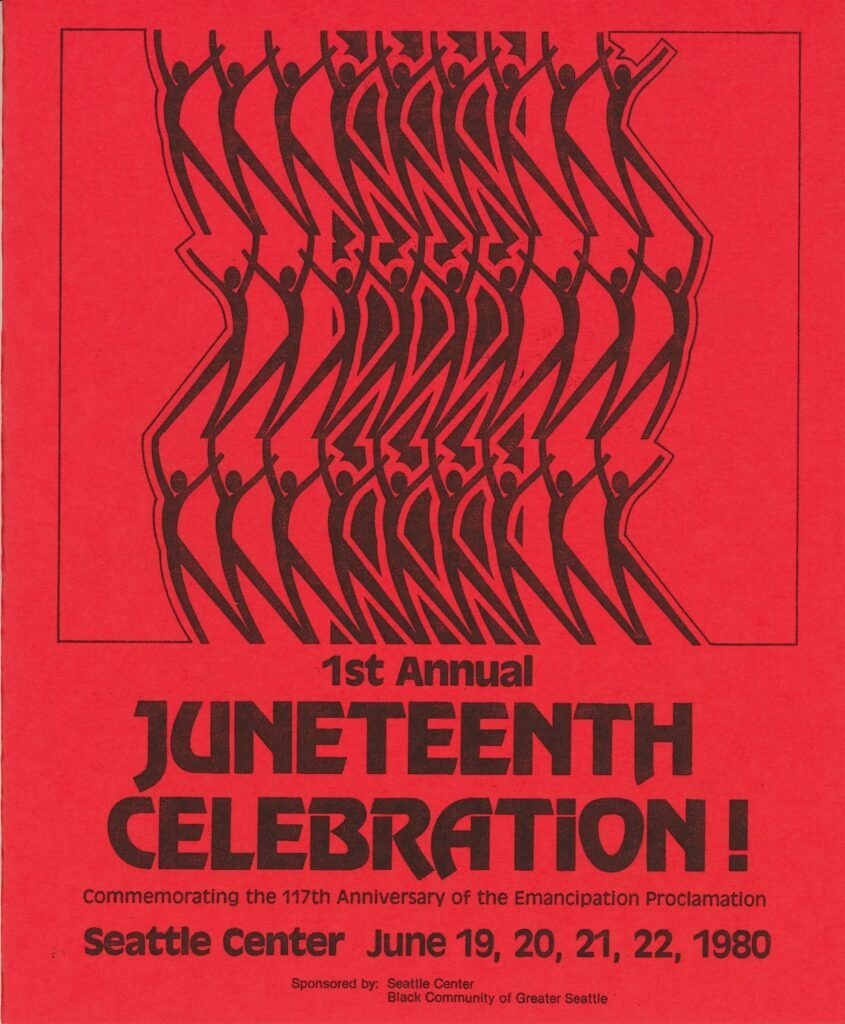
Juneteenth was celebrated in Texas and in Black communities across the country long before it became a federal holiday. The name itself blends June and nineteenth, and the day was known early on as Jubilee Day before Juneteenth became the common name.
The Juneteenth National Independence Day Act was signed into law on June 17, 2021, by President Joe Biden, making June 19 a federal holiday under the name Juneteenth National Independence Day. The law took effect at once, which created an unusual first observance. June 19, 2021, fell on a Saturday, so most federal employees observed the holiday on the preceding Friday, June 18, 2021.
As a federal holiday, June 19 is now a day when federal offices close and federal employees have the day off, with the usual Friday or Monday observance when June 19 falls on a weekend. The holiday does not change the history it marks. It gives the date national recognition, while the meaning of the day remains the event in Galveston in 1865.
What Juneteenth Means and How It Is Observed
Juneteenth carries two meanings at once, and both shape how it is observed. It is a celebration of freedom finally arriving, and it is a reminder that freedom arrived late, unevenly, and only when enforced.
Common forms of observance include community gatherings, parades, church services, educational programs, and public readings of General Order No. 3. Many observances include music, food, and time with family, alongside talks and exhibits about slavery, emancipation, and the long road to equal rights.
For readers marking the day for the first time, the most useful step is to read the short text of General Order No. 3 itself. It takes only a few minutes, and it makes the history concrete in a way that a summary cannot. The Christmas countdown and the Thanksgiving counter show how the site tracks other holidays through the year, and Juneteenth belongs on the same calendar of dates worth knowing in advance.
Common Mistakes to Avoid
- Saying Juneteenth is the day slavery ended everywhere. It is the day the news reached Texas. Slavery ended in law across the United States with the 13th Amendment on December 6, 1865.
- Saying the Emancipation Proclamation freed everyone at once. It applied to the Confederate states and depended on Union enforcement, which is why Texas waited more than two years.
- Treating the federal holiday as the start of the celebration. The first organized celebrations took place in Texas in 1866, 155 years before the federal holiday in 2021.
- Confusing the date with the observance. Juneteenth is June 19. When June 19 falls on a Saturday, federal observance moves to Friday, as it did on June 18, 2021. The date itself does not move.
- Reducing the day to a day off. The holiday marks a specific event with named people, a named order, and a named place. The history is the point of the day off.
Pros and Cons
Pros:
- A federal holiday gives a long-observed day national recognition and a place on the public calendar.
- The date teaches a clear story: a promise, a delay, and the enforcement that made the promise real.
- Public observance creates space each year for education about slavery and emancipation.
- The short text of General Order No. 3 makes the history easy to read and share.
- Local events keep the history tied to communities and places, not only to Washington.
Cons:
- A single holiday cannot carry the full history of slavery, emancipation, and what followed.
- The date is often confused with the Emancipation Proclamation or with the 13th Amendment.
- Weekend observance rules can confuse the date, as the Friday observance in 2021 showed.
- Celebration alone can hide the serious part of the story, which is how late the news arrived.
- National recognition does not settle questions about how the history should be taught.
Frequently Asked Questions
Can I celebrate Juneteenth if my family has no direct connection to it?
Yes. Juneteenth is a federal holiday and a part of American history, and its observances are public. Reading General Order No. 3 or attending a local event are open ways to mark the day.
Is Juneteenth the same as the Fourth of July?
No. The Fourth of July marks the Declaration of Independence in 1776. Juneteenth marks June 19, 1865, when enslaved people in Texas learned they were free.
Why is it called Juneteenth instead of June Nineteenth?
Juneteenth blends June and nineteenth into a single word. The name came into use as the celebration spread, replacing the earlier name Jubilee Day. Both names refer to the same date, June 19, 1865.
Do all states and workplaces close on Juneteenth?
Federal offices close on the federal holiday. State and local government offices, schools, and private workplaces follow their own calendars, so some close and some stay open.
What is the difference between Juneteenth and the Emancipation Proclamation?
The Emancipation Proclamation was the declaration, issued January 1, 1863. Juneteenth was the delivery of that declaration to Texas, on June 19, 1865, through General Order No. 3. One is the promise, the other is the day the promise arrived.
Juneteenth endures because it marks a moment when a promise became real for people who had waited for it. The proclamation was signed in 1863, the news reached Galveston in 1865, the amendment followed later that year, and the federal holiday followed 156 years later. Remembering the dates in order keeps the story straight, and reading the order itself keeps it human. For more on how other holidays are marked through the year, see the guide to the cost of Thanksgiving dinner in 2026 and the ideas for cheap group Halloween costumes for 2026.
Sources: the U.S. Census Bureau gives the history of Juneteenth, the National Archives Museum presents the Emancipation Proclamation and Juneteenth, and the National Constitution Center records the ratification of the 13th Amendment.