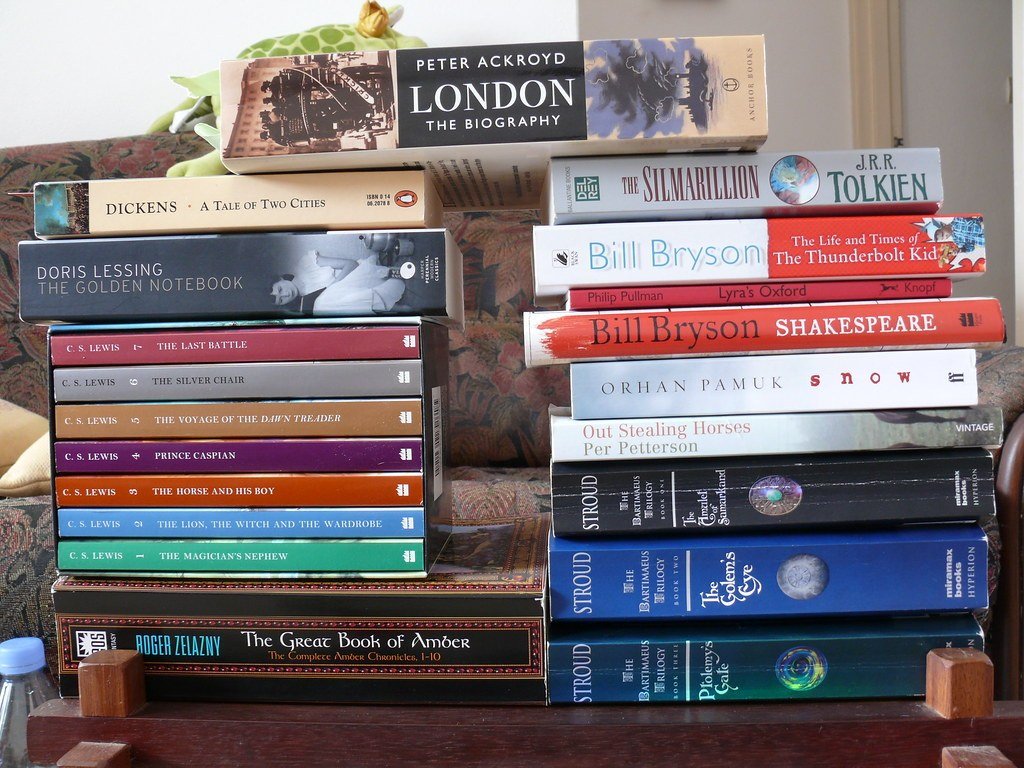
A shelf full of personal finance books can feel like a second problem on top of the money problem. One book promises a seven-step plan for getting out of debt. The next promises wealth through investing. A third says the real issue is the relationship with money itself. All three can be right, and all three can be wrong for the same reader, because the right book depends on the question the reader is trying to answer.
Choosing well matters because a finance book is not a novel. It asks for weeks of attention and, if it works, changes how money is earned, spent, saved, and invested.
Quick Answer
Choose a personal finance book by starting with one clear money goal, such as paying off debt, building a first budget, or starting to invest. Match the book to that goal and to current knowledge, check that its advice fits present circumstances, and read a sample chapter before committing.
Start With Your Goal, Not the Bestseller List
Most personal finance books fall into a small number of lanes. Debt books answer how to get out of what is owed. Budgeting books answer how to control where money goes each month. Investing books answer how to grow money over years. Mindset books answer why money decisions feel hard even when the numbers are clear.
A reader with credit card debt and a reader saving for retirement need different books, even if both sit on the same bestseller list. The first step is to write down one goal in a single sentence, such as paying off a credit card balance, building a three-month emergency fund, or opening a first investment account.
Next, name the current starting point honestly. A complete beginner needs plain language and a step-by-step plan. A reader who already budgets and saves needs detail on investing, taxes, or retirement accounts. A book written for the wrong level either repeats what is already known or jumps ahead to ideas that cannot be used yet. The budget calculator can show where money goes now, which makes the goal concrete before any book is opened.
Five Questions to Ask Before Choosing a Book
Use these five questions as a filter. A book that passes all five is worth reading. A book that fails two or more is worth putting back, however popular it is. A sample chapter or a library copy answers most of them in under half an hour.
- What problem does this book solve? Read the contents page and the introduction. If the problem it solves is not the reader’s problem, the book will not help.
- Who is it written for? Check whether the author says the book is for beginners, for people in debt, for new investors, or for people near retirement.
- Does the advice fit real life now? A plan that assumes a high income, no debt, and a paid-off home may not fit a reader with a modest income and student loans.
- Is the method clear enough to follow? A useful book gives steps in order, with numbers or examples. A book that only offers motivation, without a plan, leaves the reader stuck on the next day.
- Can the claims be checked? Look for sources, dates, and worked examples. A book that explains its reasoning can be tested.
The Main Types of Personal Finance Books
Knowing the types makes the choice faster, because each type has a different job.
Debt and budgeting books
These books focus on getting spending under control and clearing what is owed, usually with a strict order for paying debts, a simple budget, and a small emergency fund as a first step. The Total Money Makeover by Dave Ramsey, first published in 2003, is a well-known example, built around a step-by-step debt plan.
Investing books
Investing books explain how money grows over time, what stocks, bonds, and index funds are, and how risk works. The Simple Path to Wealth by JL Collins, first published in 2016, focuses on low-cost index funds and a simple long-term plan. These books suit readers who already have debts under control and money to invest each month.
Money mindset books
Mindset books look at habits, beliefs, and the trade between money and time. Your Money or Your Life by Vicki Robin and Joe Dominguez, first published in 1992, asks readers to weigh spending against the hours of life spent earning the money. Rich Dad Poor Dad by Robert Kiyosaki and Sharon L. Lechter, first published in 1997, focuses on attitudes toward assets and income.
Systems and automation books
Systems books give a week-by-week plan for setting up accounts, automating saving and investing, and spending on chosen priorities without guilt. I Will Teach You to Be Rich by Ramit Sethi, first published in 2009 with a revised second edition in 2019, is an example built around a six-week program.
Debt books suit readers whose payments take a large share of income. Investing books suit readers whose debts are under control and who have started saving. Mindset books suit readers who know the numbers but find action hard. Systems books suit readers who want a clear week-by-week plan.
How to Spot a Book That Fits Your Situation
First, check the date and the edition. Money rules change, so a book from twenty years ago may describe tax rules, account limits, or interest rates that no longer apply.
Second, check whether the book matches income and life stage. A plan written for a high earner with no children may not fit a single parent on a modest wage, and a retirement book written for someone aged sixty may not fit someone aged twenty-five. The test is simple: can the steps be followed with the money and time available now?
Third, check for balance. A sound book explains risk as well as reward, and it says what can go wrong. A book that promises fast wealth with no risk, or that presents one method as the only answer, should be read with care. The guide to strategies for paying down credit card debt shows the same point: the right method depends on the debts and the budget in front of the reader.
Worked Example: What $200 a Month Could Become in 10 Years
This is an illustrative example with a stated return, not a promise of future results. A reader finishes a budgeting book, sets up a plan, and saves $200 at the end of each month for 10 years. The example return is 7 percent a year, compounded monthly. The monthly rate is 7 percent divided by 12, which is 0.5833 percent, or 0.005833 as a decimal. There are 120 monthly deposits.
The future value of a series of equal monthly deposits is the monthly deposit multiplied by the growth factor, where the growth factor is the monthly growth raised to the power of 120, minus one, divided by the monthly rate. In numbers, 1.005833 raised to the power of 120 is 2.00966. Subtract one to get 1.00966, divide by 0.005833 to get 173.0848, and multiply by $200 to get $34,616.96, or about $34,617.
Total deposits over 10 years are $200 times 120 months, which is $24,000. Growth from the example return is $34,617 minus $24,000, which is $10,617. The compound interest calculator can test other amounts, rates, and time periods.
Common Mistakes to Avoid
- Buying the most famous book first. Fame proves that a book sold well, not that it fits the reader’s goal.
- Reading many books and acting on none. Five half-finished books teach less than one finished book with its steps followed.
- Copying a plan built for a different income. A budget that assumes a high salary will fail on a modest one.
- Ignoring the publication date. Old editions can carry out-of-date account rules and tax details.
- Treating a book as a promise. No book can guarantee a return or a payoff date.
- Skipping the sample chapter. A book that is hard to follow will not be finished, however good its ideas are.
Pros and Cons
Pros:
- A good book gives a complete plan in one place, in order, for a low cost.
- Reading before acting prevents expensive trial and error with real money.
- A book matched to a goal builds habits that last longer than a single tip.
- Library copies and used editions make the cost of trying a book very low.
- Working through the examples turns abstract advice into numbers for one household.
Cons:
- Advice can go out of date, especially on taxes, accounts, and interest rates.
- A book written for one income or life stage may mislead a reader in another.
- Reading can become a delay, with more books bought and no plan started.
- Some books present one method as the only answer and hide its risks.
- A book alone cannot fix income, debt, or an emergency that needs direct help.
Frequently Asked Questions
Can I learn personal finance from one book?
One good book can cover one goal well, such as getting out of debt or starting to invest. Most readers need a second book later, when the first goal is met and a new question appears.
Should I buy a book or borrow it from the library?
Borrow first when the fit is uncertain. Buy the book when it will be used as a workbook, with pages marked and steps checked off over weeks.
How do I know if a finance book is out of date?
Check the publication year and the edition, then check any tax figures, account limits, and interest rates it gives against current official sources. The core ideas age slowly. The practical details age fast.
Can I read an investing book if I still have debt?
Reading it is fine, and it can help with planning. Acting on it before the debt is under control is often the wrong order, because high-interest debt usually costs more than investing earns.
What if two books give opposite advice?
Opposite advice usually comes from different goals or different starting points. Compare what each book assumes about income, debt, and risk, and choose the advice that matches the reader’s own situation.
The best personal finance book is the one that matches the goal in front of the reader, fits the money and time available now, and gets finished and used. Start with one goal, filter the choices with the five questions, and use the retirement calculator to turn its long-term ideas into numbers for one household.
Sources: Empower explains how compound interest works, The Total Money Makeover by Dave Ramsey was first published in 2003 as shown on its publication record, and I Will Teach You to Be Rich by Ramit Sethi is described by its publisher Hachette Book Group as a revised second edition from 2019.
Sources and methodology
The figures, rules, and rates in this guide come from the authoritative sources linked throughout the article, including empower.com, en.wikipedia.org, hachettebookgroup.com. Where a figure is an estimate or a worked example, the article says so.