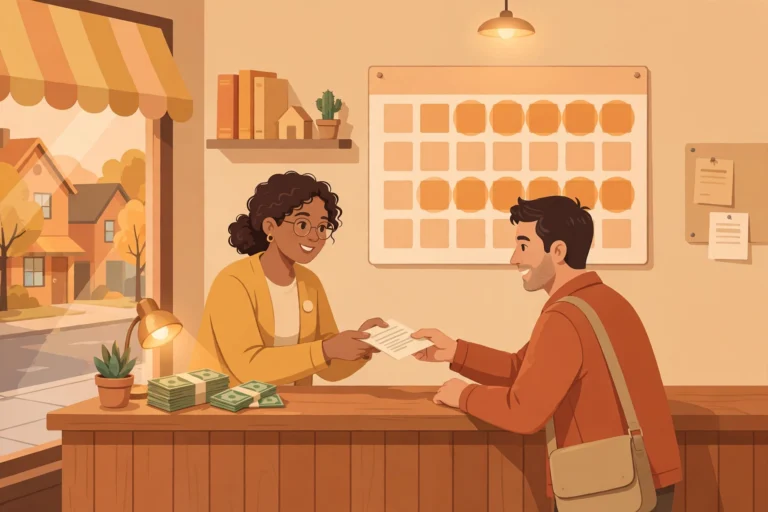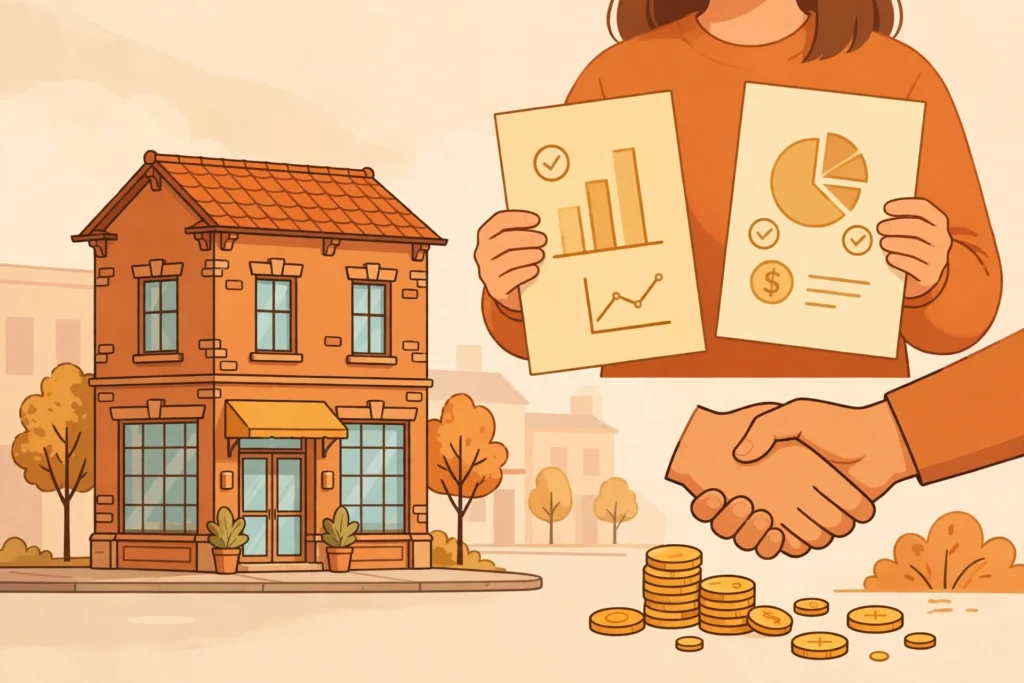
Typing “loans near me” into a search bar returns a mix of national online lenders, local banks, credit unions, and ads from high-cost lenders. The local options are worth a closer look. A lender with branches in town can offer something an online form cannot: a person who explains the terms, a relationship that may help next time, and often lower costs for existing customers.
Quick answer
Start with your own bank and one local credit union, compare offers on APR, total repaid, monthly payment, and fees in writing, and beware of nearby options that will not disclose an APR. Local credit unions frequently offer the lowest personal loan rates, but online lenders sometimes beat them, so compare at least one of each.
Where local loans actually come from
Four kinds of local lender cover most personal borrowing needs, and they behave differently. Community banks and local bank branches offer personal loans, auto loans, and home equity products, and they often give existing customers a small rate discount for automatic payments. Credit unions are member-owned nonprofits, which is why they frequently offer lower rates and fees than banks on the same loan. Community development financial institutions, known as CDFIs, are mission-driven lenders that serve borrowers banks often turn away, including people with thin credit files. Finally, local finance companies and storefront lenders offer fast approval but usually at much higher rates, and they deserve the most scrutiny.
Start with the institutions where a relationship already exists. A personal bank or credit union can see deposit history, which sometimes matters more than a credit score alone. Then check one credit union not yet joined. Membership is often open to anyone who lives, works, or worships in the area, and joining is usually free or costs a few dollars. The NCUA credit union locator finds member-owned options nearby, and the CDFI Fund lists certified mission-driven lenders.
How to compare local loan offers fairly
Lenders advertise monthly payments, not total cost, and the lowest payment is not always the cheapest loan. A longer term lowers the monthly payment but raises the total interest. Compare offers on four numbers: the APR, which includes interest plus most mandatory fees; the total amount repaid over the life of the loan; the monthly payment; and any origination fee, late fee, or prepayment penalty.
Ask every lender for the same three figures in writing: APR, total of payments, and total fees. Put them side by side before deciding. A loan with a slightly higher APR but no origination fee can beat a lower-APR loan loaded with fees. Also ask whether the rate is fixed or variable. A fixed rate stays the same for the whole term, while a variable rate can rise, which matters most on longer loans.
One more comparison tip: get quotes within a short window, ideally two weeks. Credit scoring models generally treat multiple loan inquiries in a short period as a single shopping event, so comparing lenders should not punish a score the way scattered applications over months can.
Example: the lower APR that costs more
Example: two lenders offer $10,000 over 36 months. Lender A quotes 8.5% APR with a $300 origination fee: about $316 a month, about $11,365 in payments, plus the $300 fee, for an all-in total of about $11,665. Lender B quotes 9.0% APR with no fees: about $318 a month, about $11,448 in total. Lender B’s monthly payment is $2 higher, yet the loan costs about $217 less overall, because the fee outweighs the rate difference. Anyone comparing monthly payments alone would pick the more expensive loan. That is why the three written figures, APR, total of payments, and total fees, matter more than any advertised payment.
What documents to bring
Local lenders move faster when the visit is prepared. Bring a government photo ID, proof of address, recent pay stubs or tax returns if self-employed, and recent bank statements. If borrowing against a car or home, bring the title or mortgage statement. If another person is co-signing, they need the same documents. If income is self-employed or variable, bring a full year of records rather than one good month. Lenders average irregular income, and a thin file slows approval more than a low month does. Ask upfront what the lender needs, so one visit is enough.
Prequalification is not approval
Many local lenders offer prequalification, a soft estimate based on a light credit check that does not affect a score. It is useful for comparing offers, but it is not a promise. Final approval follows a hard credit check and verification of income and documents, and the rate can change if the verified numbers differ from what was stated. Do not sign a purchase agreement or give notice on a rental based on a prequalification alone.
Local traps to avoid
Three nearby options look like local loans but work very differently. Title loans use a car as collateral and can cost far more than a personal loan, with the risk of losing the vehicle. Pawn loans charge high monthly interest and fees, and the item is lost if the loan is not repaid. Rent-to-own stores are not loans at all, but the total paid for furniture or electronics often runs several times the retail price. If a local lender will not disclose an APR in writing, cannot explain the total cost, or pressures for a same-day signature, treat that as a reason to leave, not a reason to hurry.
Building a local borrowing relationship
A local lender is most useful before money is urgently needed. Opening a checking or savings account, keeping a small balance, and repaying a small loan on time builds a record that can matter the next time an application is made. Credit unions in particular often approve members with imperfect credit when they can see steady deposits and a history with the institution. Think of the relationship as part of the application, not just the paperwork.
Common mistakes
The first mistake is comparing monthly payments instead of total cost, which is how the more expensive loan wins. The second is borrowing the maximum offered rather than the amount the need requires, since a larger loan means more total interest. The third is signing on a prequalification before final approval. The fourth is walking into a title or pawn lender for speed without pricing a credit union first. The fifth is scattering applications over months instead of shopping inside a short window.
Local vs online: pros and cons
Local pros: face-to-face explanations, relationship-based flexibility, credit unions often price lowest, and problems can be resolved with a person rather than a call center. Local cons: fewer product choices, branch hours limit access, and approval can depend on local policies.
Online pros: national competition sometimes beats local rates, applications run any hour, and comparison is fast. Online cons: no one to question in person, and the cheapest advertised rate often assumes a top credit profile.
Frequently asked questions
Is a local loan cheaper than an online loan?
Not always. Online lenders compete nationally and sometimes beat local rates. Local credit unions, however, frequently offer the lowest rates on personal loans, and local lenders can be more flexible on approval. Compare at least one local and one online offer before deciding.
Do I need an account at the bank to borrow from it?
Usually no for banks, though existing customers may get better terms. Credit unions do require membership, but membership is often open to local residents and costs little.
How long does a local personal loan take?
Many local lenders decide within one business day and fund within one to three business days once documents are verified. Secured loans, such as auto or home equity loans, take longer because of appraisals and title checks.
What credit score do local lenders want?
There is no single cutoff. Banks often prefer stronger credit, credit unions and CDFIs are more flexible, and secured loans are easier to get than unsecured ones. A steady income and low existing debt can matter as much as the score itself.
Should I take the maximum amount offered?
No. Borrow only what the specific need requires. A larger loan means more total interest, and lenders sometimes approve more than is wise to accept. For related borrowing guides, see small business loans, home loans, car loans, and consolidation loans.
Searching for loans near you is a good instinct, because the best deal is often a local institution that can be walked into and questioned face to face. Compare APR and total cost in writing, arrive with documents, and give a local credit union the first call. The cheapest loan is rarely the fastest advertised one.
Sources and methodology
The figures, rules, and rates in this guide come from the authoritative sources linked throughout the article, including mapping.ncua.gov, cdfifund.gov. Where a figure is an estimate or a worked example, the article says so.