The Short Answer: Around 580 to Qualify, 670+ for Good Rates
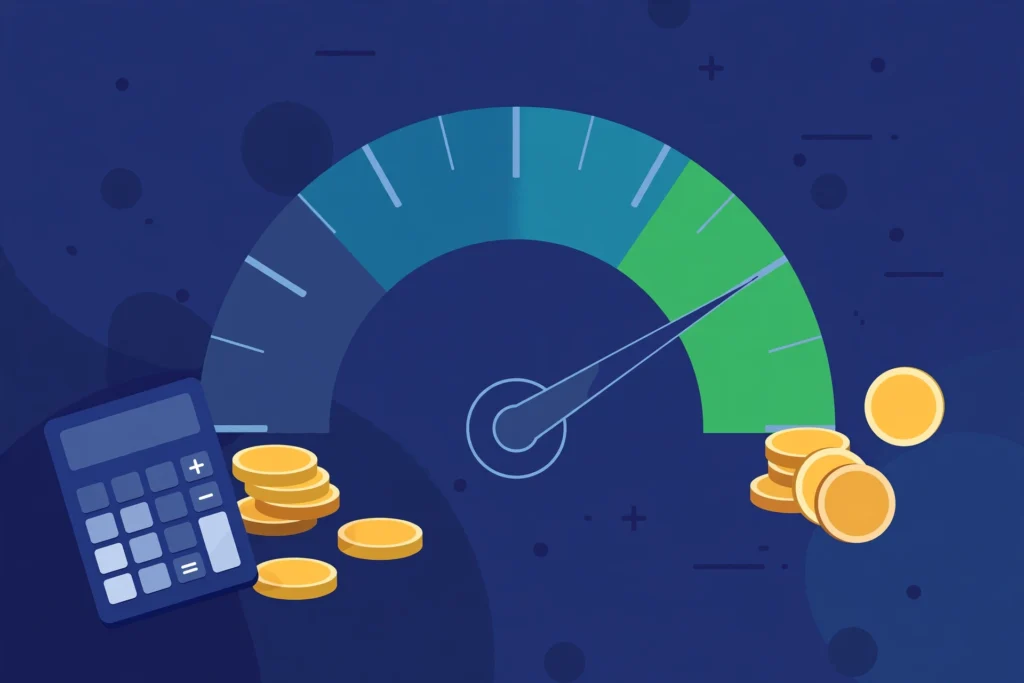
There is no single official minimum credit score for a debt consolidation loan — each lender sets its own bar. In practice, 580 is a common floor at lenders that serve fair-credit borrowers, 670+ unlocks meaningfully better APRs, and 740+ gets the best advertised rates. Below 580, approvals get scarce, and the APRs on offer often aren’t any better than your credit cards.
Your score also isn’t the whole story. Lenders weigh income, employment stability, and debt-to-income ratio alongside it — and your score moves every rate you pay, from consolidation loans to mortgages (see today’s mortgage rates for how wide the prime-to-subprime spread runs in housing). Rates vary by lender and credit profile.
Why No Lender Publishes One Official Minimum
Unlike some government-backed mortgages with published floors, personal-loan lenders keep their cutoffs proprietary and adjust them with market conditions. Two lenders can look at the same 640 score and offer very different APRs, because one weighs your income more heavily while the other weighs your recent payment history more. Published minimums, when they exist, are marketing as much as policy: “minimum 580” often really means “we’ll consider 580 if everything else in your application is strong.”
The practical takeaway: don’t self-reject. Prequalification uses a soft inquiry that won’t hurt your score, so checking real offers costs you nothing — and the offer itself tells you more than any published minimum ever could.
Typical APRs by Credit Score Tier
Typical advertised ranges from major lenders in the current rate environment — treat these as ballparks, not quotes:
| FICO score | Tier | Typical APR range | Approval odds |
|---|---|---|---|
| 800–850 | Exceptional | 7%–10% | Excellent |
| 740–799 | Very good | 7%–11% | Excellent |
| 670–739 | Good | 10%–16% | Good |
| 580–669 | Fair | 16%–26% | Fair — fewer lenders, thinner margins |
| Below 580 | Poor | 26%–36% (when offered) | Low — many lenders decline |
Note the cliff: dropping from 700 to 620 can easily add 8–12 percentage points to your APR. On a $15,000 loan, that’s thousands of dollars over the life of the loan — which is why a few months of score-building before you apply can pay for itself many times over.
What a Score Difference Actually Costs You
To make the tiers concrete, here’s an illustrative $15,000 consolidation loan over five years at three different APRs a borrower might typically be offered at three different scores. These are rough figures for comparison — your actual offer will vary by lender and credit profile:
| Illustrative score | Illustrative APR | Monthly payment | Total interest |
|---|---|---|---|
| 760 | 9% | ~$311 | ~$3,700 |
| 700 | 12% | ~$334 | ~$5,000 |
| 620 | 22% | ~$414 | ~$9,900 |
The 620 borrower pays roughly $6,000 more in interest than the 760 borrower for the exact same loan — and about $100 more every month. That gap is why spending three to six months improving your score before applying is often the highest-return financial move available to you.
Your Score Isn’t the Only Thing Lenders Check
Debt-to-income ratio (DTI)
Most lenders want your total monthly debt payments — including the new loan — under roughly 36%–43% of gross monthly income. A 720 score with a 50% DTI can still get declined. Paying down small balances before you apply helps on both fronts, and the same ratio decides what house you can afford on a $50k salary.
Income and employment stability
Lenders want steady, verifiable income that comfortably covers the payment. Self-employed borrowers should expect extra documentation — tax returns rather than just pay stubs — and gig income may be discounted or averaged.
Recent credit behavior
A 680 built on two years of clean payments beats a 680 still carrying a 90-day late payment from six months ago. Recent delinquencies, collections, and a flurry of new applications all raise red flags even when the headline score looks okay. Lenders read the story behind the number.
How to Improve Your Odds Before You Apply
- Attack utilization first. Credit utilization — balances divided by limits — is one of the fastest-moving score factors. Paying a maxed-out card down below 30% of its limit can lift your score within a billing cycle or two.
- Dispute report errors. Wrongly reported late payments, duplicate collections, and accounts that aren’t yours are depressingly common. Disputes are free through each bureau, and removing one error can move you a full tier.
- Stop applying for new credit. Every hard inquiry dings you slightly, and several in a short window signals distress. Rate-shop consolidation offers within a focused two-to-four-week window instead.
- Borrow less. Asking for $12,000 instead of $18,000 lowers the lender’s risk and your DTI — sometimes the difference between a decline and an approval.
- Bring a co-signer or co-borrower. A creditworthy co-signer can pull your effective risk profile — and your APR — into a better tier. Make sure they understand they’re equally on the hook if you miss payments.
- Wait strategically. If you’re at 645 with a collection aging off in three months, waiting can be worth thousands in interest. Set a calendar reminder rather than applying twice and taking two hard inquiries.
- Become an authorized user. If a trusted family member has a long-standing card with low utilization and perfect history, being added as an authorized user can import some of that positive history onto your report. It costs them nothing and requires no new application from you.
If Your Score Is Under 580: Realistic Alternatives
Below 580, a consolidation loan is often unavailable — or available only at an APR that doesn’t beat your cards. Better routes:
- Nonprofit debt management plan (DMP). A credit counseling agency negotiates lower rates with your creditors; you make one monthly payment for three to five years. DMPs are designed for exactly this score range, with a modest monthly agency fee.
- Negotiate directly. Card issuers have hardship programs — reduced APRs, waived fees, fixed payoff plans — that they don’t advertise. Call and ask; the worst outcome is a no.
- Secured or co-signed options. A savings-secured loan or a co-signed loan can work when unsecured credit won’t. Never secure debt with your home unless you fully understand the foreclosure risk.
- Rebuild, then consolidate. Six to twelve months of on-time payments and falling utilization can move a 560 into the 620s — often the difference between a 30% quote and a 20% one.
And keep perspective: your score affects more than this one loan. If homeownership is on your horizon, it’s worth checking the published FHA loan income limits for 2026 early, so you can plan around the score and income requirements together rather than discovering them at application time.
FAQs
What is the minimum credit score for a debt consolidation loan?
There’s no universal minimum, but most lenders that publish one set it around 580–640. Below 580, approvals are rare and APRs are often no better than credit cards.
Can I get a consolidation loan with a 600 credit score?
Yes, from fair-credit lenders — expect APRs in the high teens to mid-20s, plus origination fees. Compare the total cost against your current rates; if the savings are thin, a debt management plan may beat it.
What credit score gets the best debt consolidation rates?
Typically 740 and above unlocks the lowest advertised APRs, often in the high single digits to around 11%. The 670–739 range still gets solid offers in the low-to-mid teens.
Do lenders use FICO or VantageScore?
Most personal-loan lenders use a FICO score, though some use VantageScore. The two can differ by 20 points or more, so check which version your lender uses before judging where you stand.
Will checking my rate hurt my credit score?
Prequalification uses a soft inquiry — no impact. Only the formal application triggers a hard inquiry, typically costing a few points for about a year.
How long does it take to improve my score enough to matter?
Utilization-driven gains can show up in one to two billing cycles — paying down a maxed-out card is the fastest lever most borrowers have. Removing an error through dispute typically takes 30–60 days. Deeper damage, like a recent collection, can take six to twelve months of clean payments to fade. If you’re close to a tier boundary (say, 655), even a few weeks of work can be worth it.