The Short Answer: One Loan Replaces Many Debts
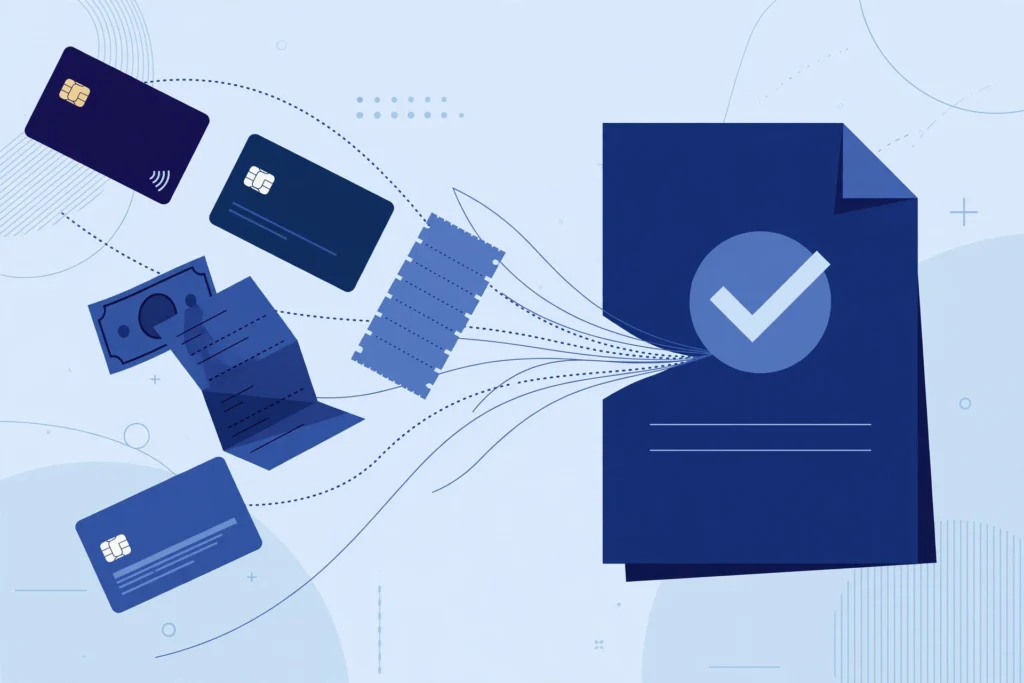
A debt consolidation loan is a personal loan — usually unsecured — that you take out to pay off several existing debts at once: credit cards, medical bills, store cards, sometimes other personal loans. Instead of juggling five balances, five due dates, and five interest rates, you make one fixed monthly payment at one fixed APR for a set term, typically two to seven years.
The point is almost always the interest rate. Credit cards routinely carry APRs above 20%, while borrowers with decent credit can typically get a consolidation loan somewhere in the low teens or even single digits. Swap a 22% balance for a 12% loan and less of every payment goes to interest — provided the fees don’t eat the difference and you don’t run the cards back up. Loan amounts typically range from $1,000 to $50,000, and rates vary by lender and credit profile, so comparing at least a few offers is part of the job.
How a Debt Consolidation Loan Works, Step by Step
The mechanics are simple, but the details matter:
- You apply and get a rate quote. Most online lenders let you check a rate with a soft credit inquiry (no score impact) before you commit. The formal application triggers a hard inquiry, which can ding your score a few points temporarily.
- The lender approves an amount and term. Typical terms run two to seven years. A shorter term means a higher payment but less total interest; a longer term lowers the payment but raises the total cost.
- The money pays off your debts. Some lenders send the funds straight to your creditors; others deposit the loan into your bank account and trust you to pay them off. Either way, your old balances should read zero afterward.
- You repay one fixed payment. Same amount, same due date, every month, until the term ends. Most consolidation loans are fixed-rate, so the payment never changes — unlike a credit card minimum, which shrinks as the balance drops and can stretch repayment over many years.
- Your old accounts stay open (usually). The cards are paid off, not closed — unless you close them. Keeping a zero-balance card open helps your credit utilization ratio, but it also leaves temptation within reach. More on that below.
What a Debt Consolidation Loan Typically Costs: APR by Credit Tier
Your APR is the single biggest driver of whether consolidation saves you money. Typical advertised ranges from major lenders look roughly like this — actual offers vary by lender, income, and debt load:
| Credit tier (FICO) | Typical APR range | What it means |
|---|---|---|
| Excellent (740+) | 7%–11% | Best offers; big savings vs. cards |
| Good (670–739) | 10%–16% | Solid savings for most card debt |
| Fair (580–669) | 16%–26% | May still beat 22%+ cards, but margins thin |
| Poor (below 580) | 26%–36% or decline | Often no better than the cards themselves |
Two caveats. First, these are typical ranges, not promises — a lender’s actual offer reflects your whole profile, and APRs move with the broader rate environment. Second, the APR only matters relative to what you’re paying now. Consolidating a 24% card balance into a 14% loan is a clear win; consolidating a 9% personal loan into a 14% loan is not.
The Fees That Can Quietly Raise Your Cost
The APR gets the headlines, but fees decide the true price:
- Origination fees: the big one. Many lenders charge 1%–8% of the loan amount (some charge nothing). On a $15,000 loan, a 5% fee is $750 — often deducted from the payout, so you receive $14,250 but repay $15,000.
- Late fees: typically $25–$50 or a percentage of the missed payment. Setting up autopay avoids them entirely.
- Returned-payment fees: charged when a payment bounces, on top of any bank overdraft fee.
- Prepayment penalties: uncommon with personal loans — most let you pay extra or pay off early for free — but always confirm before signing.
A fee-heavy loan can erase an APR advantage. Always compare the total cost (interest plus fees), not just the monthly payment.
A Real Cost Example: $15,000 in Credit Card Debt
Say you owe $15,000 across three cards at an average 22% APR, paying $400 a month. At that pace you’d be paying for roughly 64 months (over five years), handing over about $25,600 total — roughly $10,600 of it interest.
Now consolidate: a $15,000 loan at 12% APR for four years with a 5% origination fee. The monthly payment lands near $395 — about the same as before — but the loan ends in 48 months. Total paid: roughly $18,960 in payments plus the $750 fee, about $19,700. Compared with the cards, that’s roughly $5,900 less and a finish line more than a year sooner.
Stretch the same loan to seven years and the payment drops to about $265 — tempting — but total interest climbs and the savings shrink dramatically. The lesson: the APR is only half the math; the term is the other half.
Who Benefits Most — and Who Should Think Twice
Consolidation tends to pay off for borrowers who:
- Carry high-rate revolving debt (credit cards, store cards) they can realistically repay in 2–5 years
- Have steady income and a credit score that unlocks an APR clearly below their current rates
- Have a debt-to-income ratio lenders like — often under 36%–43%
- Are done adding new debt — the cleared cards stay at zero
Think twice if you:
- Would only qualify for an APR similar to (or above) your current rates
- Need the loan mainly to free up cards you plan to keep spending on
- Owe an amount so small you could clear it in a few months of aggressive payments
- Are considering a secured loan against your home without fully understanding the risk
How It Compares to Other Ways Out of Debt
| Option | Typical cost | Best for | Watch out for |
|---|---|---|---|
| Debt consolidation loan | APR varies by credit tier; 0%–8% origination fees | High-rate card debt, fair credit or better | Fees; temptation to re-spend |
| Balance transfer card | 0% intro APR for 12–21 months; 3%–5% transfer fee | Smaller balances you can clear within the intro period | Rate jumps after intro; usually needs good credit |
| Home equity loan / HELOC | Often lower rates than unsecured loans — compare against today’s mortgage rates | Homeowners with equity and discipline | Your home is collateral; default can lead to foreclosure |
| Debt management plan (nonprofit) | Creditors often reduce rates; modest monthly agency fee | Lower scores, steady income, 3–5 year commitment | Some cards may be closed; takes years |
How to Get the Best Rate You Qualify For
- Check your credit reports first. Errors are common; disputing one wrongly reported late payment can lift your score before you apply.
- Pay down balances before applying. Lower utilization often lifts your score and improves your debt-to-income ratio — the same ratio that determines what house you can afford on a $50k salary.
- Prequalify with several lenders. Soft-pull rate checks let you compare real APRs without hurting your score.
- Borrow only what you need. A smaller loan is easier to approve and cheaper overall.
- Consider a co-signer or co-borrower. A creditworthy co-signer can unlock a lower APR — but they share the risk if you miss payments.
FAQs
Does a debt consolidation loan hurt your credit score?
Temporarily, slightly — the hard inquiry can cost a few points. Over time, many borrowers see scores rise: installment debt replaces maxed-out revolving balances, utilization drops, and on-time payments build history. The exception is borrowers who max the cards out again.
Can I get a debt consolidation loan with bad credit?
Sometimes, but the APR may not beat your cards. Below roughly 580, many lenders decline or quote 26%–36%. A nonprofit debt management plan or direct negotiation with creditors is often the cheaper route at that level.
Are debt consolidation loans secured or unsecured?
Most are unsecured — no collateral required. Some lenders offer secured versions (backed by a car or savings account) with lower rates, but you risk the asset if you default. Home equity options put your house on the line.
How long does it take to get the money?
Online lenders often fund within one to three business days of approval; some fund the same day. Bank and credit-union timelines can run a week or longer.
Should I close my credit cards after consolidating?
Usually not right away. Open, zero-balance cards lower your utilization ratio and lengthen your credit history — both help your score. If a card’s annual fee isn’t worth it, or the temptation is too strong, closing it is the safer move.