The Short Answer
FHA loan requirements in 2026: a credit score of 580 or higher qualifies you for a 3.5% down payment; scores from 500 to 579 require 10% down. Loan limits range from $541,287 in most counties to $1,249,125 in the highest-cost markets. Every FHA borrower pays two mortgage insurance premiums — 1.75% upfront and about 0.55% per year on a typical 30-year loan — and with less than 10% down, the annual premium lasts for the life of the loan. Your total debt-to-income ratio generally must stay under about 43%, the home must be your primary residence, and it must pass FHA’s health and safety appraisal standards.
Credit Score Requirements: The Two Tiers
FHA credit rules are simpler than most loan programs because they come down to one line:
| Credit Score | Minimum Down Payment |
|---|---|
| 580 or higher | 3.5% of the purchase price |
| 500 to 579 | 10% of the purchase price |
| Below 500 | Not eligible |
Two money notes: first, individual lenders set their own overlays, and many require 620 or even 640 regardless of the FHA minimum. Second, that 580 line is worth real cash — on a $400,000 home, crossing from 579 to 580 drops the required down payment from $40,000 to $14,000. If you are close, a few months of credit cleanup before applying can pay for itself many times over.
Down Payment: How Low Can It Go?
The 3.5% minimum is FHA’s signature feature. On a $300,000 purchase, that is $10,500 — far less than the 20% conventional loans traditionally expect. The down payment can come from your savings, but FHA is unusually flexible about where else it comes from:
- Gift funds: family members, employers, and labor unions can gift the entire down payment. The gift must be documented with a gift letter — no cash under the table.
- Down payment assistance: state and local programs (often structured as forgivable second mortgages) can cover part or all of the 3.5%.
- Seller concessions: sellers can contribute up to 6% of the price toward your closing costs and prepaids — though not toward the down payment itself.
The true cash-to-close is typically more than the down payment alone: expect closing costs of roughly 2% to 5% of the price, plus prepaid taxes and insurance. Seller concessions and state assistance are how buyers with tight savings actually close.
2026 FHA Loan Limits
HUD resets FHA loan limits every year based on county median home prices. For 2026, effective on case numbers assigned on or after January 1, 2026:
- Floor (most counties): $541,287 for a one-unit home. Roughly two-thirds of U.S. counties sit at the floor.
- Ceiling (highest-cost markets): $1,249,125 — places like the Bay Area, New York City, and parts of Southern California.
- In-between counties: limits set at 115% of local median home price, between the floor and ceiling.
- Multi-unit: higher limits apply — about $693,050 (2-unit), $837,700 (3-unit), and $1,041,125 (4-unit) at the floor.
The loan limit caps your total FHA loan, including the upfront MIP if you finance it into the loan. Because limits are county-specific, a home price that works in one county may not work in the next — check HUD’s loan limit lookup for your county before you fall in love with a listing.
MIP Costs: The FHA Trade-Off
FHA mortgage insurance (MIP) is the cost of admission, and it has two parts:
| Premium | Rate | How You Pay |
|---|---|---|
| Upfront MIP (UFMIP) | 1.75% of loan amount | At closing; almost always financed into the loan |
| Annual MIP (30-year, typical) | 0.50%–0.55% | Monthly, bundled into your mortgage payment |
| Annual MIP (15-year) | 0.15%–0.40% | Lower for shorter terms |
On a $350,000 loan with 3.5% down, expect roughly $6,000 in upfront MIP added to your balance and about $155 to $165 per month in annual MIP. Here is the part that surprises buyers: for loans originated after June 2013 with less than 10% down, MIP lasts the life of the loan. Unlike conventional PMI, there is no 78% or 80% loan-to-value cancellation trigger. Over 10 years on a $300,000 loan, total MIP can exceed $20,000 — and it keeps going. The only way out is to refinance into a conventional loan once you have at least 20% equity and the credit score to qualify. Borrowers who put 10% or more down get MIP cancellation after 11 years.
This is FHA’s real cost calculus. FHA is often the cheapest way in to homeownership and one of the most expensive ways to stay — plan your refinance exit from day one if your credit and equity are on an upward path.
Debt-to-Income (DTI) Limits
FHA looks at two ratios: the housing ratio (mortgage payment to income) and total DTI (all monthly debts to income). The standard benchmark is total DTI of about 43%, though automated underwriting can approve higher ratios — sometimes into the 50s — with compensating factors like large cash reserves or strong residual income.
DTI is where many first-time buyers get tripped up — not by the mortgage, but by car payments and student loans. A $500 monthly car payment can erase $60,000 or more of buying power. Clearing consumer debt before applying is often the fastest route to a bigger approval.
Income, Employment, and Documentation
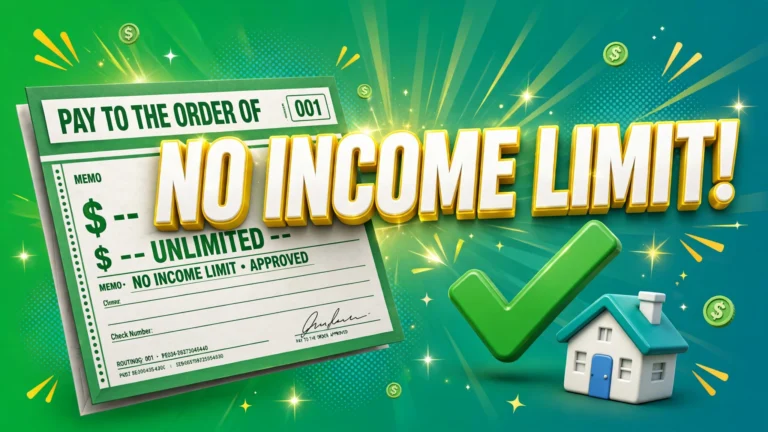
FHA has no income limit — what it requires is stable, documented income: typically two years of employment history in the same field, with pay stubs, W-2s, and tax returns to prove it. Self-employed borrowers generally need two years of tax returns showing consistent or rising income.
Property Standards: What FHA Will and Won’t Finance
FHA loans are for primary residences you will occupy within 60 days of closing. Eligible properties include single-family homes, townhouses, FHA-approved condominiums, and 2- to 4-unit properties (you must live in one unit). Manufactured homes qualify under stricter rules.
Every FHA purchase requires an appraisal by an FHA-roster appraiser who checks minimum property requirements: the home must be safe, sound, and secure. Common deal-killers include peeling paint on homes built before 1978 (lead hazard rules), a roof with little remaining life, missing handrails, broken windows, non-functioning heat or utilities, water damage, and faulty electrical. The lender cannot close until these are repaired, which is why fixer-uppers often need the FHA 203(k) renovation loan instead.
FHA vs. Conventional: A Cost Comparison
| Feature | FHA | Conventional |
|---|---|---|
| Min. credit score (3–5% down) | 580 | 620 (most lenders) |
| Minimum down payment | 3.5% | 3% (first-time programs) |
| Mortgage insurance | MIP for life of loan (under 10% down) | PMI cancels at 78% LTV automatically |
| Upfront insurance cost | 1.75% of loan | None |
| Property standards | Strict FHA appraisal rules | More flexible |
FHA wins on entry: lower credit bar, flexible down payment sources, and forgiving underwriting. Conventional usually wins on lifetime cost once you have decent credit and 5% or more down, because PMI eventually ends. If your score is 680+ with 5% down, get quotes for both.
How to Apply: Step by Step
- Step 1: Check your credit and score. Dispute errors; pay down revolving balances toward the 580 and 620 thresholds.
- Step 2: Calculate your DTI and estimate your maximum payment — include taxes, insurance, and MIP.
- Step 3: Get pre-approved with an FHA-approved lender. Compare at least three Loan Estimates; rates and fees vary more than buyers expect.
- Step 4: Ask every lender about state down payment assistance — many buyers leave thousands unclaimed.
- Step 5: Shop with the FHA appraisal in mind, make your offer, and let the lender order the FHA appraisal under contract.
FAQs
What is the minimum credit score for an FHA loan in 2026?
FHA guidelines allow scores as low as 500 with 10% down and 580 with 3.5% down. However, most lenders impose their own overlays — typically 620 or higher — so the practical minimum depends on your lender.
How much is the FHA down payment?
The minimum is 3.5% of the purchase price for borrowers with a 580+ credit score, or 10% for scores between 500 and 579. Gifts, down payment assistance programs, and seller concessions toward closing costs can all reduce your out-of-pocket cash.
Does FHA mortgage insurance ever go away?
With less than 10% down on loans originated after June 2013, annual MIP lasts for the entire life of the loan and never cancels on its own. The only way to remove it is to refinance into a conventional mortgage. Borrowers who put 10% or more down see MIP end after 11 years.
Is there an income limit for FHA loans?
No — FHA does not cap borrower income. You must demonstrate stable, documented income sufficient to support the payment under DTI guidelines, but there is no maximum. Income limits apply only to separate down payment assistance programs, not to the FHA loan itself.
Can I buy a fixer-upper with an FHA loan?
A standard FHA loan requires the home to meet minimum property standards at closing, so true fixer-uppers usually do not qualify. The FHA 203(k) renovation loan is designed for that situation — it finances the purchase plus repairs in one loan, with stricter contractor and timeline rules.
Can I have two FHA loans at once?
Generally no — FHA limits borrowers to one FHA-insured mortgage at a time, with exceptions for relocation (job move beyond commuting distance), family size growth, divorce, or non-occupying co-borrowers. You must document the qualifying reason.