You did the hard part, or you are trying to skip it altogether. Either way, you are here because you want your weight to stay steady without living on a diet, buying an expensive program, or thinking about food all day.
Maintaining weight is a different skill from losing weight. Losing weight usually means a clear plan and a lot of focus for a few weeks or months. Maintaining weight means building a normal life that happens to keep your weight stable. It is less intense, but it lasts longer.
This guide is about maintenance only. You will not find a weight-loss plan, a crash diet, or rules for dropping pounds fast. Instead, you will find practical habits for keeping your weight where it is, handling the weeks when it creeps up, and doing it without spending a lot of money.
Quick answer
Maintenance means holding a weight range of about five pounds, not one exact number. Build meals on the plate method, walk daily, keep portions steady, and protect sleep. When your weight sits above the top of your range for two weeks, fix one drift, such as evening snacking or missed walks, for two weeks before changing anything else.
What weight maintenance really means
Maintenance does not mean your weight never changes. It means your weight stays within a small range over time, even though it moves up and down from day to day.
Your body weight can shift by a few pounds in a single week because of water, salt, a large meal, a hard workout, or a change in your routine. That is normal. It does not mean you have failed, and it does not mean you need to start a diet on Monday.
A more useful way to think about it is to pick a range, not a single number. For example, if you feel good at 170 pounds, your maintenance range might be 167 to 173 pounds. As long as you stay roughly inside that range over several weeks, you are maintaining. If you drift above the top of the range and stay there, that is your signal to make a small adjustment. You do not need to panic. You just need a plan for that moment, covered later in this guide.
Why weight tends to creep back up
If your weight has crept up before, you are not alone, and it is not a character flaw. Weight gain after a period of stability usually happens slowly, through small daily drifts that are easy to miss.
Here are the most common drifts:
- Portions grow quietly. You start serving yourself a little more rice, a little more pasta, or a second helping because you are still hungry. None of it feels like a big change, but over weeks it adds up.
- Movement drops without you noticing. You stop walking to the store, you drive more, you sit longer at your desk, or winter makes you stay indoors. You might not change what you eat at all, yet you burn less energy each day.
- Snacking becomes a habit, not a choice. A handful of chips while you cook, a sweet coffee in the afternoon, a snack while you watch television. Each one is small. Together, they can become an extra meal.
- Sleep and stress change your appetite. When you are tired or stressed, you are more likely to crave quick, filling foods and less likely to cook or go for a walk. That is a normal human response, not a lack of willpower.
- Life gets busy. A new job, a move, or a long stretch of travel can push your routine aside. You eat what is easy, you skip your walks, and a few months later your clothes fit differently. The good news is that these drifts are fixable with small corrections, noticed early.
Step 1: choose a range you can live with
Before you change anything, decide what maintenance looks like for you.
Pick a weight range of about five pounds, centered on a weight where you feel comfortable, energetic, and able to do the things you enjoy. If you are not sure what that weight is, use the weight you have held most comfortably in recent months, or talk with your doctor about a healthy range for your height and health history.
Write the range down somewhere you will see it, such as in your phone notes. For example: “Range 167 to 173. Above 173 for two weeks in a row means adjust.”
Weigh yourself in a consistent way if you choose to weigh yourself at all. The same scale, the same time of day, and similar clothing will give you the most useful trend. Many people find that weighing once or twice a week, rather than every day, is enough to spot a trend without becoming obsessed with daily ups and downs. If daily weighing stresses you out, do not do it. A weekly check, plus how your clothes fit and how you feel, is plenty.
If you do not want to use a scale, track maintenance by how your clothes fit and whether your everyday habits are still in place. The scale is a tool, not a judge.
Step 2: build your everyday plate
You do not need a meal plan, a food scale, or a paid app to maintain your weight. You need a simple, repeatable way to build meals that keeps you full without overeating.
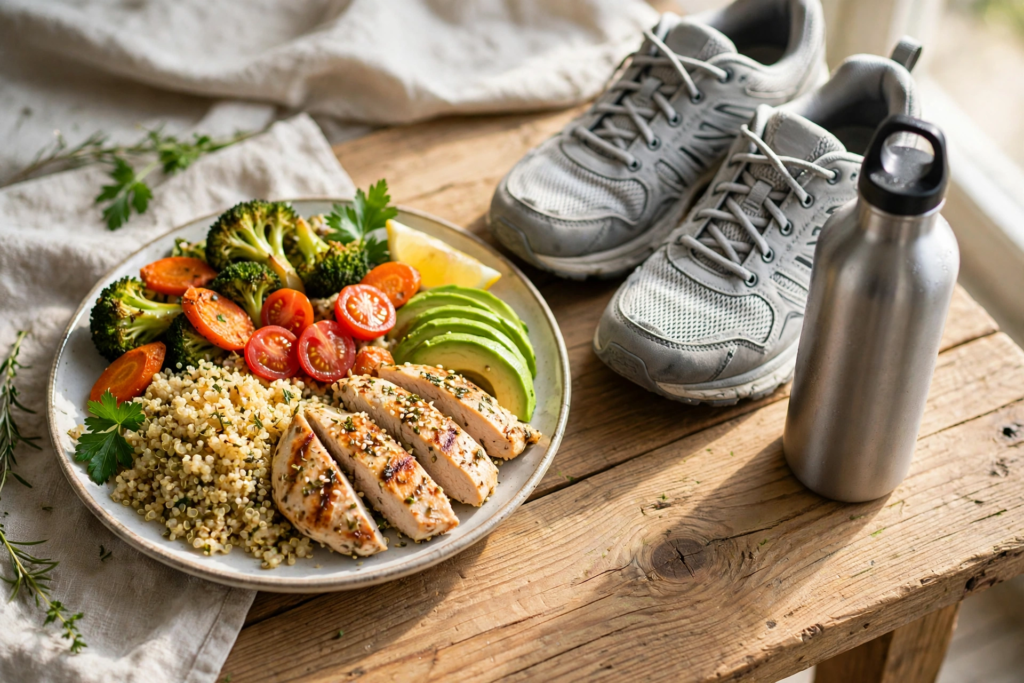
A helpful starting point is the plate method. At lunch and dinner, aim for roughly half your plate to be vegetables or salad, one quarter to be protein, and one quarter to be a starchy food such as rice, potatoes, bread, or pasta. Add a piece of fruit or a small serving of dairy if you like. This is not a strict rule. It is a visual guide that works at home, at a restaurant, and at a family gathering.
Protein and fiber are your best friends for maintenance because they keep you full for longer. That does not mean expensive protein powders or specialty foods. Affordable options work just as well:
- Beans, lentils, and chickpeas, which are cheap, filling, and easy to cook in bulk
- Eggs, which are versatile and inexpensive
- Canned tuna, chicken thighs, and other budget-friendly proteins
- Greek yogurt or cottage cheese, if you enjoy them
- Whole grains such as oats, brown rice, and whole wheat bread
- Frozen vegetables, which are just as nutritious as fresh ones and far less likely to go bad in your fridge
Portion sense matters more than precise counting. A few simple checks can help:
- Serve your food in the kitchen, rather than bringing serving dishes to the table, so a second helping takes a conscious choice.
- Use a smaller plate or bowl for foods that are easy to overeat, such as pasta, rice, and snacks.
- Pause halfway through your meal and ask yourself if you are still hungry, or just eating because food is in front of you. If you are comfortably full, you can stop, even if there is food left.
- Eat slowly when you can. It takes time for fullness to catch up with your stomach, and rushing through a meal makes it easy to eat past the point of comfort.
Step 3: make movement part of your day, not a chore
You do not need a gym membership to maintain your weight, although a gym is great if you enjoy it and can afford it. For most people, everyday movement does more for maintenance than intense workouts done for a few weeks and then dropped.
Walking is the most underrated maintenance tool there is. It is free, it is gentle on your joints, and you can fit it into a day you already have. Try these ideas:
- Walk for 10 to 15 minutes after your largest meal. It helps digestion, it breaks up a long sitting stretch, and it adds up over a week.
- Park a little farther away, take the stairs when you can, or get off the bus one stop early.
- Walk while you talk on the phone, listen to a podcast, or catch up with a friend.
- If you work at a desk, stand up and move for a few minutes every hour. Set a timer if that helps.
Beyond walking, aim for an activity you actually enjoy two or three times a week, such as cycling, swimming, gardening, or a free workout video online. The best exercise for maintenance is the one you will still be doing in six months.
Strength matters too, and it does not require equipment. Simple bodyweight moves such as squats, wall push-ups, lunges, and planks help you keep muscle, which supports your metabolism and your everyday strength. Even two short sessions a week, about 15 to 20 minutes each, can make a difference. Start with what feels manageable and build up slowly.
The goal is consistency, not intensity. A 20-minute walk you do every day beats a two-hour workout you do once and then quit.
Step 4: handle hunger, cravings, and snacking honestly
Hunger is not the enemy. It is information. Learning to tell the difference between real hunger and other urges is one of the most useful maintenance skills you can build.
Real hunger usually builds gradually, and almost any food sounds appealing. A craving usually arrives suddenly, focuses on one specific food, and often follows boredom, stress, tiredness, or the sight or smell of food.
When a craving hits, you have options besides giving in or white-knuckling through it:
- Drink a glass of water and wait 10 minutes. Sometimes thirst feels like hunger.
- Eat a planned snack with protein or fiber, such as an apple with peanut butter, a handful of nuts, or yogurt with fruit, instead of grazing on whatever is closest.
- Step away from the kitchen for a few minutes. Go for a short walk, call a friend, or do a small task. If you still want the food afterward, have a reasonable portion and enjoy it.
- Keep tempting snacks out of easy sight. If chips live on the counter, you will eat them. If they live in a high cupboard or you have to go to the store to buy them, you will eat them less often.
Snacking itself is not a problem. Unplanned, mindless snacking is where the trouble starts. If you like an afternoon snack, plan it. Put it on a plate, sit down, and enjoy it, rather than eating straight from the bag while standing in the kitchen.
Alcohol deserves a special mention because it adds calories without filling you up, lowers your inhibitions around food, and can disrupt your sleep. You do not have to give it up to maintain your weight, but it helps to be honest about how often you drink and how much. Choosing smaller pours, alternating alcoholic drinks with water, and keeping a few alcohol-free days each week are simple ways to reduce its effect without feeling deprived.
Step 5: protect your sleep and manage stress
Sleep and stress do not get as much attention as food and exercise, but they have a real effect on maintenance.
When you are short on sleep, you tend to feel hungrier, crave richer foods, and have less energy for cooking or walking. You do not need perfect sleep. You need a regular wind-down routine that gives you a reasonable chance of rest. Going to bed and waking up at roughly the same time, keeping your phone out of your bed, and avoiding a heavy meal or a lot of caffeine late in the evening can all help.
Stress works in a similar way. When life is stressful, food becomes comfort, and movement becomes the first thing you drop. You cannot eliminate stress, but you can build a few low-cost coping habits that do not involve food: a short walk, a few minutes of stretching, writing down what is worrying you, talking to a friend, or stepping outside for fresh air. If stress eating is a regular pattern for you, noticing the trigger is the first step. You can then decide in advance what you will do next time stress hits, instead of deciding in the moment when you are already tired.
Step 6: eat out, celebrate, and travel without undoing your progress
Maintenance has to survive real life. If your routine only works when you cook every meal at home and never go out, it will not last.
When you eat out, a few small choices help:
- Look at the menu before you go, if you can, and pick something you will enjoy that also leaves you feeling good afterward.
- Ask for dressing or sauce on the side, and for vegetables or salad instead of fries if that swap feels fine to you.
- Eat half of a very large restaurant portion and take the rest home. Restaurant servings are often much larger than a home serving, and a take-home box turns one meal into two.
- Enjoy dessert if you want it. Sharing a dessert, or ordering a smaller portion, lets you enjoy it without turning the whole meal into an overload.
Holidays work the same way. Eat the foods you love, enjoy the people you are with, and return to your normal routine the next day. One meal does not define your weight. What matters is what you do most days.
Travel is trickier because your routine disappears. Pack portable snacks such as nuts or fruit, walk when you can instead of taking a short taxi ride, and choose one balanced meal a day as your anchor. Then enjoy the local food.
Step 7: have a setback plan before you need one
Everyone who maintains their weight has setbacks. The difference between people who stay stable long term and people who drift upward is not that one group never slips. It is that one group has a plan for slipping.
Here is a simple setback plan you can use:
- 1. Notice early. If your weight goes above the top of your range for two weeks in a row, or your clothes feel tighter for a couple of weeks, treat that as useful information, not a failure.
- 2. Find the drift. Ask yourself what changed. Are portions bigger? Are you walking less? Are you snacking more in the evening? Are you sleeping poorly? Usually one or two changes explain most of the drift.
- 3. Fix one thing, not everything. Pick the easiest drift to fix and focus on that for two weeks. For example, bring back your after-dinner walk, or go back to serving food in the kitchen instead of at the table. Small fixes are easier to stick with than a complete overhaul.
- 4. Give it two weeks. Weight changes slowly. Two weeks of a steady habit will tell you more than two days of strict dieting followed by giving up.
- 5. Reset without punishment. Do not skip meals to make up for overeating, and do not punish yourself with extra exercise. Just return to your normal routine. Punishment diets tend to lead to more overeating later, not less.
If you gain weight during a difficult period, such as an illness, a stressful few months, or a holiday season, be kind to yourself. You can always return to your maintenance habits when life calms down. Maintenance is a long game, measured in years, not weeks.
Worked example: a five-pound range in practice
Example: suppose you feel good at 170 pounds, so you set a maintenance range of 167 to 173 pounds. For six weeks your weekly weigh-ins land between 168 and 172, which counts as maintaining even though the number moves. Then two weeks in a row come in at 174 and 175. That is your signal, not a crisis. You look for the drift and find it: evening snacking after dinner most nights, plus a missed after-dinner walk during a busy stretch. You fix one thing only: the after-dinner walk comes back, every evening, for two weeks. If the next two weigh-ins fall back toward 172, the fix worked and you change nothing else. If they stay above 173, you fix the second drift next. The example shows why a range beats a single number: it tells you when to act and when to leave things alone.
Maintaining weight without spending a lot
You do not need to buy a program, a meal delivery service, a supplement, or a wearable device to maintain your weight. Those products can be helpful for some people, but none of them is required.
The lowest-cost maintenance toolkit is already in your life:
- Walking, which is free
- Cooking at home most days, which is usually cheaper than eating out or ordering delivery
- Beans, lentils, eggs, oats, frozen vegetables, and seasonal fruit, which are among the cheapest nutritious foods available
- Water, which costs far less than soda, juice, or sweet coffee drinks
- A simple notebook or phone note to track your weight range and your habits, which costs nothing
Be skeptical of products that promise to maintain your weight for you. Teas, cleanses, and fat burners are not needed for maintenance, and some can be a waste of money. Your money is better spent on good everyday food and an activity you love.
Cooking in bulk is one of the best money-saving maintenance habits. A large pot of lentil soup, bean chili, or vegetable stew can provide several filling lunches for the cost of one takeout meal. Leftovers also remove the daily decision of what to eat, which makes it easier to stick with your routine on busy days.
A sample maintenance week
You do not need to copy this exactly. Use it as a template and adjust it to your schedule, your tastes, and your budget.
Monday to Thursday: Walk after dinner, cook simple meals at home with vegetables, protein, and a grain, and batch-cook soup or beans for lunches. Add 15 minutes of bodyweight exercises or stretching twice in the week.
Friday to Sunday: Enjoy a more relaxed meal, such as takeout, without guilt, take a longer walk or bike ride, and do a short Sunday check-in: weigh yourself if you use a scale, notice how your clothes fit, and plan one or two meals for the week ahead.
Notice what this week does not include: no calorie counting, no forbidden foods, no expensive ingredients, and no punishing workouts. Maintenance should feel like a normal week, not a project.
What maintenance is not
It helps to be clear about what you are not doing, so you do not accidentally slide back into dieting mode.
Maintenance is not weighing every bite of food forever. If tracking helped you earlier, you can use it for a short check-in, but you do not need to track for life.
Maintenance is not a single perfect weight. Your body, your age, your activity level, and your life circumstances will change over time. Your range may need to shift, and that is okay.
Maintenance is not a competition. Your plan should fit your body, your budget, and your life.
Common mistakes
- Chasing one exact number. Daily weight moves for many reasons. A range absorbs normal shifts without false alarms.
- Fixing everything at once. A full overhaul after a slip rarely sticks. Fix one drift for two weeks, then reassess.
- Skipping meals to make up for overeating. Punishment eating patterns tend to lead to more overeating later, not less.
- Letting movement quietly vanish. A shorter day, a new desk job, or winter can cut hundreds of steps a day without you noticing. Track the habit, not just the weight.
- Buying the maintenance product. Teas, cleanses, and fat burners do not maintain weight. Habits do, and they are mostly free.
Pros and cons
Pros: no diet rules, no calorie counting for life, no required spending; built on normal food and free walking; survives restaurants, holidays, and travel; a range gives a clear, calm signal for when to adjust.
Cons: requires ongoing attention to portions and movement; drifts are easy to miss until clothes tighten; weight still fluctuates, which frustrates people who want one stable number; sleep and stress can undo good food habits; not a plan for active weight loss.
Frequently asked questions
How often should you weigh yourself to maintain your weight?
Once or twice a week is enough for most people, using the same scale and time of day. Daily weighing can help some people spot trends early, but it can also cause stress because of normal daily fluctuations. Choose the frequency that gives you information without anxiety.
What should you do if you gain five pounds?
Do not panic and do not start a crash diet. Check whether the gain has lasted two weeks or more, look for the drift that caused it, and fix one habit for two weeks. Five pounds is a normal fluctuation range for many people, and a small, steady correction usually brings you back.
Can you maintain your weight without exercising?
Movement makes maintenance much easier, but it does not have to be formal exercise. Daily walking, active chores, gardening, and playing with your kids all count. If you truly cannot exercise for a period, focus on portion awareness, sleep, and cooking at home, and add movement back when you can.
Do you need a special diet to maintain your weight?
No special diet is required. A balanced pattern built around vegetables, protein, whole grains, and foods you enjoy, with attention to portions and regular movement, is enough for most people. If you have a medical condition that affects your diet, follow the guidance of your doctor or a registered dietitian.
What if you have already regained weight you lost before?
You can start maintenance again at your current weight. Stabilizing there for a few months and building steady habits is often a better foundation than jumping straight into another diet.
Further reading
For more on food and health costs, see these guides: highest fiber foods, blood test costs without insurance, and mammogram costs without insurance. For official guidance, see the CDC tips for maintaining a healthy weight and the CDC page on physical activity and weight.
A final word
Maintaining a healthy weight is not about willpower, perfection, or expensive solutions. It is about a handful of ordinary habits, repeated most days: a balanced plate, portion awareness, daily walking, decent sleep, and a calm plan for setbacks.
Start with one habit this week. Maybe it is a walk after dinner. Maybe it is serving food in the kitchen. Maybe it is choosing a weight range and writing it down. Pick the one that feels easiest, do it consistently, and add another habit when the first one feels normal.
Your weight does not need to be perfect. It needs to be stable enough, in a life you actually enjoy living. That is maintenance, and you can build it one small habit at a time.
This article is for general information only and is not medical advice. If you have a health condition, take medication that affects your weight, or are unsure what a healthy weight range is for you, talk to your doctor or a qualified health professional before making changes to your diet or activity routine.
Sources and methodology
The figures, rules, and rates in this guide come from the authoritative sources linked throughout the article, including cdc.gov. Where a figure is an estimate or a worked example, the article says so.