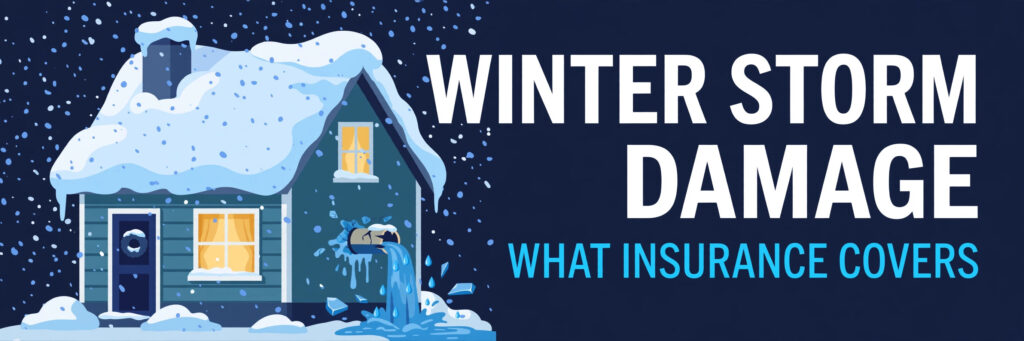
Winter is the most expensive season for homeowners insurance claims after fire. A burst pipe can flood a house in hours, a heavy snow load can collapse a roof, and an ice dam can push water under shingles for weeks before anyone notices. The good news is that a standard homeowners policy covers most winter storm damage. The bad news is that the gaps are exactly where people assume they are covered.
This guide covers what is covered, what is excluded, what claims actually cost, and how to file one that gets paid.
What homeowners insurance covers in winter
Wind damage. Winter storms bring high winds that tear off shingles, topple trees, and throw debris through windows. Standard policies cover wind damage to the structure and to belongings inside.
Roof collapse from snow and ice. The weight of ice, snow, and sleet is a named peril on most policies. If heavy accumulation buckles a roof or ceiling, the structural repair is covered. Roof collapse claims commonly run 20,000 dollars or more.
Burst pipes. A pipe that freezes and bursts is covered as sudden and accidental water damage, provided the home was properly heated and maintained. This is the most common winter claim: water damage and freezing account for roughly one in four homeowners claims, with an average cost above 13,000 dollars per claim. One industry table puts the average water damage and freezing claim at 11,098 dollars, while State Farm reported its average frozen pipe and winter water claim topped 30,000 dollars from January 2024 through June 2025.
Ice dam leaks. When snow melts on a warm roof and refreezes at the edge, water backs up under shingles and into walls. The resulting interior damage is usually covered, with claims ranging from 4,500 to 15,000 dollars. The ice removal itself is often not covered.
Additional living expenses. If a covered event makes your home uninhabitable, the policy pays for temporary housing. Short term rentals run 150 to 250 dollars a night in many areas, and this coverage is what keeps a bad winter from becoming a financial crisis.
What is NOT covered
Flood damage. Flooding from snowmelt, overflowing rivers, or rising groundwater is not covered by homeowners insurance at all. It needs a separate flood policy. This is the single most common winter coverage surprise: the snow that damaged your roof is covered, but the meltwater that flooded your basement is not.
Neglect. If pipes froze because you left the heat off or left the home unoccupied without winterizing, the claim will likely be denied. Insurers expect the home to be kept heated, typically above 55 degrees, and pipes in unheated spaces to be insulated.
Gradual damage. A slow leak that went unnoticed for months is maintenance, not an accident. Insurance covers sudden events, not deterioration.
Sewer backup. Melting snow can overwhelm older sewer lines, but backup coverage is an optional rider on most policies. Without it, a flooded basement from a backed up drain is not covered.
Ice removal and tree removal without damage. Clearing ice from a roof or removing a tree that fell without hitting anything is usually your expense, not the insurer’s.
Average winter claim costs
| Damage type | Typical claim |
|---|---|
| Frozen or burst pipes | 10,000 to 15,000 dollars |
| Ice dam damage | 4,500 to 15,000 dollars |
| Roof collapse from snow load | 20,000 dollars or more |
| Wind and storm damage | 4,500 to 10,000 dollars |
| Water damage and freezing, average | 11,000 to 15,400 dollars |
How to file a winter storm claim that gets paid
Document before you clean. Photograph everything from multiple angles before cleanup starts. A well documented claim is worth more than a rushed one, and initial settlement offers often run 20 to 30 percent below what a documented claim supports.
Report within 24 hours. Call your insurer promptly, but do not rush the documentation to do it. Mitigate further damage: shut off water to a burst pipe, tarp a damaged roof, and keep receipts for every emergency repair.
Do not accept the first offer automatically. Get independent repair estimates and negotiate. You have the right to a fair settlement, and insurers expect negotiation on larger claims.
Review your policy before winter, not after. Check your deductible, your water backup rider, and whether your coverage limit reflects current rebuilding costs. Many homeowners are underinsured for water damage specifically.
Frequently asked questions
Does homeowners insurance cover frozen pipes?
Yes, if the burst was sudden and accidental and the home was properly heated. Claims are denied when the heat was off or the home was left unoccupied without winterizing.
Does homeowners insurance cover roof collapse from snow?
Yes. Weight of ice, snow, and sleet is a standard covered peril. Structural collapse claims commonly exceed 20,000 dollars.
Does homeowners insurance cover flooding from melting snow?
No. Flood damage of any source requires a separate flood policy. Snowmelt flooding is the most common winter gap.
Does homeowners insurance cover ice dams?
Interior water damage from an ice dam is usually covered. The cost of removing the ice itself usually is not.