Pet insurance is one of those purchases that feels obviously smart until you do the math, and then feels obviously wasteful until your pet gets sick. Both feelings are correct at different times. The honest answer is that pet insurance is a bad deal for the average pet and a great deal for the unlucky one, and you buy it because you cannot know in advance which pet is yours.
This guide runs the real numbers so you can decide with your eyes open.
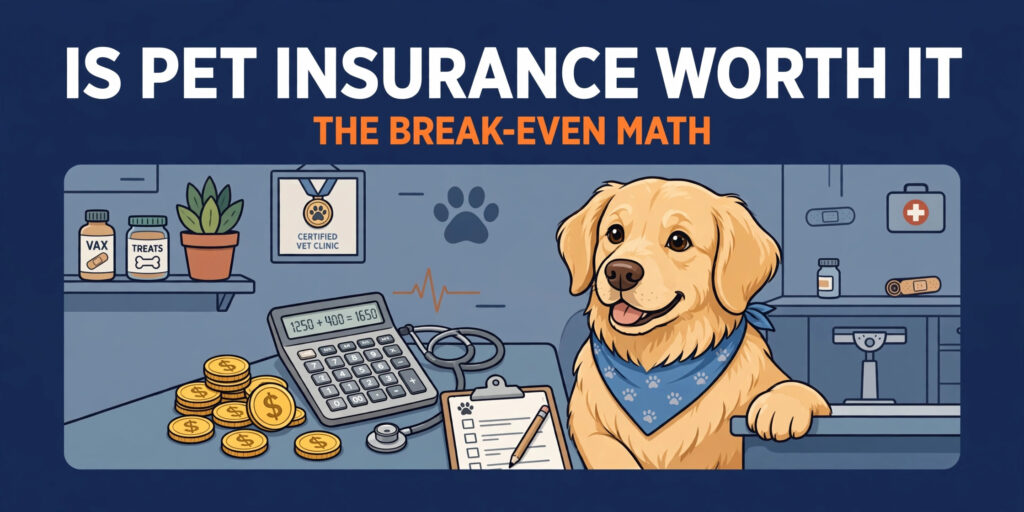
The break-even math
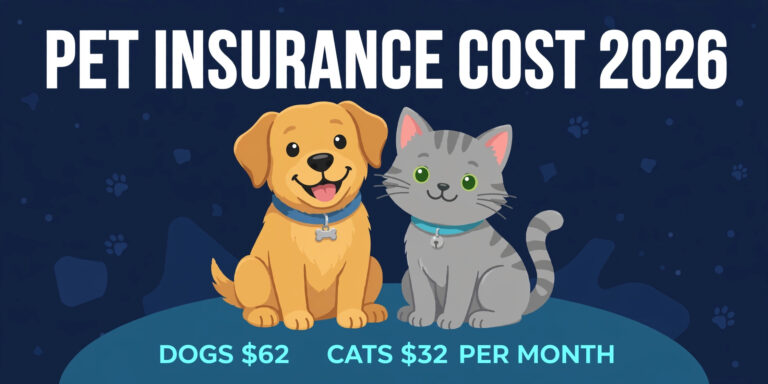
Take a typical dog policy at 62 dollars a month. That is 744 dollars a year in premiums. Over five healthy years you pay about 3,720 dollars and get nothing back. That is the deal most owners actually experience, and it is why pet insurance looks like a waste of money most of the time.
Now take the other path. About one pet in three needs emergency treatment in any given year. A swallowed object that needs surgery runs 3,000 to 5,000 dollars. A cruciate ligament repair runs about 7,000 dollars. Hip dysplasia surgery runs 4,000 to 7,000 dollars. A cancer diagnosis can run 5,000 to 15,000 dollars in treatment.
With an 80 percent reimbursement policy and a 500 dollar deductible, a 7,000 dollar cruciate surgery costs you roughly 1,800 dollars out of pocket instead of the full amount. One incident like that wipes out years of premiums in a single afternoon.
When pet insurance pays off
Pet insurance pays off when your pet has one big event or one chronic condition. A dog that develops diabetes needs management for the rest of its life, easily reaching five figures over the remaining years. A cat that develops kidney disease needs ongoing treatment. A single cancer diagnosis can exceed 15,000 dollars. In each case the policy turns a bill you cannot afford into a bill you can.
It also pays off for high claim breeds. French bulldogs, Bernese mountain dogs, and Great Danes generate expensive claims at high rates. Owners of these breeds face the steepest premiums, but they also face the steepest vet bills, which is exactly why the premiums are steep.
The less obvious payoff is decision freedom. Without insurance, a 10,000 dollar treatment estimate forces a choice between your savings and your pet. With insurance, that same estimate becomes a manageable out of pocket cost, and you choose treatment on medical grounds instead of financial ones.
When pet insurance does not pay off
Pet insurance does not pay off for a pet that stays healthy. If your pet never has an emergency and never develops a chronic condition, you pay more in premiums than you ever receive in claims. That is the normal outcome, and it is how insurance works: most policyholders fund the few who need it.
It also does not pay off well for routine care. Wellness add-ons that cover checkups and vaccines cost 10 to 30 dollars extra a month and rarely return more than they cost, because routine care is predictable. You can budget for vaccines yourself without paying an insurer to do it for you.
Finally, it does not pay off for pre-existing conditions. If your pet already has diabetes, hip dysplasia, or cancer before you enroll, standard policies exclude that condition permanently. Buying a policy after the diagnosis does not help with the diagnosis you already have.
The self-insurance test
Ask yourself one question: could you pay a 5,000 to 10,000 dollar vet bill tomorrow without financial stress? If the answer is yes, you can reasonably self-insure. Put the 62 dollars a month into a savings account instead and let it grow. Over a healthy pet’s life that fund will cover most surprises.
If the answer is no, and it is no for most households, insurance is high value. The point of the policy is not to come out ahead on average. The point is to cap your worst case. A 62 dollar monthly premium converts an unbounded risk into a known cost, and that certainty is what you are buying.
How to make it worth it if you buy
Buy early. Enroll a puppy or kitten before any condition appears. Young pets get the lowest premiums and the cleanest coverage, and conditions diagnosed after enrollment are covered.
Choose a high deductible. A 1,000 dollar deductible with 80 percent reimbursement keeps premiums low while still protecting you against the 5,000 dollar and 10,000 dollar events that actually matter. You self-insure the small stuff and insure the catastrophe.
Compare at least three quotes. The same dog can draw quotes 20 dollars a month apart across carriers. A 20 dollar monthly gap is 240 dollars a year for identical coverage.
Read the exclusions before you buy. Check whether hereditary conditions, chronic illness, and dental disease are covered, and check the annual limit. A cheap policy with a 2,000 dollar limit is not protection against a 7,000 dollar surgery.
Frequently asked questions
Is pet insurance worth it for a healthy pet?
Financially, usually not in any given year. You pay premiums and get nothing back. The value is protection against the year your pet is not healthy, and about one pet in three has an emergency in any given year.
Is pet insurance worth it for an older pet?
It can be, though premiums are higher and more conditions count as pre-existing. Accident coverage alone often still pays off for seniors, since emergencies are unpredictable at any age.
Is pet insurance worth it for indoor cats?
Indoor cats have fewer accidents but still develop illness. Kidney disease, urinary problems, and dental disease are common and expensive. Cat premiums are also much lower, around 32 dollars a month on average, so the break-even point is easier to reach.
What is the alternative to pet insurance?
A dedicated savings account. Put the monthly premium amount aside every month and use it only for vet bills. This works if you start early and your pet stays healthy for the first few years while the fund builds. It fails if a big bill arrives in year one.