A Pinterest chart called “Food as Medicine” is doing huge numbers right now because it does one thing well: it organizes food by body part. Brain foods here, heart foods there, gut foods at the bottom. It is satisfying to look at. It is also incomplete, and taken literally, it misleads: no single food heals an organ, and a chart cannot know your health conditions, your medicines, or your budget. This guide keeps the chart’s useful idea — eat for the body part you want to support — and fills in what the chart leaves out: what the foods actually do, what they cost, and where the claims stop.
Quick answer
“Food as medicine” means choosing foods whose nutrients support normal body functions: omega-3 fats for the brain, fiber for the gut, potassium and nitrates for the heart, and so on. No food treats or cures disease on its own. The pattern that works is boring and cheap: vegetables, fruits, beans, whole grains, nuts, and oily fish, most of the time.
How to read a “food as medicine” chart
Charts link foods to organs by their best-known nutrients. Blueberries point to the brain because of anthocyanins; beets point to the heart because of nitrates. That link is real but partial: nutrients work together, doses from ordinary food are modest, and cooking and processing change things. One rule protects you from nearly every bad chart: if it promises a cure, it is selling something. Food supports health; it does not replace medicine. Anyone with a condition such as diabetes, kidney disease, or heart disease, or anyone on medication — blood thinners and vitamin-K-rich greens are the classic interaction — should check with a clinician before overhauling their diet.
The money lens matters too. The most nutrient-dense foods are often the cheapest: beans, lentils, oats, frozen vegetables, canned tomatoes. The expensive “superfood” powders are usually the worst value on the shelf.
Brain
The chart lists walnuts, almonds, turmeric, blueberries, and flaxseeds. Add oily fish and leafy greens to that list. Omega-3 fats from fish, walnuts, and flaxseed are structural fats in the brain. Blueberries and leafy greens supply antioxidants and folate. Turmeric’s curcumin is widely studied, but it is poorly absorbed from food alone — an honest note the chart skips: a pinch of turmeric in cooking is seasoning, not brain treatment. On budget, canned sardines and frozen blueberries deliver the same key nutrients as fresh salmon and fresh berries for much less money.
Heart
The chart lists tomatoes, beets, pomegranate, garlic, and leafy greens, and olive oil belongs here too. Potassium from leafy greens, beets, and tomatoes helps blood pressure. Nitrates in beets support blood vessel function. Soluble fiber from oats and beans helps cholesterol. Olive oil helps when it replaces saturated fat rather than simply being added on top. Garlic and pomegranate have small, real effects — worth eating, not drug-level effects, and no honest chart should imply otherwise.
Gut and digestion
Fiber is the main story in gut health: it feeds gut microbes and keeps digestion moving. The best cheap sources are beans, lentils, oats, apples, and berries — see the highest-fiber foods guide for the full list: Highest Fiber Foods. Fermented foods such as kimchi, kefir, and yogurt add live microbes; the evidence for general gut health is promising but not settled, so expect support, not transformation.
A healthy gut smoothie for beginners needs nothing special: kefir or yogurt, a banana, a handful of spinach, and a spoon of ground flaxseed. Blend and drink. That is the whole method, and it works because it combines fiber, fermented food, and fruit in one glass.
And the “natural digestive cleanse at home,” honestly: there is no food or drink that cleanses or detoxes you. Your liver and kidneys do that continuously, for free. What people usually mean by a cleanse is a few days of more fiber, more water, less alcohol, and less ultra-processed food. That routine genuinely helps digestion feel better, and it costs nothing. What does not help: laxative “detox” teas and cleanse supplements, which can cause cramps, diarrhea, and electrolyte problems. Persistent symptoms — blood, unexplained weight loss, pain lasting weeks — need a doctor, not a smoothie.
Skin, hair, and scalp
The chart lists citrus, red bell peppers, berries, avocados, walnuts, yogurt, and zinc-rich foods. Vitamin C from citrus and peppers supports collagen. Vitamin E and healthy fats from avocado and nuts support the skin barrier. Zinc and protein from pumpkin seeds, chickpeas, and eggs support hair growth. The limit: hair loss has many causes — hormones, stress, illness, medicines — that food alone will not fix. On budget, bell peppers and citrus are cheap vitamin C. You do not need collagen powder to get it.
Joints and muscles
The chart lists fatty fish, berries, leafy greens, walnuts, and olive oil for joints, and lean proteins, beans, lentils, and complex carbs for muscles. Omega-3 fats and polyphenols are linked to lower inflammation markers. Protein builds muscle only together with resistance exercise — food alone does not. Vitamin C and copper support connective tissue. One boundary worth stating: joint pain that is new, swollen, or persistent deserves evaluation. No food reverses arthritis.
The rest of the chart: eyes, lungs, kidneys, liver, pancreas, lymphatic system
Eyes: carrots, sweet potato, spinach, kale, blueberries, orange. Vitamin A and lutein support vision. They do not restore lost eyesight.
Lungs: apples, tomatoes, olive oil, walnuts, turmeric. Antioxidants support lung tissue, but quitting smoking matters more than any food on this list.
Kidneys: cranberries, blueberries, apples, garlic, red bell peppers. These are kidney-friendly partly because they are lower in potassium and sodium than many alternatives — but people who already have kidney disease need personalized limits on potassium and phosphorus, and a chart cannot give those.
Liver: beans, broccoli, walnuts, greens. Fiber and plant compounds support liver health. Cutting alcohol matters most.
Pancreas: sweet potato, ginger, turmeric, flaxseeds. Steady blood sugar comes from fiber and whole foods across the day, not from any single “pancreas food.”
Lymphatic system: berries, citrus, nuts, seeds, dark leafy greens. The lymph system moves mainly through muscle movement and hydration; food supports it indirectly.
Tomato and avocado get their own callouts on the chart for a reason. Tomatoes supply lycopene, an antioxidant, and canned tomatoes are one of the cheapest healthy foods available. Avocado supplies monounsaturated fats, potassium, and fiber. Both are genuinely versatile, and both beat nearly every powdered product on value.
The money angle: eating this way without the “superfood” markup
Buy frozen: berries, spinach, broccoli. Frozen at peak ripeness, cheaper, and less waste. Buy dried or canned: beans, lentils, oats, tomatoes. These are the cheapest nutrient-dense foods in any store. For protein value, beans, lentils, eggs, and canned fish beat fresh meat and protein powders per dollar. Skip detox teas, collagen powders, “brain” gummies, and exotic berries sold by the ounce — the chart’s ordinary foods cover the same nutrients. For building the plate itself, the MyPlate guide shows how the groups fit together: MyPlate Explained: USDA Daily Nutrition Guide.
One-day example plate (illustrative example)
The following day is an illustration, not a prescription or a measured meal plan. Every item comes from the chart, nothing exotic, nothing elaborately cooked.
Breakfast — no-cook protein breakfast bowl: Greek yogurt, rolled oats, frozen berries thawed overnight, ground flaxseed, and walnuts. No cooking. Protein, fiber, and omega-3 fats in one bowl.
Lunch: beans and rice with tomato salsa, leafy greens, and olive oil.
Snack: an apple and a handful of nuts.
Dinner: canned sardines or lentils with sweet potato, broccoli, and garlic.
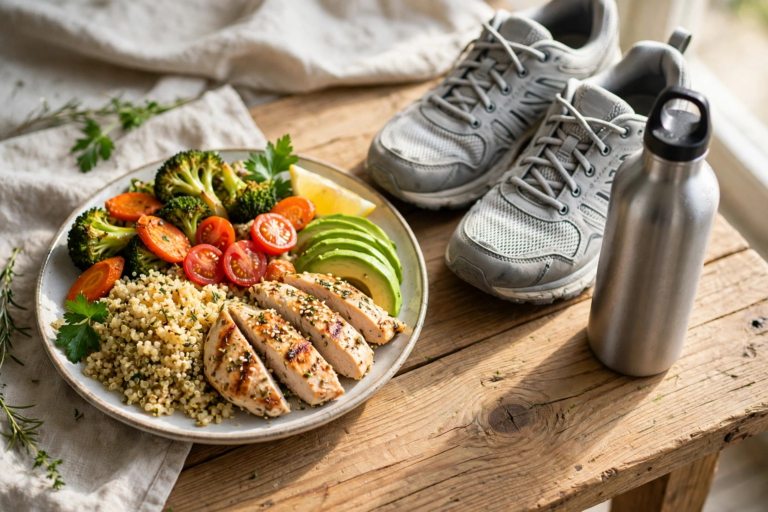
Drinks: water through the day, and kefir or the gut smoothie above if you like fermented foods.
Common mistakes
Treating one food as medicine — “eat this, fix that.” Patterns beat single foods, every time. Buying “cleanse” or “detox” products — see the gut section. Taking megadose supplements — high-dose vitamins can harm and interact with medicines; food-first is safer. Ignoring the rest — sleep, movement, smoking, and alcohol swamp small diet effects. And copying a chart’s portions — charts do not give portions, and your needs depend on age, sex, activity, and conditions.
Pros and cons
Pros: cheap, because the core foods are staples. No special products needed. Supports overall health rather than one narrow outcome. Flexible for any cuisine and budget.
Cons: slow — weeks, not days. Will not treat disease alone. Needs personalization for conditions and medicines. Charts oversimplify, so a chart alone is never the full picture.
FAQ
Can food really act as medicine?
Food supports normal function and lowers risk; it does not cure disease. Think “supports,” not “treats.” For a diagnosed condition, food complements treatment — it does not replace it.
What is a natural digestive cleanse?
More fiber, more water, fermented foods, less alcohol and ultra-processed food for a few days. Your liver and kidneys handle detox; products sold as “cleanses” add nothing to that and can harm.
Is a gut smoothie enough for gut health?
It helps if it adds fiber and fermented foods, but the overall pattern matters more than one drink: fiber across the day, varied plants, sleep, and movement.
Do I need supplements for any of this?
Most people do not, if they eat varied foods. Exceptions such as vitamin D, B12 on a plant-based diet, or iron in pregnancy are personal — ask a clinician or dietitian rather than guessing.
When should I see a doctor instead of changing food?
Blood in stool, unexplained weight loss, persistent pain, chest symptoms, or any new lump or swelling — promptly, not after a diet experiment. If cost is the barrier to getting checked, knowing what a blood test costs without insurance helps you plan: How Much Does a Blood Test Cost Without Insurance.
The bottom line
The Pinterest chart went viral because it makes healthy eating feel simple and visual. Keep that simplicity: pick one food from each group you actually like, buy the cheap versions — frozen, canned, dried — and repeat them most days. That is the whole “food as medicine” method. No powders, no cleanses, no miracle claims.
This guide is general information, not medical advice. Talk to a clinician about health conditions or medicines before making major diet changes.