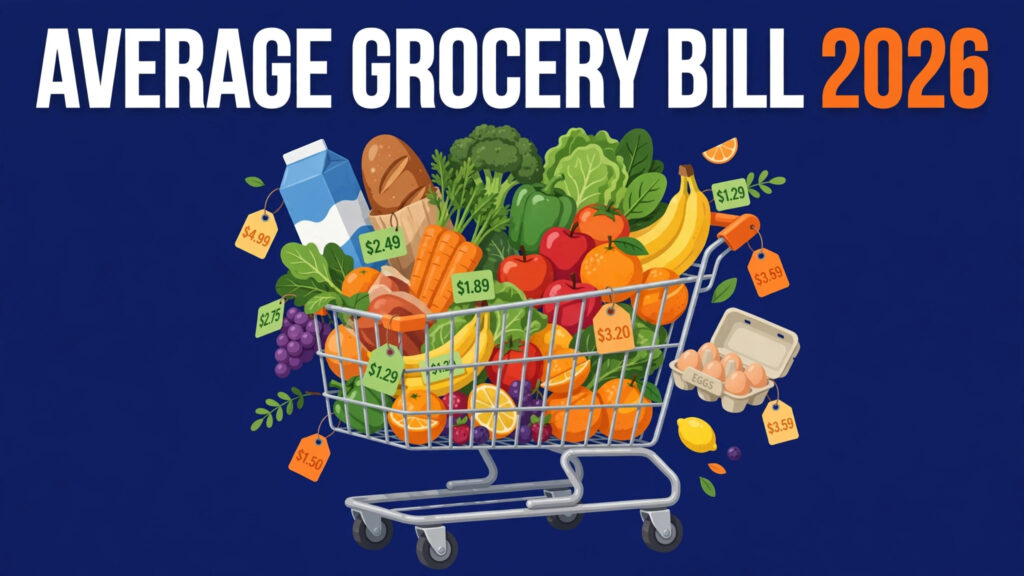
Groceries are one of the largest monthly bills most households face, and the most common question about them is also the simplest: what should a family actually spend? The short answer for 2026 is that a family of four on the USDA moderate-cost food plan spends about $1,388 a month on groceries, a single adult on the same plan spends roughly $441 a month, and two adults spend about $808 a month. The full range for a family of four runs from $1,013 a month on the thrifty plan to $1,668 a month on the liberal plan. These figures come from the USDA August 2026 Cost of Food at Home report, the closest thing to an official answer the United States has, and this guide breaks them down by household size and plan level, plus what you can do if your bill runs higher.
The USDA Food Plans, Explained
The USDA publishes four food plans every month, each one pricing a healthy diet at home at a different cost level. The thrifty plan is the lowest-cost plan, built on scratch cooking, beans, rice, oats, in-season produce, and almost no processed food. It is also the plan that sets the maximum SNAP benefit. The low-cost plan adds a little more variety. The moderate-cost plan is the middle tier and the closest match to what a typical middle-income household actually buys, with a mix of store brands and name brands and a few convenience foods. The liberal plan reflects premium shopping: organic produce, premium cuts, and specialty items. All four plans cover food at home only. They do not include restaurants, takeout, delivery, school lunches, or snacks bought at a convenience store, so a household that eats out regularly will spend more than the plan shows.
Average Grocery Bill by Household Size in 2026
For a family of four made up of two adults aged 19 to 50 and two children aged 6 to 8 and 9 to 11, the August 2026 USDA figures are the benchmark most budget guides use. The moderate plan at $1,388 a month works out to about $320 a week. The thrifty plan at $1,013 a month is about $234 a week, and it assumes careful shopping and almost no waste. The liberal plan at $1,668 a month is about $385 a week.
| USDA Plan, Family of Four | Monthly Cost | Weekly Cost |
|---|---|---|
| Thrifty | $1,013 | About $234 |
| Low-cost | $1,170 | About $270 |
| Moderate-cost | $1,388 | About $320 |
| Liberal | $1,668 | About $385 |
Household size changes the total, but not in a straight line, because larger households get economies of scale. On the moderate-cost plan in August 2026, two adults run about $808 a month, and a single adult lands around $441 a month. The single-adult figure needs one caveat: the USDA publishes its individual costs for people living in four-person households, so the one-adult number is an adjusted midpoint of the male and female figures, not a figure the USDA publishes as a standalone one-person cost. The direction is still clear: the per-person cost falls as the household grows, because staples, bulk buys, and shared meals stretch further.
| Household | Moderate-Cost Plan, Monthly |
|---|---|
| 1 adult | About $441 |
| 2 adults | About $808 |
| Family of four (2 adults, 2 children) | About $1,388 |
Why Your Bill May Be Higher Than the Benchmark
Location is the first reason. The USDA figures are national averages, and a gallon of milk that costs about $3.30 in Mississippi can cost over $6 in Hawaii, which adds up to hundreds of dollars a month across a whole cart. Dietary needs are the second reason: gluten-free, dairy-free, and organic shopping all push the bill above the moderate plan, sometimes toward liberal-plan territory. Food waste is the third reason, and it is the one households control most. Groceries bought and never eaten are money thrown away, and the average household wastes a meaningful share of what it buys, especially fresh produce and leftovers. Eating out is the fourth reason, and it is the largest: a household that counts restaurant meals and delivery in its food spending can easily run 20 to 40 percent above the USDA benchmark, because the benchmark counts home cooking only.
How to Lower Your Grocery Bill
- Plan meals before shopping. A weekly meal plan built around what is on sale turns impulse buys into planned buys, and it is the single most effective saving habit.
- Shop with a list, and stick to it. The list is the budget in written form. Shopping hungry or without a list is how the bill grows by a third.
- Buy store brands for staples. Rice, oats, canned tomatoes, broth, and frozen vegetables are usually identical in quality to name brands at 20 to 30 percent less.
- Buy seasonal produce. Fruit and vegetables in season cost less and taste better. Frozen produce is a close second and never spoils.
- Cook from scratch where it counts. Beans, rice, eggs, and whole chickens are the cheapest proteins per serving, and batch cooking turns one cooking session into several meals.
- Use the freezer. Bread, meat bought on sale, and cooked leftovers all freeze well, which kills the waste that inflates the bill.
- Compare unit prices, not package prices. The bigger bag is not always cheaper per ounce. The shelf tag usually shows the unit price, and it is the number that matters.
- Limit the trips. Fewer trips mean fewer impulse buys. One big weekly shop beats four small ones.
What Americans Actually Spend Versus the Benchmark
The USDA plans describe what a household should spend on a healthy diet at home. What households actually spend is a different number. The Bureau of Labor Statistics Consumer Expenditure Survey puts average household grocery spending at $6,224 a year, about $519 a month, which sits well below the USDA moderate plan for a family of four. The gap is explained by household size: the national average household has about 2.5 people, not four, and many households include single adults and couples whose bills are far lower than a family of four. It is also explained by the difference between groceries and total food spending. The survey figure covers groceries only, while a household that eats out adds restaurant spending on top. The right comparison is always household to household: compare a single adult with the single-adult figure, and a family of four with the family-of-four figure, rather than comparing any household with the national average.
What Counts as a Good Grocery Budget
A useful rule is to compare your spending with the plan that matches your lifestyle, not with the cheapest plan. A household that cooks most meals at home and shops carefully should land near the moderate plan. A household that buys organic and premium items should expect liberal-plan spending and budget for it honestly. A household that is trying to cut costs should aim for the low-cost plan first, because jumping straight to thrifty usually fails: the thrifty plan assumes scratch cooking, near-zero waste, and a level of planning most busy households cannot sustain every week. The goal is a number you can hold for months, not a number you hit once.
Frequently Asked Questions
What is the average grocery bill per month in 2026?
For a family of four on the USDA moderate-cost plan, about $1,388 a month as of August 2026. A single adult on the same plan spends roughly $441 a month, and two adults about $808 a month.
What is the cheapest realistic grocery budget for a family of four?
About $1,013 a month on the USDA thrifty plan, which assumes scratch cooking, seasonal produce, and almost no waste. Most households find the low-cost plan at about $1,170 a month more realistic.
Do the USDA figures include eating out?
No. The USDA food plans cover food prepared at home only. Restaurants, takeout, and delivery are excluded, so households that eat out should expect their total food spending to run higher than the benchmark.
Why does the per-person cost fall as the household grows?
Because of economies of scale. Staples bought in bulk, shared meals, and one cooking session feeding several people all spread the cost. A single adult pays the most per person, and a family of four pays the least.
How much can meal planning really save?
It depends on the starting point, but households that move from unplanned shopping to a weekly plan with a list typically cut 15 to 25 percent from their bill, mostly by eliminating impulse buys and wasted food.