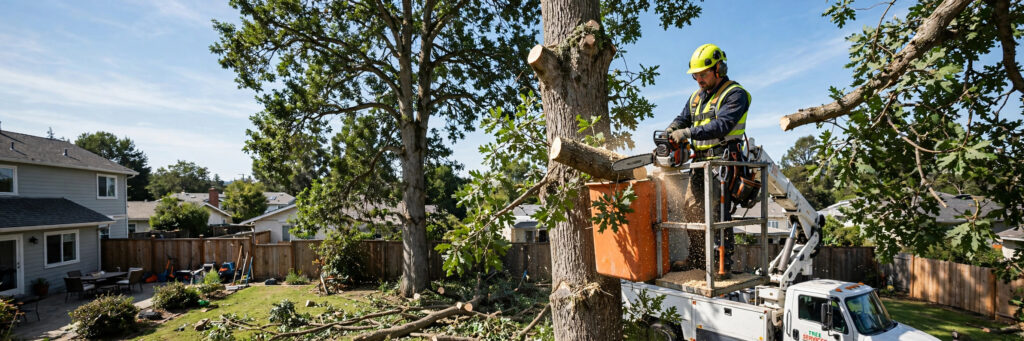
A dead oak leaning toward the roof, a pine that outgrew the yard, a stump grinding project that keeps getting postponed: at some point most homeowners need a tree gone, and the first question is always the price. Tree removal costs vary more than almost any other home service because no two trees are alike. Size is the biggest driver, but access, condition, and location can double a quote. This guide lays out what tree removal actually costs in 2026, what pushes the price up or down, and where you can realistically save money.
Average Tree Removal Cost in 2026
Most homeowners pay somewhere between $400 and $1,500 to have a typical yard tree cut down and hauled away, with straightforward jobs on smaller trees coming in below that range and very large or hazardous trees going well above it. Tree services often build their quotes from a per-foot rate, commonly in the range of $10 to $25 per foot of tree height, then adjust for difficulty. That simple math explains the whole market: a 30-foot tree is a half-day job for a small crew, while a 90-foot oak over a house can take a full day, a bucket truck, and a crane.
Tree Removal Cost by Size
Height is the fastest way to estimate a removal bill. The ranges below combine typical per-foot pricing with published industry cost data for 2026, and assume the tree is in an average yard with reasonable access. They cover cutting the tree down and removing the debris, but not stump grinding, which is priced separately further down.
| Tree size | Height | Typical removal cost |
|---|---|---|
| Small | Up to 30 feet | $150 to $450 |
| Medium | 30 to 50 feet | $400 to $1,000 |
| Large | 50 to 75 feet | $800 to $1,900 |
| Extra large | Over 75 feet | $1,500 to $3,000 or more |
Species matters inside those ranges. A straight pine with soft wood cuts fast and lands at the low end. A spreading hardwood like an oak or hickory, with heavy limbs that each need to be roped and lowered, takes far longer and lands at the high end. Multi-trunk trees are often priced like several trees sharing one stump.
Stump Grinding and Stump Removal Costs
Cutting a tree down leaves a stump, and stump work is almost never included in the base removal quote. Stump grinding, where a machine chews the stump into mulch below ground level, typically costs $100 to $450 per stump. The national average for stump removal work is around $340, according to published home-services cost data, and grinders usually price by diameter at roughly $2 to $5 per inch, often with a minimum service fee of $75 to $100. A 24-inch stump, for example, usually grinds for $150 to $300.
Full stump removal, digging out the stump and root ball entirely, costs more because it needs excavation equipment and leaves a hole to fill. Most homeowners choose grinding: it is cheaper, faster, and the ground is ready for grass or mulch the same day. Booking grinding for several stumps on one visit usually earns a discount on every stump after the first.
What Drives the Price Up or Down
- Access. A tree in an open front yard is cheap. A tree behind a fence, up a slope, or in a tight side yard where no truck or lift can reach forces the crew to climb and hand-carry everything out, which can add 20 to 50 percent.
- Hazard and condition. Dead, rotten, storm-damaged, or leaning trees are dangerous to dismantle. If a tree hangs over a roof, pool, or power lines, expect rigging, a crane, or both. Crane work alone can add $500 to $1,500 or more to a job.
- Emergency removal. A tree on your house after a storm is a rush job with a rush price. Emergency removal commonly costs 50 to 100 percent more than the same work scheduled in advance, though homeowners insurance often covers removal when a tree damages a covered structure.
- Location. Prices track local labor costs. Urban and coastal areas, and cities with strict rules, sit at the top of the range; rural areas in the Midwest and South sit at the bottom.
- Debris and extras. Hauling logs away, chipping brush, splitting firewood, and root chasing all take time. Keeping the wood or the mulch usually shaves money off the quote.
Permits and Rules to Know
Many cities require a permit to remove a tree above a certain trunk diameter, and some protect specific species such as heritage oaks. Permit fees are usually modest, often under a few hundred dollars, but fines for unpermitted removal can be severe, and the homeowner is usually the one responsible. Homeowners associations may have their own approval process. A reputable tree service will tell you what your city requires before work starts, and many handle the paperwork as part of the job. When in doubt, a two-minute call to the city arborist or permitting office is worth it.
DIY Versus Hiring a Pro
Cutting down a small, healthy tree in open ground is one of the few tree jobs a confident homeowner with chainsaw experience can reasonably do, and it costs only fuel, safety gear, and a weekend. Everything else belongs to professionals. Tree work is consistently ranked among the most dangerous jobs in the country: falling limbs are unpredictable, rotten wood behaves badly, and a tree that lands wrong can cause tens of thousands of dollars in damage or a fatal injury. Pros carry liability insurance and workers compensation, which protects you if something goes wrong. Always confirm a company is insured before signing, because an uninsured low bid can make you liable for injuries on your property.
How to Save Money on Tree Removal
- Get three written quotes. Prices for identical work routinely vary by 30 percent or more between companies.
- Book in the off-season. Late fall and winter are slow for tree services in most regions, and some offer seasonal discounts.
- Bundle the work. Removing two trees or adding grinding on the same visit spreads the crew and equipment cost across more work.
- Keep the wood and chips. Skipping hauling and disposal lowers the quote, and you get free firewood and mulch.
- Ask what is included. A cheap quote that excludes hauling, grinding, and cleanup is not cheap once the extras are added.
What a Written Quote Should Show
Tree removal pricing gets far less mysterious when the quote is itemized. A proper written estimate should state the height and species being removed, whether the price includes cutting, lowering, and chipping, whether logs and brush are hauled away or left on site, whether stump grinding is included or separate, and who handles permits. It should also name the company insurance coverage and license number where your state requires one. Vague one-line quotes are where surprise charges breed: the cheap number that assumed you would keep the mess, or that quietly excluded the stump. Comparing two itemized quotes side by side takes five minutes and is the most reliable way to know whether a price is fair for your tree, your yard, and your city. If a quote is dramatically lower than the others, check what it leaves out before you celebrate.
Frequently Asked Questions
How much does it cost to remove a large tree?
A large tree of 50 to 75 feet typically costs $800 to $1,900 to remove, and extra-large trees over 75 feet often run $1,500 to $3,000 or more, especially if a crane is needed or the tree overhangs a structure.
Is stump grinding included in tree removal?
Usually not. Stump grinding is priced separately, typically $100 to $450 per stump based on diameter, though some companies bundle it if you ask during the quote. Always confirm before the crew leaves, because a return trip costs more.
Does homeowners insurance pay for tree removal?
Generally only when the tree falls and damages a covered structure, like your roof or fence, or blocks a driveway. Insurers typically pay to remove a fallen tree in that situation, often up to a set limit. Removing a standing tree just because it is dead or risky is almost always the homeowner cost to bear.
Can I remove a tree myself to save money?
For a small tree in open ground, an experienced homeowner can. For anything tall, dead, leaning, or near a building or power line, hiring an insured professional is the safer and usually cheaper choice once risk is priced in.