The Short Answer: What a Roof Replacement Typically Costs in 2026
Most homeowners pay roughly $8,000 to $25,000 for a full asphalt-shingle replacement on an average home in 2026. A small, simple roof can come in below that range, while a large, steep or complex roof in a high-cost area can run $30,000 or more. Premium materials change the picture completely: metal, tile and slate roofs commonly cost two to four times as much as standard shingles.
That range is wide because contractors price by roof size, material, steepness and complexity, and any repair work hiding under the old shingles. The sections below break the price down so you can place your own home inside the range before collecting quotes.
A roof is one of the largest single home expenses you will face. If you are building a savings target for it, our emergency fund calculator can help you set a realistic number.
Roof Replacement Cost by Material
Material is the single biggest price lever. Roofers measure in squares, where one square equals 100 square feet of roof surface. The table below shows typical installed prices in 2026, including tear-off and basic underlayment. Expect the high end in coastal and high-wage markets.
| Material | Typical cost per square foot installed | Typical total for a 2,000 sq. ft. roof | Typical lifespan |
|---|---|---|---|
| Asphalt shingle (3-tab) | $4 to $6 | $8,000 to $12,000 | 15 to 20 years |
| Architectural shingle | $5 to $8 | $10,000 to $16,000 | 25 to 30 years |
| Metal (standing seam or panels) | $9 to $16 | $18,000 to $32,000 | 40 to 70 years |
| Tile (clay or concrete) | $10 to $18 | $20,000 to $36,000 | 50 years or more |
| Slate | $15 to $30 | $30,000 to $60,000 | 75 to 100 years or more |
| Wood shake | $7 to $12 | $14,000 to $24,000 | 25 to 35 years |
Asphalt shingles dominate US replacements because they are the cheapest to buy, fastest to install and easiest to repair. Architectural shingles cost a little more than 3-tab shingles but handle wind better and last longer, so most roofers quote them as the default.
Metal costs more up front but can last two to three times as long. Tile and slate are heavy, may need structural reinforcement, and need specialist installers. Wood shake sits in the middle on price, but some insurers and fire codes restrict it.
Roof Replacement Cost by Roof Size
After material, size drives the total. Roof size is not house size: a 1,800 square foot house with a steep roof and large overhang can have 2,200 square feet or more of roof surface.
- 1,000 sq. ft. roof: expect roughly $4,500 to $8,000 for asphalt shingles
- 1,500 sq. ft. roof: expect roughly $6,500 to $12,000 for asphalt shingles
- 2,000 sq. ft. roof: expect roughly $8,500 to $16,000 for asphalt shingles
- 2,500 sq. ft. roof: expect roughly $11,000 to $20,000 for asphalt shingles
- 3,000 sq. ft. roof: expect roughly $13,000 to $24,000 for asphalt shingles
For metal, tile or slate, use the per-square-foot ranges in the table above. If a quote looks far outside these ranges, ask the contractor to walk you through the line items. Sometimes there is a good reason, such as decking replacement, and sometimes there is not.
What Drives the Price
Tear-off and disposal
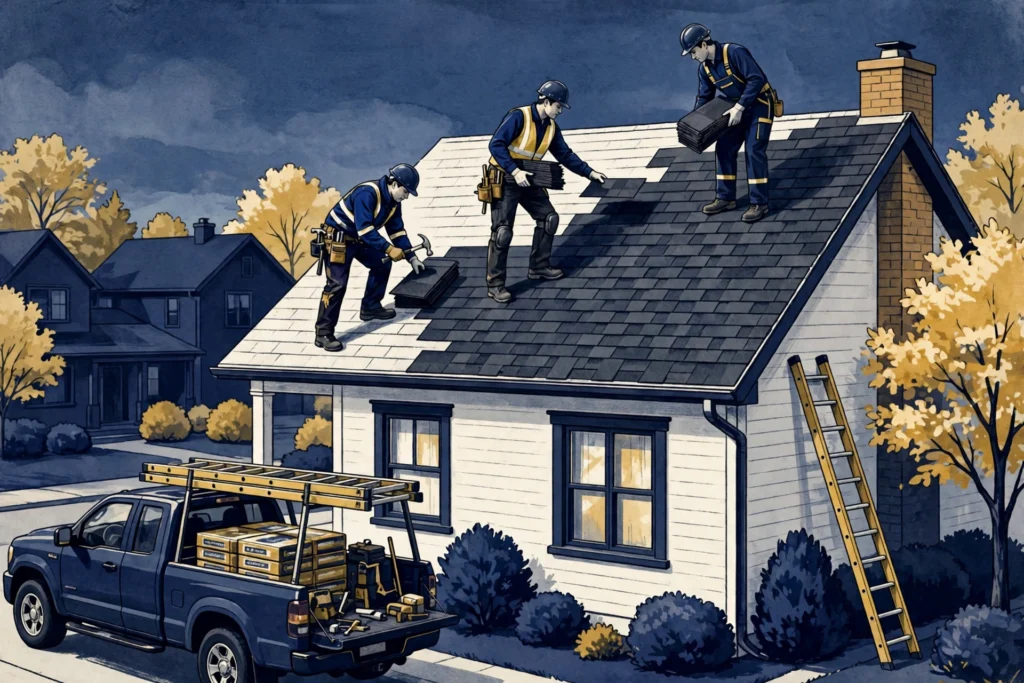
Removing the old roof typically adds $1 to $3 per square foot, including dump fees, and more if there are two layers. A roof-over, installing over the old layer, saves that money but can shorten the new roof life and may void warranties, so most homeowners are better off paying for a full tear-off.
Pitch and complexity
A steep roof is slower and more dangerous to work on, so labor costs rise. Valleys, dormers, skylights and chimneys add cutting, flashing and sealing work. A simple gable roof is the cheapest shape; a cut-up roof can cost 20 to 40 percent more than a simple roof of the same size.
Labor
Labor is typically around 60 percent of the total bill. That is why the same roof costs more in a high-wage metro area than in a rural county, and why prices spike after a major storm, when crews are booked out for months.
Permits and decking repair
Permits typically run $150 to $500, and reputable contractors include them in the quote. Decking is the surprise cost: rotted plywood found under the old shingles must be replaced, typically at $3 to $6 per square foot for affected sections. Get the per-sheet price in writing before work starts.
How Cost Varies by Region
Expect roughly 10 to 25 percent above the national ranges in the Northeast, on the West Coast and in large metros, where labor and disposal cost most. Prices in the South and Midwest typically sit at or below the middle, although hurricane-prone parts of Florida and the Gulf Coast pay more for wind-rated materials and stricter codes. Some areas also require ice-dam underlayment, wildfire-rated materials or cool-roof products, so confirm local rules before signing.
Will Homeowners Insurance Pay for a New Roof?
Sometimes, and this is where a $15,000 bill can become a deductible-only bill. Insurance covers sudden, accidental damage from a covered event. It does not pay to replace a roof that simply wore out.
Covered damage versus wear and tear
Storm, wind and hail damage are the most common successful claims. If a storm tears off shingles, drops a limb through the deck, or hail bruises the surface, that damage is typically covered, subject to your deductible and limits. Fire and falling objects are also typically covered.
Wear and tear is excluded. A 22-year-old roof leaking because the shingles are at the end of their life is a maintenance cost, not a claim. Gradual leaks, rot and damage from neglected repairs are also typically denied, so get an honest roofer assessment before you call the insurer.
Actual cash value versus replacement cost coverage
Replacement cost coverage pays what it actually costs to replace the roof with a similar new one, after your deductible. Actual cash value, or ACV, pays replacement cost minus depreciation for age and condition. On an older roof that gap is large: an ACV policy might pay only 40 to 60 percent of a $16,000 replacement.
Many insurers move older roofs to ACV automatically, or use a roof payment schedule that cuts the payout each year. Check your declarations page for roof settlement wording, and ask your agent which basis your roof is on.
Deductibles, including percentage wind and hurricane deductibles
A standard deductible is flat, often $1,000 or $2,500. In storm-prone states, many policies carry a separate percentage deductible for wind or hurricane damage, typically 1 to 5 percent of the home insured value, not the roof cost. On a home insured for $400,000, a 2 percent deductible means you pay the first $8,000. Check for this deductible before storm season.
How to document damage and file a claim
- Photograph and video the damage from the ground when it is safe, including fallen shingles and interior leaks, and save the date-stamped files.
- Make temporary repairs, such as tarping a hole, and keep receipts. Further damage after the event may not be covered.
- Get a licensed roofer to inspect and write up the damage, tying it to a specific storm date.
- File promptly, keep every document, and note the claim number, adjuster name and every deadline you are given.
- Meet the adjuster on site if you can, with your roofer present, so damaged areas are not missed.
- Do not hand your full payout to a contractor before you have the insurer approved scope in writing.
Ways to Save on a Roof Replacement
- Get at least three written quotes with the same materials and scope, so you are comparing like for like. The spread between bids is often several thousand dollars.
- Schedule off-season if you can. Late fall and winter are slower in many regions, and some roofers discount modestly to keep crews working.
- Ask about material tiers. A good architectural shingle often delivers most of the lifespan of premium options at a fraction of the price.
- Check for tax credits and rebates. Certain energy-efficient metal and reflective products may qualify for federal or local incentives; confirm eligibility before you buy.
- Use financing carefully. A home equity loan typically costs far less than a contractor-arranged loan or a credit card. Compare total interest, not just the monthly payment. See more planning tools on our tools page.
- Keep the old roof maintained. Fixing flashing early and replacing a few damaged shingles can buy two or three extra years to save.
When to Repair Instead of Replace
Repair usually makes sense when the roof is under 15 years old, damage is limited to one area, such as a leak around flashing or a few wind-lifted shingles, and the rest of the surface is sound. A targeted repair typically costs $300 to $1,500.
Replace when leaks appear in multiple places, shingles are curling or shedding granules across the whole roof, the roof is sagging, or it is near the end of its life and a repair would only buy a year or two. Repeated repairs on a dying roof usually cost more than replacing it once.
FAQs
How long does a roof replacement take?
Most asphalt shingle replacements take one to three days, weather permitting. Metal, tile and slate typically take a week or more.
How long should a new roof last?
Expect roughly 15 to 20 years from basic 3-tab shingles, 25 to 30 years from architectural shingles, 40 to 70 years from metal, and 50 years or more from tile and slate, provided the roof is installed correctly and maintained.
Does a new roof increase home value?
Typically yes. A new roof removes a major objection for buyers and insurers, and homeowners commonly recover a substantial share of the cost at resale. It can also make the home easier to insure.
Can I stay in the house during a replacement?
Yes, in most cases. Expect loud noise and vibration during working hours, and keep children and pets away from the work zone. Working from home on tear-off day is difficult.
Will insurance premiums go up after a roof claim?
They can. A claim may affect your premium at renewal and stays on your claims history for several years, so weigh a small claim against your deductible before filing.
What warranty should a new roof come with?
Expect two layers: a manufacturer warranty on the materials, often 25 years to lifetime on shingles with conditions, and a workmanship warranty from the installer, commonly 5 to 10 years. Get both in writing and confirm what voids them.