The Short Answer: Yes, You Can Switch Anytime
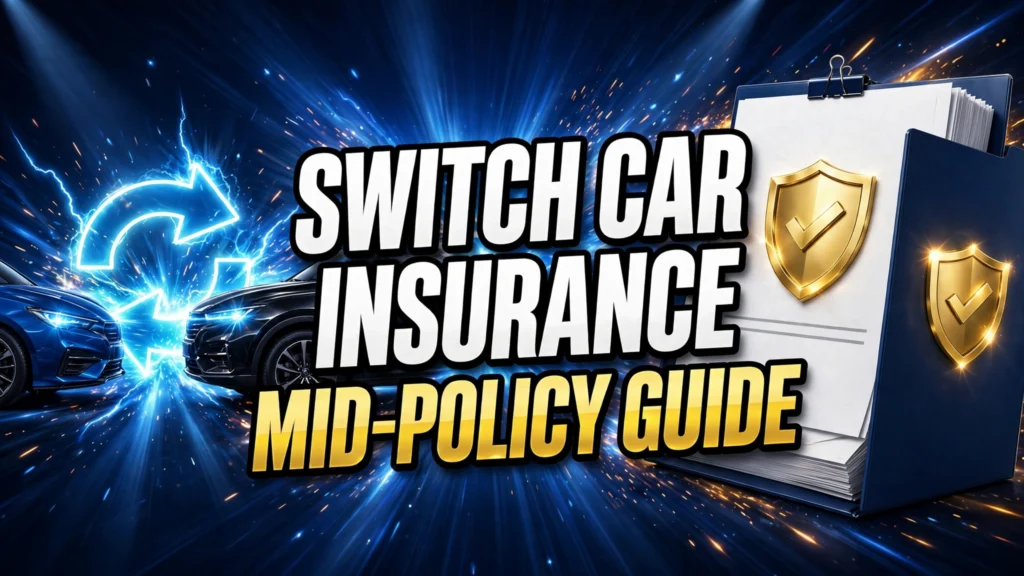
Can you switch car insurance mid-policy? Yes — in every U.S. state, you have the right to cancel your auto insurance at any time and move to a new carrier. You don’t have to wait for renewal. But how you switch determines whether you save money or pay unnecessary fees, and whether you accidentally create a coverage gap. Follow the process below and you’ll keep every dollar you’re owed.
How to Switch Car Insurance Mid-Policy: The 7-Step Checklist
Order matters. Do it in this sequence and there is no gap, no double-billing, and no surprise fee.
- Shop at least three quotes with identical coverage. Match your current limits and deductibles exactly so you’re comparing price, not coverage. Our cheap car insurance guide shows where to look beyond the big advertisers.
- Buy the new policy first. Choose a start date a few days out — most policies activate at 12:01 AM on the start date. Get the policy number and ID cards before you touch the old policy.
- Time the handoff with zero gap. Ideally, the old policy ends at 11:59 PM the night before the new one begins. Even a one-day overlap is safer than a one-hour gap — a lapse can mean fines and higher rates, as the penalties for driving uninsured in Texas illustrate.
- Cancel the old policy in writing. Call to notify them, then follow up with an email or letter requesting cancellation effective on your chosen date and time. Get a written confirmation.
- Confirm your refund amount and method. Ask for the exact dollar figure and whether it comes as a check, card reversal, or account credit.
- Stop autopay on the old policy. Cancel the automatic draft only after the cancellation date passes, so no stray charges — or missed final bills — slip through.
- Notify your lender if you finance or lease. Lienholders require specific coverages and must be listed correctly on the new policy. Send them the new declarations page.
Will You Pay a Cancellation Fee?
Usually, no — but not always. It comes down to how your insurer calculates the refund:
| Refund type | How it works | What you get |
|---|---|---|
| Pro-rata | Refund is strictly proportional to unused days | Full unused premium back, no penalty — the best outcome |
| Short-rate | Insurer keeps a percentage of the unearned premium as a penalty | Less than the pro-rata amount; the “fee” is baked into the math |
Many major insurers cancel with no fee and a pro-rata refund, but some apply short-rate penalties — and rules vary by company and state. A short-rate penalty is often calculated on a sliding scale: cancel early in the term and the insurer keeps a larger slice; cancel near the end and the penalty shrinks. This is why the math favors switching early only when the annual savings are large enough to dwarf the penalty — run both numbers before you commit.
Before you cancel, ask your agent two questions and write down the answers: “Is this pro-rata or short-rate, and what is the exact dollar refund?” If they can’t answer clearly, get it in writing before you proceed. Carrier practices differ, which is one reason comparing providers — like in our Progressive insurance overview — pays off before you commit.
When Switching Mid-Policy Makes Sense (and When to Wait)
Switch now when: the annual savings clearly exceed any cancellation fee; you’ve had a life change (moved, married, new car, teen driver added); or your current insurer’s service or claims handling has been poor.
Wait until renewal when: the savings are marginal (under ~$100/year after fees); you’re within a month or two of renewal anyway; or you have an open claim — switching mid-claim is legal, but it complicates the paperwork, so most drivers prefer a clean break at renewal.
Mistakes That Cost Drivers Real Money
- Just stopping payment. Never “cancel” by letting autopay fail. That creates a lapse on your insurance history, and insurers charge lapsed drivers significantly higher rates — far more than any cancellation fee would have cost.
- Leaving even a one-day gap. Driving uninsured, even briefly, can trigger fines, registration holds, and license issues depending on your state.
- Forgetting the lienholder. If you finance or lease, your lender can force-place expensive insurance if they don’t see continuous coverage on file.
- Chasing price alone. A cheaper premium with worse claims service or much higher deductibles isn’t a win. Compare coverage line by line.
Frequently Asked Questions
Do I get a refund if I cancel car insurance mid-policy?
In most cases, yes — you’ll receive a refund of the unused premium, either pro-rata (full) or short-rate (minus a penalty). If you pay monthly and haven’t prepaid, you may simply owe nothing further. Always confirm the amount before canceling.
Does switching car insurance hurt your credit score or raise rates?
Switching itself does neither. What does raise your rates is a lapse in coverage — which is why you buy the new policy before canceling the old one.
Can I switch car insurance with an open claim?
Yes, it’s legal. Your old insurer still handles the open claim. That said, many drivers wait until the claim closes to keep the paperwork simple.
How long does it take to get a cancellation refund?
Timelines vary by insurer and payment method — typically within a few weeks. Ask for the expected timeline and method (check, card reversal, or direct deposit) when you cancel.
Rules vary by insurer and state. For impartial consumer guidance on auto insurance, see the National Association of Insurance Commissioners.