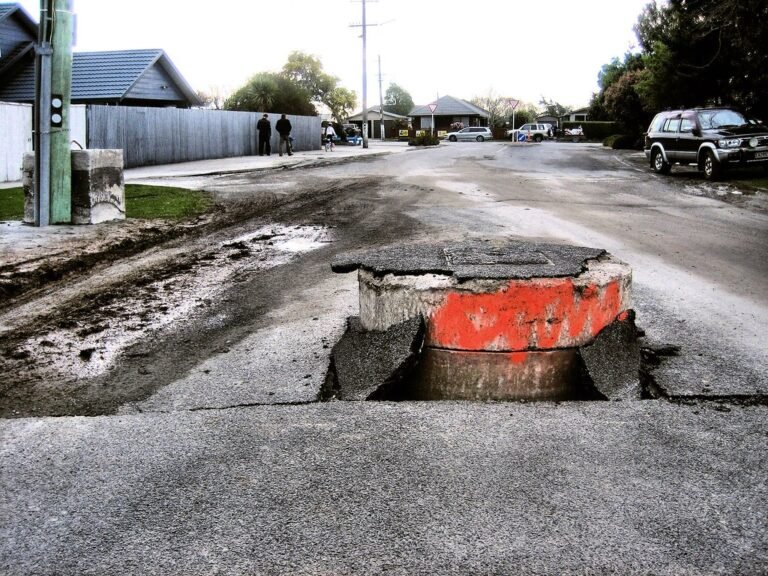
Heavy rain falls all night, a nearby creek rises, and by morning there is water in your living room. You call your homeowners insurer, confident you are covered. Then comes the sentence no homeowner wants to hear: flood damage is not covered by your homeowners policy. Floods are the most common and most expensive natural disaster in the United States, and the coverage for them is a separate policy most people never buy until it is too late.
Quick answer
Flood insurance is a separate policy that pays for flood damage to your home and belongings, because standard homeowners and renters policies exclude flooding. The National Flood Insurance Program, run by FEMA, covers up to $250,000 for the building and $100,000 for contents, while private insurers can offer higher limits.
What flood insurance actually is
Flood insurance is property insurance that deals with damage caused by flooding. Contrary to what most people assume, flood damage is not generally covered by homeowners or renters insurance. That is why a separate policy is needed to protect your home and belongings against the financial cost of flood damage.
The National Flood Insurance Program, or NFIP, falls under the Federal Emergency Management Agency, known as FEMA, and provides most flood insurance in the United States. Private flood insurance providers also sell coverage, often with higher limits and extra benefits. You can buy NFIP coverage through an insurance agent, and FEMA’s consumer site FloodSmart explains the program and lets you check your flood risk.
What Counts as a Flood? FEMA’s Definition Is Narrower Than You Think
Most people picture any water in the house as a flood. The flood insurance policy does not. Under the Standard Flood Insurance Policy (the federal policy form, 44 CFR Part 61, Appendix A(1)), a “flood” means a general and temporary condition of partial or complete inundation of two or more acres of normally dry land, or of two or more properties (one of which must be yours), caused by:
- overflow of inland or tidal waters;
- unusual and rapid accumulation or runoff of surface waters from any source; or
- mudflow.
It also covers collapse or subsidence of land along the shore of a lake or similar body of water, when erosion or undermining by waves or currents causes a flood as defined above.
The practical consequence is the two-acre / two-property test. If a heavy rainstorm fills your basement but the water only pools in your own yard and never reaches a neighbour’s property or covers two acres, the damage does not meet the policy definition — and the claim can be denied even though your home is genuinely wet. A burst pipe inside the house is not a flood at all; that is a homeowners claim. This is why the “Do you need flood insurance?” section below asks whether your area has flooded before: a flood that reaches your neighbours is the kind the policy is built for.
Why it matters even if you are not near water
Most Americans think they do not need flood insurance because they do not live close to the ocean or a river. Yet from 2014 to 2024, nearly one third of NFIP claims came from outside high risk flood areas, according to FloodSmart. Flooding comes from heavy rainfall, storm surge, snowmelt, hurricanes, and overwhelmed drainage systems, not just rivers overflowing.
Without flood insurance, you pay out of pocket or rely on federal disaster assistance, which is never guaranteed and is often limited. Federal help after a disaster frequently arrives as a low interest loan, not a grant, which means you repay the money that rebuilds your home.
What flood insurance covers
There are two categories of coverage, bought separately with separate deductibles.
Building property coverage
Building coverage protects the structure of your home, including foundation walls, plumbing and electrical systems, heating and cooling equipment, furnaces, air conditioners, built in appliances such as refrigerators and dishwashers, permanently installed carpeting, and detached garages. NFIP building coverage goes up to $250,000.
Personal property coverage
Contents coverage protects the items inside your home, including clothing, furniture, electronics, curtains and drapery, and portable appliances. NFIP contents coverage goes up to $100,000. Renters can buy contents only coverage, which is the right shape of policy for a tenant with no building to insure.
What it does not cover
NFIP policies do not cover temporary living expenses while your home is repaired, automobiles, cash, or damage from sewer backup unless the backup is directly caused by flooding. Those gaps surprise people who assume a flood policy works like a homeowners policy. It does not. Private flood policies sometimes add living expense coverage, which is one reason to compare them against NFIP terms.
What Flood Insurance Does NOT Cover: The Full List
The “What it does not cover” part of the section above lists four gaps — temporary living expenses, automobiles, cash, and sewer backup not caused by flooding. The full exclusion list is longer, and the extra items are the ones that surprise people at claim time:
- Temporary living expenses. Already stated above, but worth repeating because it is the biggest gap: if your home is uninhabitable for months, an NFIP policy pays nothing for a hotel or a rental. Some private flood policies add living-expense cover — see the NFIP vs private comparison below.
- Finished basement contents and most basement items. NFIP building cover in a basement is limited to structural elements and essential equipment (foundation walls, furnaces, water heaters, electrical systems). Furniture, electronics, and personal belongings stored below ground level are generally not covered.
- Outdoor property. Decks, fences, patios, landscaping, swimming pools, and septic systems are not covered. A flood that destroys a deck and a fence leaves those as out-of-pocket repairs.
- Vehicles. Cars, motorcycles, and boats are not covered by a flood policy — that is what comprehensive auto insurance is for.
- Cash, valuable papers, and currency. Not covered.
- Mold from delayed cleanup. Mold that results from the flood itself may be covered, but mold from delayed cleanup or neglect is not.
- Damage above your limits. NFIP building cover stops at $250,000 and contents at $100,000. Anything above that is yours unless you bought a private excess policy.
- Sewer backup, unless directly caused by flooding. Already stated above — a backup on its own, with no flood, is not a flood claim.
Private flood policies vary: many cover living expenses and some cover basement contents or outdoor items that NFIP excludes. If any item on this list matters to you, compare the private policy’s exclusions line by line against the NFIP list rather than assuming “flood insurance” means the same thing everywhere.
How much flood insurance costs
The price depends on location and flood zone exposure, the structure and value of the property, the coverage amount, land elevation, building type, and the deductible chosen. FEMA has put the average NFIP premium around $700 a year, but Risk Rating 2.0 pricing means premiums now reflect each property’s specific risk, so two neighbors can pay very different amounts.
You can lower a premium by elevating the home, installing flood vents, or moving utilities to higher ground. Those mitigation steps cost money upfront but can cut the premium for years, and they reduce the damage itself, which is the larger saving.
NFIP vs Private Flood Insurance: Which Is Better?
The post above describes the NFIP, run by FEMA, as the main source of flood insurance. It is — but private flood insurance now covers roughly a third of the market, and for many homes it is cheaper, faster, and broader. The two are not the same product, so here is the comparison that matters.
| NFIP (federal, FEMA) | Private flood insurance | |
|---|---|---|
| Building limit | $250,000 maximum | Up to $5,000,000 with some carriers |
| Contents limit | $100,000 maximum | Up to $1,000,000 with some carriers |
| Temporary living expenses | Not included | Often included, up to about $30,000–$50,000 |
| Waiting period | 30 days (with mortgage and map-change exceptions) | Typically 10–14 days |
| Average annual cost (2026) | About $976 a year (NerdWallet, May 2026 analysis of NFIP rates); other 2026 analyses put it at $888–$926 | About $650–$1,400 a year; S&P Global puts the private average at $1,140 a year, Neptune Flood at $985 a year |
| Who backs it | The federal government | The private insurer’s own balance sheet |
| Annual increase cap | Federal law caps most increases at 18% a year (25% for non-primary residences and businesses) | No cap — the insurer sets the renewal price |
Which wins depends on the house. Private flood insurance is cheaper about 60% of the time for newer or elevated homes — typically 30–60% below the NFIP rate — because private insurers price the individual property rather than carrying the NFIP’s older subsidised book. For a high-value home above the NFIP’s $250,000 building limit, private cover is the only way to insure the full value (or buy a private excess policy on top of NFIP). For a high-risk home whose NFIP premium is still climbing toward its full-risk price under the 18% annual cap, NFIP can be cheaper for now — but the cap means the price keeps rising each year until it reaches the full-risk level, so ask for the full-risk figure before deciding.
One practical point: a private policy must meet the federal definition of private flood insurance (42 U.S.C. 4012a(b)(7)) for a lender to accept it in place of NFIP cover. Most established private flood policies do; confirm it with your lender before switching.
How Much Does Flood Insurance Cost by Flood Zone?
The cost section above says price depends on location and flood zone exposure, but gives no zone figures. The honest version of the numbers comes with a warning first: since Risk Rating 2.0 (explained in the next section), FEMA no longer prices by flood zone at all. Zone averages are still useful as a rough guide, but two houses in the same zone can pay very different premiums.
Typical 2026 NFIP premiums by zone (HomeFortifyROI, 2026, based on FEMA NFIP premium data and actuarial reports):
- Zone X (minimal risk): about $450 a year on average, typically $300–$700.
- Zone A (100-year floodplain, no base flood elevation set): about $1,200 a year, typically $800–$3,500.
- Zone AE (100-year floodplain, base flood elevation set): about $1,800 a year, typically $900–$6,000 or more. OpenFEMA policy data puts the national Zone AE average lower, at $1,151 a year across about 2.1 million policies — the difference is that the range includes high-value and below-elevation homes that pull the average up.
- Zone VE (coastal high hazard, with wave action): about $3,200 a year, typically $1,800–$14,000 or more. A home below the base flood elevation in Zone VE can cost $8,000–$12,000 or more a year.
What moves a home inside those ranges is the property itself: first-floor height against the base flood elevation, distance to water, foundation type, and rebuild cost. A house in Zone AE with its first floor well above the base flood elevation can cost less than a house in Zone X that sits low beside a creek. That is why the guide’s advice to get a quote — not to trust a zone table — is the right one.
How Much Does Flood Insurance Cost by State?
State averages are even rougher than zone averages, because a state’s average mixes coastal mansions with inland bungalows. Still, they show where flood insurance is a big budget item and where it is not.
Average NFIP premiums by state (NerdWallet, May 2026 analysis of 2026 NFIP rates; figures cover all NFIP policies including commercial, and include the mandatory federal policy fee):
- National average: about $976 a year ($81 a month).
- Florida: about $938 a year. Florida holds about 21% of all NFIP policies, and the spread inside the state is enormous — the median Florida premium is about $1,289 a year while the average is about $2,837, because a small number of very high-risk coastal properties pull the average up.
- Texas: about $966 a year (median about $1,015).
- Louisiana: about $1,015 a year.
- New Jersey: about $1,096 a year.
- New York: about $1,218 a year — the highest of the five big flood states in this analysis.
Other 2026 analyses give somewhat different state figures (MoneyGeek’s medians for single-family primary residences: New York $1,261, New Jersey $1,230, Louisiana $1,115, Texas $1,083, Florida $984), because medians and averages measure different things and the policy mix differs. The pattern is the same either way: the Gulf and Atlantic coast states pay the most, and within every state the individual property matters more than the state average. Florida, Texas, Louisiana, and California together hold about 67% of all NFIP single-family policies, so their prices shape the national numbers.
What Is FEMA Risk Rating 2.0, and How Did It Change Your Price?
The cost section above mentions Risk Rating 2.0 in passing. It is the biggest change to flood insurance pricing since the NFIP began in 1968, and it explains why your premium may have moved sharply in the last few years even though nothing about your house changed.
What changed. For nearly 50 years, NFIP premiums were set mainly by the flood zone on a FEMA map. Risk Rating 2.0 replaced that with property-specific pricing. FEMA now calculates an individual “full risk premium” for each property using: distance to the nearest water source; the type and frequency of flooding the property faces (river overflow, storm surge, coastal erosion, heavy rainfall); the elevation of the lowest floor relative to the ground and to the base flood elevation; the foundation and construction type; and the cost to rebuild the structure. The flood zone is no longer a pricing input at all — it still decides whether a lender requires cover, but not what the cover costs.
When it happened. New policies were priced under Risk Rating 2.0 from October 1, 2021, renewing policies began transitioning on April 1, 2022, and the methodology was fully in effect for all policies by April 1, 2023.
Who won and who lost. About 77% of policyholders saw their premiums increase under the new system and about 23% saw decreases, according to FEMA’s own reporting. Homes that were underpriced under the old zone system — often older homes in high-risk areas — saw the largest rises. Homes in lower-risk areas, or elevated homes that the old system overpriced, often saw falls.
Why your premium may still be rising. Federal law caps how fast an existing policy’s premium can climb toward its full-risk price: 18% a year for most primary residences, and 25% a year for non-primary residences, business properties, and severe repetitive-loss properties. A policy that sits far below its full-risk price rises by up to 18% at every renewal until it catches up — so a premium that looks reasonable this year can keep climbing for years. New policies, by contrast, are written at the full-risk rate from day one, with no phase-in. About 42% of NFIP policies are still below their full-risk price. Before buying a home, ask the seller for the current premium and the full-risk premium — the gap between them is a future cost you are inheriting.
Which Private Flood Insurers Should You Compare?
If the NFIP vs private comparison above has you considering a private policy, these are the names that come up most often in 2026 comparisons — and what each one is known for.
- Neptune Flood. The largest private flood insurer in the United States, founded in 2016 in St. Petersburg, Florida, with roughly 280,000 to 316,000 policies in force and about $367 million in written premium at the end of 2025. Its selling point is speed: a fully digital quote-to-bind process that takes minutes, with no human underwriter. Neptune is a managing general agency, not an insurer itself — the policies are backed by a panel of carriers all rated A- or better by AM Best, including Lloyd’s of London, AXA XL, and Swiss Re. Dwelling cover goes up to about $4 million, and the waiting period is 10 days instead of the NFIP’s 30. Its average premium is about $985 a year.
- Wright Flood. One of the largest NFIP “Write Your Own” carriers — meaning it sells and services NFIP policies on FEMA’s behalf — and also a private flood writer. If you want an NFIP policy rather than a private one, Wright is one of the most common names on the declarations page.
- Zurich and Chubb. Large commercial insurers that also write private flood cover, mainly for higher-value homes where the NFIP’s $250,000 building limit is not enough. Chubb and Zurich policies can offer dwelling limits up to $5,000,000 and contents up to $1,000,000.
A note on availability: private flood cover is not sold everywhere, and some private carriers write only in certain states or for certain property types. Get at least one NFIP quote and one private quote for the same limits before choosing — the comparison takes an afternoon and the price gap can be hundreds of dollars a year.
The 30 day waiting period
A new NFIP policy generally takes effect 30 days after you buy it. There are exceptions: no waiting period when flood coverage is bought in connection with making, increasing, extending, or renewing a mortgage, and a one day wait in some cases where a new map places a property in a high risk zone. Private flood policies set their own waiting periods, which vary by company. The practical point is simple: flood insurance cannot be bought during a storm. It has to be in place before the forecast turns bad.
Example: a 60,000 dollar flood claim
Example: a storm sends water through a ground floor, causing $40,000 of building damage and $20,000 of contents damage, for $60,000 total. With a 1,000 dollar deductible, the covered payment is $59,000, well inside the NFIP limits of $250,000 for the building and $100,000 for contents. Without flood insurance, that $60,000 comes from savings, a loan, or not repairing at all. The example also shows why contents coverage matters separately: a building only policy would have paid nothing for the $20,000 of ruined belongings.
Do you need flood insurance?
Your mortgage lender may require flood insurance if your home sits in a high risk flood zone, known as a Special Flood Hazard Area, especially with a federally backed mortgage. Even outside those zones, it is worth asking three questions. Could you rebuild or repair your home after a flood without help? Are you near a storm drain, lake, or low lying land? Has your area flooded before, even once? If any answer worries you, flood insurance deserves a quote. A quote costs nothing, and the 30 day wait means deciding late is the same as deciding not to.
How to Check Your Home’s Flood Zone
The “Do you need flood insurance?” section above asks whether your area has flooded before. Here is how to answer that question with a map instead of a memory.
- Go to FEMA’s Flood Map Service Center at msc.fema.gov. It is free and needs no login. Click “Find a Flood Map” (or “Search All Products”) and type the full street address, including city and ZIP code.
- Read the zone label on the map. The interactive Flood Insurance Rate Map (FIRM) panel for the property will show a zone: Zone X (minimal risk), Zone AE or A (inside the 1%-annual-chance floodplain, the “100-year” floodplain), or Zone VE or V (coastal, with wave action). Zones beginning with A or V are inside the Special Flood Hazard Area, where a federally backed mortgage requires flood insurance.
- Note the panel number, effective date, and base flood elevation (BFE). The BFE — the height floodwater is expected to reach in the 1%-annual-chance flood — is shown on most AE panels. Your first floor’s height against the BFE is the single biggest lever on your premium under Risk Rating 2.0.
- Download the FIRMette. The site lets you download a printable excerpt of the official map centred on your address. Save the PDF for your insurance agent and your mortgage servicer.
- Cross-check with First Street’s Flood Factor tool at floodfactor.com. It uses its own flood models and gives a 1–10 risk score plus a 30-year projection, which is useful for comparing two addresses quickly.
Two warnings. First, FEMA maps can be years out of date. Panels update on a rolling cycle, and a map may not reflect recent drainage work, new development, or post-storm reassessments — always check the panel’s effective date. Second, the zone is not the price. Under Risk Rating 2.0, FEMA prices the individual property, not the zone, so a Zone X label does not guarantee a cheap premium and a Zone AE label does not guarantee an expensive one. The map tells you whether cover is required and roughly how exposed you are; the quote tells you what it costs.
Common myths about flood insurance
Myth one: my homeowners policy covers floods. False. Flood damage is excluded from most homeowners and renters policies. Myth two: I do not live in a flood zone, so I do not need it. False. Nearly one third of recent NFIP claims came from outside high risk areas. Myth three: federal aid will cover my losses. Not always. Federal assistance is limited, can take weeks to arrive, and frequently comes as a low interest loan rather than a grant.
Frequently asked questions
Does homeowners insurance cover flooding?
No. Flood damage is excluded from most homeowners and renters policies. It needs a separate flood policy through the NFIP or a private insurer.
How long does it take for flood insurance to start?
A new NFIP policy generally takes effect 30 days after purchase, with exceptions for mortgage closings, renewals, and some map changes. Private policies set their own waiting periods.
What are the NFIP coverage limits?
NFIP building coverage goes up to $250,000 and contents coverage up to $100,000, bought separately with separate deductibles. Private insurers can offer higher limits for high value homes.
Can renters buy flood insurance?
Yes. Renters can buy contents only NFIP coverage up to $100,000 for their belongings, even though they do not own the building.
Is flood insurance required?
It is required by lenders for properties in high risk flood zones with federally backed mortgages. Elsewhere it is optional, but the claim data shows low risk does not mean no risk.
NFIP or private flood insurance — which is better for me?
Compare both for the same limits. Private flood insurance is usually cheaper for newer or elevated homes (about 60% of the time, often 30–60% below the NFIP rate), offers higher limits (up to $5,000,000 for the building, against the NFIP’s $250,000), usually includes temporary living expenses, and starts after 10–14 days instead of 30. NFIP can be cheaper for a high-risk home whose premium is still climbing toward its full-risk price under the 18% annual cap, and it is backed by the federal government rather than a private insurer’s balance sheet. See the NFIP vs private comparison above.
What is Risk Rating 2.0?
It is FEMA’s current pricing method for NFIP policies, fully in effect since April 1, 2023. Instead of pricing mainly by flood zone, FEMA now prices each property individually — distance to water, flood type and frequency, first-floor height, foundation type, and rebuild cost. About 77% of policyholders saw increases and 23% saw decreases. Existing policies can rise by up to 18% a year (25% for non-primary residences and businesses) until they reach their full-risk price; new policies pay the full-risk rate from day one. See the Risk Rating 2.0 section above.
Does flood insurance cover my basement?
Only partly, under an NFIP policy. Structural elements and essential equipment in a basement — foundation walls, furnaces, water heaters, electrical systems — are covered, but furniture, electronics, and personal belongings stored below ground level generally are not. Finished basement contents are a common claim disappointment. Some private flood policies cover more basement contents, so compare the exclusions if your basement is finished or used for storage. See the exclusions section above.
How do I check my home’s flood zone?
Go to FEMA’s Flood Map Service Center at msc.fema.gov, enter your full street address, and read the zone on the Flood Insurance Rate Map panel — Zone X (minimal risk), Zone AE or A (1%-annual-chance floodplain), or Zone VE or V (coastal). Note the panel’s effective date and the base flood elevation. First Street’s Flood Factor tool at floodfactor.com gives a second opinion with a 1–10 risk score and a 30-year projection. See the lookup section above.
Can my flood insurance premium go up every year?
Yes — and for many NFIP policyholders it will. Federal law caps the increase at 18% a year for most primary residences (25% for non-primary residences, businesses, and severe repetitive-loss properties) until the premium reaches its full-risk price under Risk Rating 2.0. About 42% of NFIP policies are still below full-risk price, so their premiums keep climbing. Private flood policies have no statutory cap — the insurer sets the renewal price. Before buying a home, ask for the current premium and the full-risk premium. See the Risk Rating 2.0 section above.
Flooding can destroy a home in hours and take months to repair. A flood policy is one of the few purchases where the worst outcome is needing it and not having it, because the 30 day wait removes any second chance once water is rising. Check your risk, get a quote, and decide before the weather forces the decision for you.
Sources and methodology
The figures, rules, and rates in this guide come from the authoritative sources linked throughout the article, including fema.gov, floodsmart.gov. Where a figure is an estimate or a worked example, the article says so.